Table of contents (16)
9 Best Payroll Outsourcing Services in India: Statutory Compliance, State PT Coverage, Filing Automation, and Employee Self-Service
Q1. What Are the 9 Best Payroll Outsourcing Services in India for Hiring in 2026?
The nine best payroll outsourcing services in India for 2026 are ADP India, Deel, Versatile Club, Paybooks, Keka, greytHR, Zoho Payroll, RazorpayX Payroll, and Remote. ADP India and Deel lead on scale and brand familiarity. Versatile Club ranks third overall and first on India-only depth, because Versatile Club employs your hires on its own Indian entity, Foo Falcon Technologies Pvt Ltd, and files PF, ESI, TDS, and multi-state professional tax under its own registrations rather than a partner shell.
Choosing an India payroll or EOR partner in India is a high-stakes call. The vendor either files your statutory returns correctly or hands you a diligence problem two years later. I reviewed nine providers across entity model, statutory compliance depth, state-level coverage, onboarding speed, pricing transparency, invoicing readiness, support model, retention support, customer validation, and best-fit buyer segment. This guide is written for US and UK founders, People Ops leaders, CFOs, and legal teams hiring 1 to 50 people in India. The tone stays analytical. Where a provider is a poor fit, the section says so plainly.
Our Evaluation Criteria
India Entity Model: own Indian entity, local partner entity, contractor model, or payroll-only setup.
Statutory Compliance Depth: PF, ESI, TDS, professional tax, gratuity, POSH, Form 16, full-and-final settlement, DPDP readiness, and New Labour Code 2025-26 structuring.
State-Level Coverage: professional tax, Shops and Establishments, labour welfare fund, and leave rules across Indian states.
Onboarding Speed: time from signed agreement to compliant contract, payroll setup, statutory registration, and employee start.
Pricing Transparency: monthly fee, setup fee, exit fee, FX markup, first-month terms, and invoice clarity.
Invoicing and Finance Readiness: USD or INR invoicing, gross-deduction-net reporting, challan confirmations, TDS receipts, and audit-ready documentation.
Support Model: founder-direct, named HR manager, HRBP, ticket queue, chatbot, or general CSM.
Talent and Retention Support: recruiting, contract-to-hire vetting, culture-fit screening, onboarding monitoring, and replacement guarantee.
Customer Validation: G2, Capterra, Clutch, Reddit, case studies, and named testimonials.
Best-Fit Buyer Segment: first India hire, 1 to 20 India employees, 10 to 50 India employees, switchers off Deel or Remote, entity owners, or enterprises needing multi-country EOR.
Who This Guide Is For
US and UK founders hiring their first 1 to 3 employees in India.
Seed to Series B startups building their first India team, across engineering, product, AI, design, marketing, or operations.
People Ops and HR leaders reviewing India EOR, payroll, contractor, or PEO vendors.
CFOs and finance teams needing clean invoicing, statutory liability visibility, and audit-ready India payroll records.
Legal teams reviewing employment contracts, IP assignment, misclassification risk, PE risk, and statutory employer accountability.
Companies on Deel, Remote, Multiplier, G-P, contractors, agencies, or local payroll vendors evaluating India specialists.
🧾 The ranked list, before the detail
ADP India: Best for mid-size and enterprise India teams wanting a global brand
Deel: Best for companies hiring across many countries at once
Versatile Club: Best for US and UK companies hiring their first 1 to 20 India employees
Paybooks: Best for Indian SMBs wanting affordable domestic payroll
Keka: Best for growing Indian companies wanting payroll plus HRMS
greytHR: Best for India SMBs needing a mature payroll and leave system
Zoho Payroll: Best for companies already inside the Zoho suite
RazorpayX Payroll: Best for India startups wanting automated payments plus payroll
Remote: Best for multi-country teams wanting a single global dashboard
⭐ Master comparison table
| Provider (Stars) | Best For | Key Strength | Compliance |
| ADP India ⭐⭐⭐⭐ | Mid-size and enterprise India teams wanting a global brand | Mature statutory filing and reporting engine | Own India operations; Form 24Q, Form 27A, PF, ESI, PT, LWF, TDS |
| Deel ⭐⭐⭐⭐ | Companies hiring in 5 or more countries at once | Polished multi-country platform in one dashboard | India via local partner entity; 3 to 5 percent FX markup reported |
| Versatile Club ⭐⭐⭐⭐⭐ | US and UK companies hiring their first 1 to 20 India employees | Owned Indian entity, USD invoicing from India, 5-day onboarding SLA | Own entity; PF, ESI, TDS, multi-state PT under its own registrations; DPDP and Labour Code 2025-26 ready |
| Paybooks ⭐⭐⭐ | Indian SMBs wanting affordable domestic payroll | Low per-employee cost with compliance built in | India payroll; PF, ESI, PT, TDS filing |
| Keka ⭐⭐⭐⭐ | Growing Indian companies wanting payroll plus HRMS | Strong HRMS and employee self-service (G2 around 4.7) | India statutory payroll; PF, ESI, PT, TDS |
| greytHR ⭐⭐⭐⭐ | India SMBs needing a mature payroll and leave system | Long-running compliance and ESS portal (G2 around 4.3 to 4.4) | India statutory payroll across states |
| Zoho Payroll ⭐⭐⭐ | Companies already inside the Zoho suite | Tight suite integration and clean self-service (G2 around 4.3) | India statutory payroll; PF, ESI, PT, TDS |
| RazorpayX Payroll ⭐⭐⭐ | India startups wanting automated payments plus payroll | Automated salary disbursal with challan handling (G2 around 4.5) | India statutory payroll; PF, ESI, PT, TDS |
| Remote ⭐⭐⭐ | Multi-country teams wanting one global dashboard | Broad country coverage and clean product experience | India via local partner entity; thinner India-specific depth |
📋 How to read this table for your role
The list order follows market scale and brand familiarity. The stars follow the India-depth rubric in the next section, which is why the highest-scoring provider is not sitting at number one.
Founders making a first India hire should weigh entity ownership and onboarding speed first. People Ops leaders should weigh statutory depth and self-service, since ticket volume lives there. CFOs should weigh invoicing and FX, because markups and setup fees inflate true cost per head quietly, which is why our transparent pricing is published in full.
📈 Why entity ownership beats feature count
A US founder messaged me on WhatsApp at 11pm her time, three days before payroll. She wanted to know why her Bengaluru engineer's PF challan had not landed in her inbox. She was not a payroll expert. She wanted one answer: is my hire legal, paid, and safe?
EPFO added 2.18 million net members in June, up 12.9 percent year on year, so formalisation is tightening and filing volume is rising. Deel, Remote, G-P, and most global EOR platforms run India through local partner entities. Versatile Club does not, and our filings sit under our own PF, ESIC, and Shops and Establishments registrations, detailed on our compliance coverage page. That single fact decides who is accountable when a filing is late.
💬 What buyers actually say
Reviews carry more weight than vendor copy. Here is a balanced set from the verified source set.
"We used Versatile to hire our first employee in India after months of putting it off because the compliance side seemed like a mess. They replied to our form in about four hours with a draft offer letter already attached. The hire was onboarded in four days. USD invoice landed clean, no FX markup, no setup fee, no surprises."
— Verified User in Information Technology and Services, Versatile Club G2 - Verified Review
"The dashboard could be a little more self-serve. A couple of times I wanted to pull a report or a doc myself and ended up just messaging my contact instead. They always answered fast, so it wasn't a real problem, but I'd love to click around and find things on my own. Small thing."
— Angad S., Versatile Club G2 - Verified Review
That second quote is a fair knock. Versatile Club leans on responsive human support, and some buyers want more click-around self-service. We are building that out, and I would rather name the gap than hide it.
🔭 Where I think this category goes next
India stops being one row on the global EOR map and becomes its own specialist category. Owned-entity operators that do one country deeply start taking the generalists' India revenue.
Versatile Club sits third here on scale and first on India depth: hires employed on our own Bengaluru entity, PF, ESI, TDS, and multi-state professional tax filed under our registrations, a 5-day contractual onboarding SLA, and one USD invoice raised directly from India, as set out in our onboarding model.
1. ADP India: Best for Mid-Size and Enterprise India Teams Wanting a Global Brand
🏢 Overview
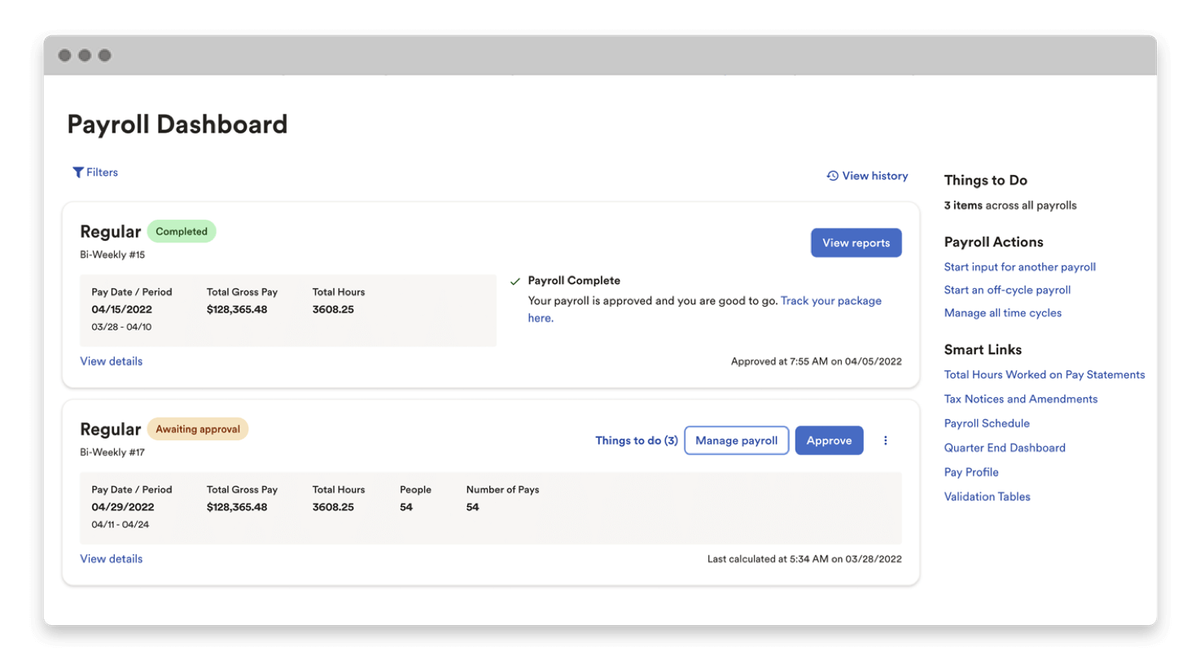
ADP is a long-established global payroll company with dedicated India operations. It serves mid-size and enterprise employers that want a recognised brand running a deep statutory filing engine. Its India scope covers PF, ESI, professional tax, labour welfare fund, and salary TDS.
🧰 Core Services
India statutory payroll processing.
Salary TDS filing on Form 24Q, with Form 27A summary handling.
PF, ESI, professional tax, LWF, and TDS compliance.
Payroll reporting and analytics for finance teams.
Employee self-service portal.
🤔 Why Companies Consider ADP India
The buying reason is brand trust plus reporting depth. Larger finance teams like a mature filing infrastructure and the comfort of a global name during an audit. For a 200-person India team, that lowers perceived risk at procurement, which is also why we built a dedicated track for enterprise India teams.
The trade-off is weight. ADP is built for scale, so a five-person startup often finds onboarding slower than with a boutique India operator. It is a payroll engine first, not a fast first-hire EOR. Versatile Club sits at the opposite end of that spectrum, with a 5-day onboarding SLA written into the contract.
👥 Ideal Customer Profile
Company size: mid-market to enterprise, with larger India headcount.
Geography: global companies with established India operations.
Hiring need: reliable statutory filing at volume, not first-hire speed.
India team size: typically 50 or more.
Decision maker: payroll head or finance leader.
💰 Commercial Model
Pricing is not publicly disclosed and is provided on a custom quote basis. I will not estimate a figure, because the source set does not support one. Ask specifically about setup charges, per-payslip fees, and off-cycle run costs, since those three lines move the total most. For entity owners comparing like for like, our managed payroll service publishes its per-employee rate openly.
2. Deel: Best for Companies Hiring Across Many Countries at Once
🌍 Overview
Deel is a large global EOR and contractor-payments platform covering more than 90 countries. The product is polished and widely adopted by scaling teams. For India, it operates through a local partner entity rather than owned India infrastructure.
🧰 Core Services
Multi-country EOR and contractor payments.
Global payroll across 90-plus countries.
Contract generation and compliance documentation.
Equipment and benefits coordination.
Integrations with HR and finance tools.
🤔 Why Companies Consider Deel
The buying reason is breadth. Hiring in five countries at once through one platform is genuinely convenient, and the brand carries weight with boards. If India is one of many markets, that consolidation is real value.
For an India-first hire, the trade-offs surface. Reviewers report roughly 3 to 5 percent FX markup, pricing commonly cited near $599 per employee per month, and onboarding that runs longer than an India specialist. India is one country in a 150-country roadmap, so multi-state professional tax and Labour Code structuring get thinner treatment, a contrast we lay out on our Deel alternative page. In the same comparison, Versatile Club charges $149 per employee per month flat, with no setup fee and no exit fee.
👥 Ideal Customer Profile
Company size: scaling companies hiring in five or more countries.
Geography: global, with no single dominant market.
Hiring need: multi-country EOR plus contractor management in one system.
India team size: usually a minority of total headcount.
Decision maker: People Ops or global HR.
💰 Commercial Model
Deel's India EOR is commonly reported around $599 per employee per month, with FX markup of roughly 3 to 5 percent on cross-border flows. Confirm current terms directly with Deel, since public figures move. Ask for the transfer-fee schedule in writing, because that is where reviewers report surprises. You can model your own numbers first with our EOR versus entity calculator.
💬 Customer Reviews
"It took three months to onboard our first 3 individuals. They didn't seem to be able to navigate Visas or variations to employment contracts, and this constantly created issues, so we had to make a decision to change providers."
— Verified User in Information Technology and Services, Deel - G2 Verified Review
"I appreciate the ease of setup with Deel, it took me only a few minutes. I love the instant transfer feature. I dislike how expensive Deel's transaction fees are, especially when moving money from the Deel account to my bank."
— Maria M., Deel - G2 Verified Review
I am not posting those to dunk on Deel. Their contractor-payment product is genuinely strong. I am posting them because onboarding speed and India contract nuance are exactly where an India-native operator has to earn its keep.
Versatile Club competes on that narrow ground only: owned Indian entity, USD invoice raised from India with no FX leg to mark up, 5-day onboarding SLA, and the founder reachable on WhatsApp instead of a ticket queue. If you are already mid-switch, our guide on switching EOR providers in India maps the sequence.
3. Versatile Club: Best for US and UK Companies Hiring Their First 1 to 20 India Employees
🇮🇳 Overview
Versatile Club is an India-only Employer of Record and Contract-to-Hire provider, operated by Foo Falcon Technologies Pvt Ltd, a registered Indian company in Bengaluru. It serves US and UK companies that want India employees without incorporating an Indian subsidiary. An Employer of Record, or EOR, is the legal employer of record for your hire while you direct the work day to day, a model explained in full on our EOR services page.
🧰 Core Services
Full EOR, where employees are legally employed by our own Indian entity with statutory compliance included.
Contract-to-Hire, starting as a contractor and converting to full-time, with culture-fit vetting across 50 behavioural parameters.
Managed payroll for companies that already hold their own India entity.
Monthly USD invoice showing gross, deductions, and net per employee, with PF and ESI challan confirmations plus TDS receipts.
Full and final settlement, Form 16, gratuity accrual, and POSH Internal Committee setup.
🤔 Why Companies Consider Versatile Club
Versatile Club gets shortlisted for two reasons: speed and a single accountable owner. A founder closes a round, needs an engineer live in weeks, and wants one plain answer to the question, do you actually own the entity in India? Ours is yes, with PF registration, ESIC code, and Shops and Establishments licences under our own name, as documented on our compliance page.
The second reason is retention, which the category mostly ignores. Compliance is the floor, not the ceiling. A culturally misfit hire discovered in month four still burns six months of runway. The 90-day Success Coach and the 6-month replacement guarantee on C2H placements exist for that problem, not for the legal-hire-on-paper problem.
👥 Ideal Customer Profile
Company size: 5 to 200 employees globally.
Geography: US primary, UK secondary.
Hiring need: first 1 to 3 India engineers, or a switch off a global generalist.
India team size: 1 to 30.
Decision maker: founder, People Ops lead, or CFO.
💰 Commercial Model
Versatile Club prices EOR at $149 per employee per month, with no setup fee, no exit fee, and the first month free. Managed payroll for entity owners starts around $49 per employee per month. C2H is outcome-based at 20 to 30 percent of annual salary, charged only after the hire completes day 90, and it carries a 6-month replacement guarantee. Invoicing is in USD directly from our Indian entity, so there is no FX conversion leg to mark up, and the full breakdown sits on our pricing page.
💬 Customer Reviews
"As a founder at a digital marketing agency, I needed to hire and manage a small India-based team without setting up a local entity. Versatile's Employer of Record India service made this seamless. Invoicing in USD meant zero exchange rate surprises. Five-day onboarding, zero late payslips."
— Vedant T., Founder, Versatile Club G2 - Verified Review
"The dashboard could be a little more self-serve. A couple of times I wanted to pull a report or a doc myself and ended up just messaging my contact instead. They always answered fast, so it wasn't a real problem. Small thing."
— Angad S., Versatile Club G2 - Verified Review
⚠️ Where we are honestly not the fit
Versatile Club operates in India only, by design. If you need EOR in five countries at once, a global platform scores higher for you than we do. We also do not yet hold SOC 2 or ISO 27001, so a 100-plus India enterprise with certification gates in procurement should know that before the first call. I would rather say it here than let you find it in a security questionnaire, and you are welcome to raise it directly through a quick conversation.
4. Paybooks: Best for Indian SMBs Wanting Affordable Domestic Payroll
🏪 Overview
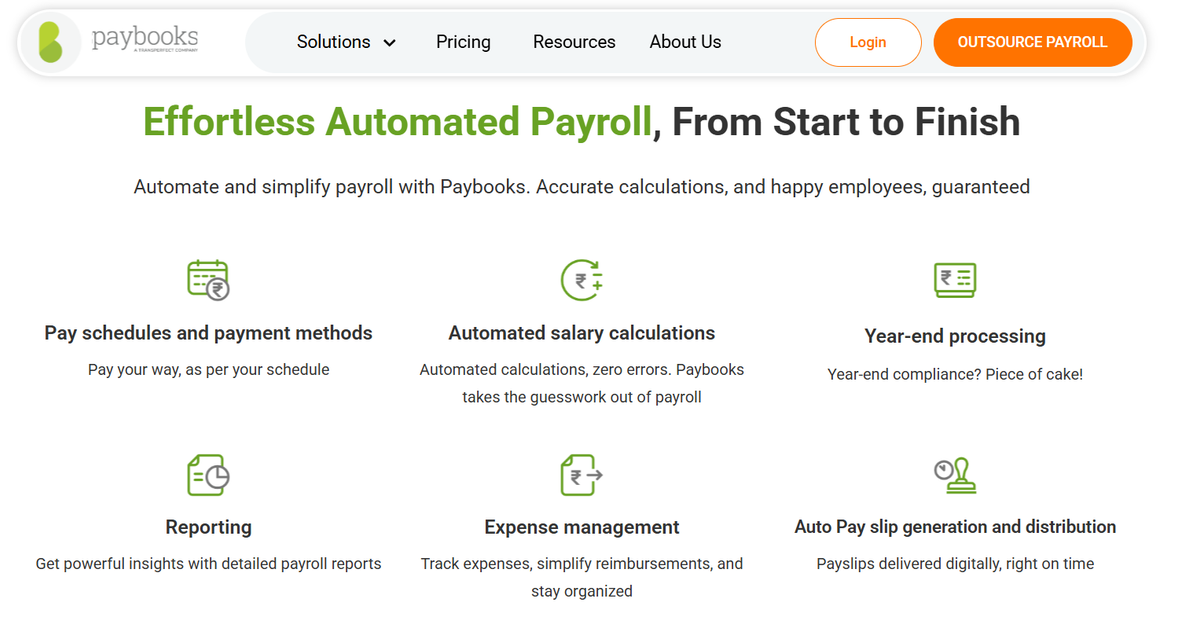
Paybooks is an India-focused payroll and compliance provider built for domestic small and mid-size businesses. It bundles salary processing with statutory filing at a low per-employee cost. The buyer is usually an India-registered company paying staff in rupees.
🧰 Core Services
India payroll processing and payslip generation.
PF, ESI, professional tax, and TDS filing.
Employee self-service portal.
Leave and attendance management.
Compliance reporting for finance and audit.
🤔 Why Companies Consider Paybooks
The decision logic is cost control. For an Indian SMB running INR payroll, Paybooks covers the statutory basics without enterprise pricing. That is a reasonable trade for a 30-person team in one or two states.
The limit for this article's reader is structural. Paybooks serves India-domiciled employers, so it does not solve USD invoicing or employment without an Indian entity. Versatile Club fills that specific gap by acting as the legal employer under its own Indian registrations, which is the route most buyers take when they need to hire in India without an entity.
👥 Ideal Customer Profile
Company size: Indian SMBs with their own registered entity.
Geography: India-domiciled.
Hiring need: domestic payroll outsourcing at low cost.
India team size: 10 to 200.
Decision maker: HR or finance manager.
💰 Commercial Model
Paybooks publishes low per-employee monthly pricing in INR tiers on its own site. Confirm the current figures directly, since I will not estimate beyond what the source set supports. Ask whether statutory filing is bundled or billed as an add-on, because that split changes the effective rate.
5. Keka: Best for Growing Indian Companies Wanting Payroll Plus HRMS
🧩 Overview
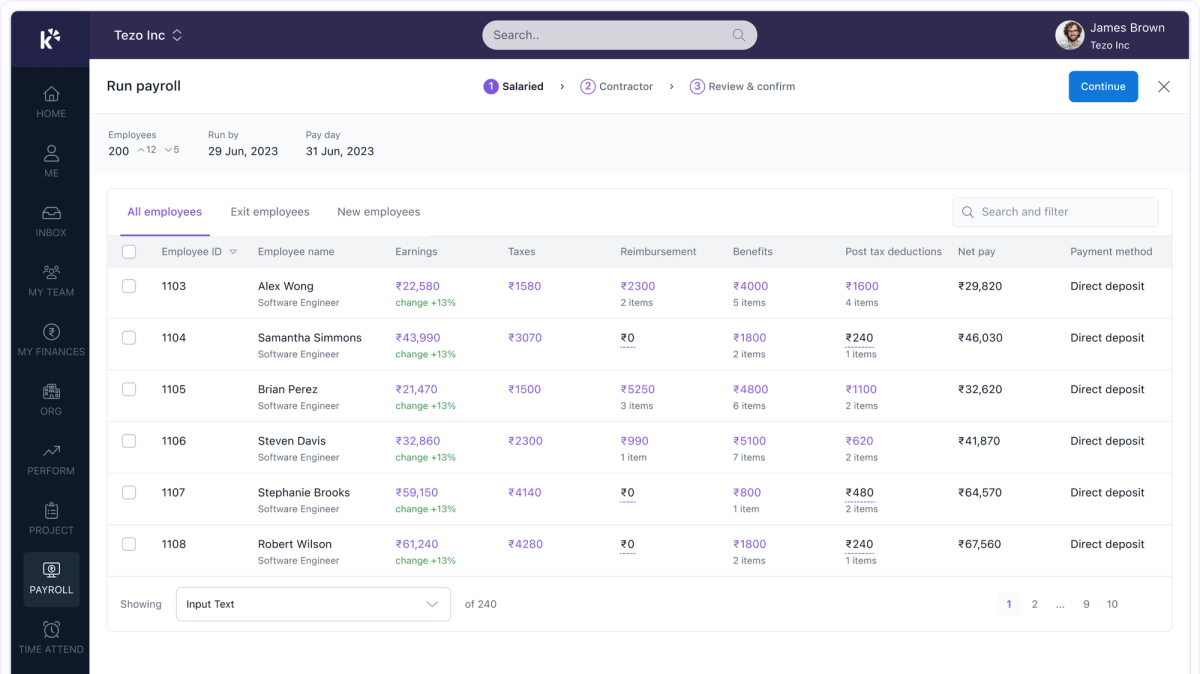
Keka is an Indian HRMS and payroll platform, rated around 4.7 on G2. HRMS means human resource management system, the software layer that holds leave, attendance, and performance data. Keka pairs that layer with India statutory payroll.
🧰 Core Services
India payroll with PF, ESI, professional tax, and TDS.
HRMS covering leave, attendance, and performance.
Employee self-service portal.
Payroll analytics and reporting.
Expense and reimbursement management.
🤔 Why Companies Consider Keka
The buying reason is consolidation of people data. Growing Indian companies want payroll and HR in one system rather than two exports and a reconciliation. Keka's self-service layer also pulls routine questions away from the HR inbox.
The trade-off matches the other domestic platforms. Keka is software-led for India-registered employers, so a US company with no entity still needs a legal employer in India. In a straight comparison row, Keka is the HRMS, and Versatile Club is the employer of record filing under its own PF and ESIC registrations, with the mechanics set out in our India payroll compliance guide.
👥 Ideal Customer Profile
Company size: growing Indian SMBs and mid-market firms.
Geography: India-domiciled.
Hiring need: payroll plus integrated HR operations.
India team size: 25 to 500.
Decision maker: HR leader.
💰 Commercial Model
Keka uses tiered per-employee subscription pricing. Exact figures should be confirmed on its pricing page, since the source set does not list them. Check whether statutory filing support sits in the base tier or a higher one.
6. greytHR: Best for India SMBs Needing a Mature Payroll and Leave System
🗂️ Overview
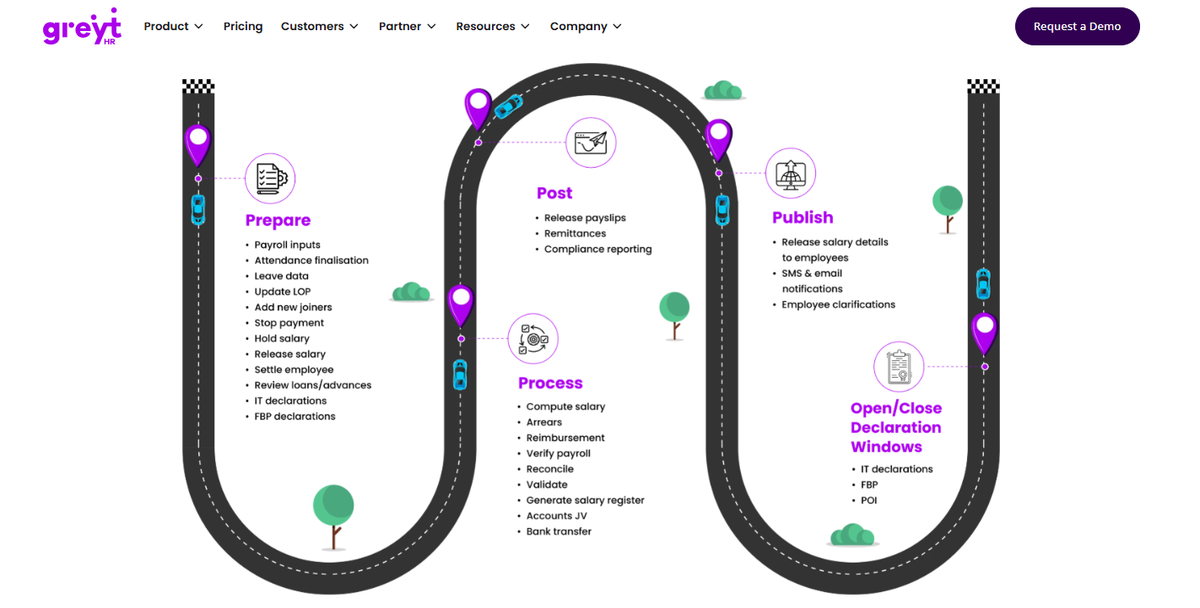
greytHR is one of India's longest-running payroll and HR platforms, rated around 4.3 to 4.4 on G2. It is known for dependable statutory compliance and a widely used employee self-service portal. Many Indian employees interact with it daily for payslips and leave.
🧰 Core Services
India statutory payroll across states.
PF, ESI, professional tax, and TDS filing.
Leave and attendance management.
Employee self-service portal.
Compliance and payroll reporting.
🤔 Why Companies Consider greytHR
The decision logic is maturity. greytHR has processed Indian payroll for years, so SMB buyers trust the compliance and leave engine to behave predictably at month-end. Predictability matters more than novelty in payroll.
The boundary is the same domestic scope. greytHR serves India-registered employers and does not provide foreign-company EOR or USD invoicing. For cross-border teams, Versatile Club adds managed payroll and USD invoicing raised from its own Indian entity.
👥 Ideal Customer Profile
Company size: India SMBs and mid-market firms.
Geography: India-domiciled.
Hiring need: mature payroll plus leave administration.
India team size: 20 to 500.
Decision maker: HR or payroll manager.
💰 Commercial Model
greytHR offers tiered per-employee subscription pricing, with a free tier for very small teams. Confirm current figures directly with the vendor. Clarify which tier includes statutory filing rather than only computation.
7. Zoho Payroll: Best for Companies Already Inside the Zoho Suite
🔗 Overview
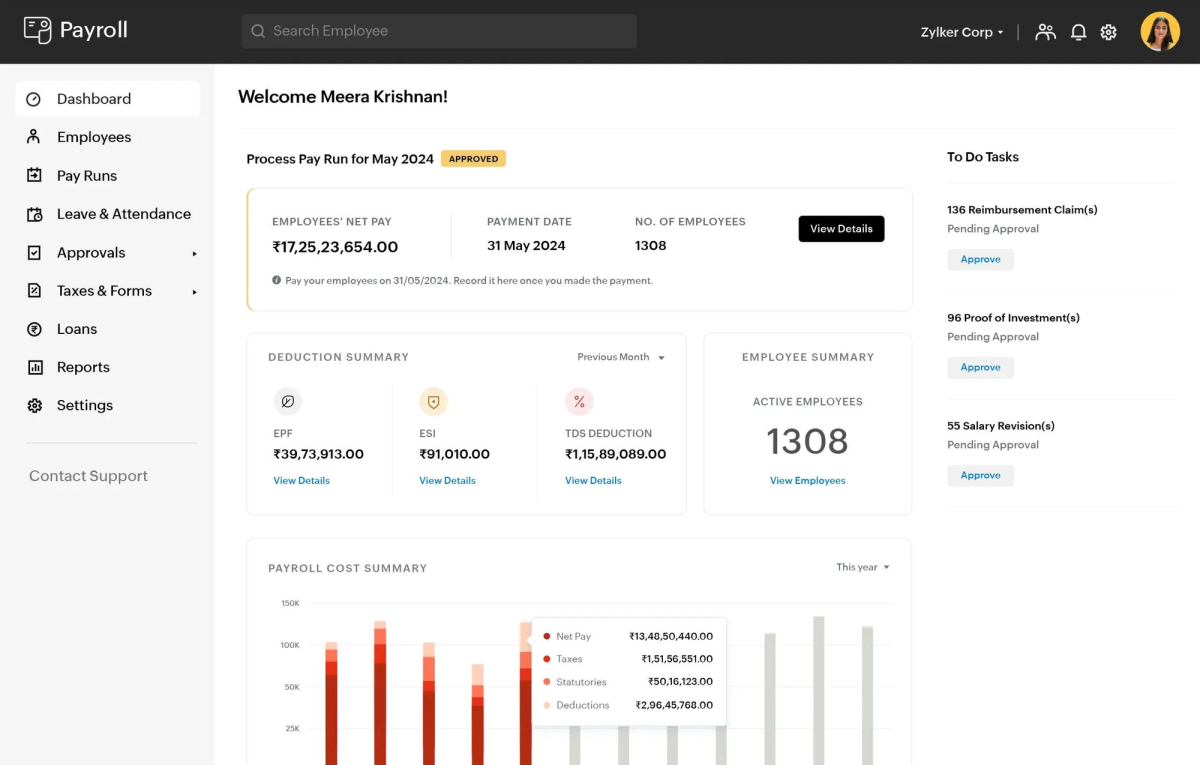
Zoho Payroll is the payroll module inside the broader Zoho business suite, rated around 4.3 on G2. It handles India statutory payroll and shares data with Zoho People, Zoho Books, and Zoho Expense. Its value depends heavily on already living in that ecosystem.
🧰 Core Services
India payroll with PF, ESI, professional tax, and TDS.
Integration with Zoho People and Zoho Books.
Employee self-service portal.
Payslip and Form 16 generation.
Payroll reporting.
🤔 Why Companies Consider Zoho Payroll
The buying reason is ecosystem fit. If your books, HR records, and expenses already sit in Zoho, payroll slots in with one login and no export step. That reduces reconciliation work at close.
The trade-off is dependency. Leave the Zoho suite and much of the advantage disappears. It is also a domestic payroll tool, not a foreign-company EOR, which is the line Versatile Club sits on with employees held on its own Indian entity, as described in our how it works walkthrough.
👥 Ideal Customer Profile
Company size: Indian SMBs already standardised on Zoho.
Geography: India-domiciled.
Hiring need: payroll inside an existing suite.
India team size: 10 to 300.
Decision maker: finance or HR administrator.
💰 Commercial Model
Zoho Payroll uses low per-employee monthly pricing in INR tiers. Confirm exact current figures on its pricing page. Check the employee-count threshold where the tier price steps up.
8. RazorpayX Payroll: Best for India Startups Wanting Automated Payments Plus Payroll
⚡ Overview
RazorpayX Payroll sits inside the Razorpay fintech stack and is rated around 4.5 on G2. It pairs automated salary disbursal with statutory compliance and challan payments. The natural buyer already uses Razorpay for collections or banking.
🧰 Core Services
Automated salary disbursal and payroll runs.
PF, ESI, professional tax, and TDS compliance.
Employee self-service.
Compliance payments and challan handling.
Integration with Razorpay banking.
🤔 Why Companies Consider RazorpayX Payroll
The decision logic is automation of the payment leg. Founders stop initiating transfers manually, and statutory payments go out on schedule. For a 20-person India startup, that removes a recurring monthly chore.
The scope stays fintech-led and domestic. It pays and files for India-registered companies, so a US or UK company without an entity still needs a legal employer. That is the specific role Versatile Club performs, with PF, ESI, TDS, and multi-state professional tax filed under its own registrations, and our guide to paying employees in India covers the mechanics.
👥 Ideal Customer Profile
Company size: India startups and SMBs.
Geography: India-domiciled.
Hiring need: automated payroll plus payment execution.
India team size: 5 to 200.
Decision maker: founder or finance lead.
💰 Commercial Model
RazorpayX Payroll offers a free tier and low-cost paid tiers per employee in INR. Confirm exact current figures directly. Ask which compliance payments are automated in the tier you are quoted.
9. Remote: Best for Multi-Country Teams Wanting a Single Global Dashboard
🌐 Overview
Remote is a global EOR platform built around one clean dashboard across many countries. Like other generalists, its India operations are typically handled through a local partner entity rather than owned India infrastructure. The product experience is well regarded by People Ops teams.
🧰 Core Services
Multi-country EOR and global payroll.
Contractor management and payments.
Benefits and equipment coordination.
Compliance documentation across countries.
Employee self-service dashboard.
🤔 Why Companies Consider Remote
The decision logic is one consistent workflow across borders. A People Ops lead hiring in six countries does not want six vendors, six invoices, and six escalation paths. Remote solves that shape of problem well.
For India specifically, depth is the trade-off. Multi-state professional tax, Labour Code wage structuring, and state Shops and Establishments rules are where a 90-plus-country platform tends to run thin, a contrast detailed on our Remote alternative page. Placed side by side, Remote is commonly reported near $599 per employee per month, while Versatile Club is $149 flat with no setup or exit fee.
👥 Ideal Customer Profile
Company size: multi-country teams, Series B and beyond.
Geography: global, with no single dominant market.
Hiring need: single-platform EOR across several countries.
India team size: usually a minority of total headcount.
Decision maker: People Ops or global HR.
💰 Commercial Model
Remote's India EOR is commonly reported around $599 per employee per month. Confirm current pricing directly with Remote, since the source set does not list an exact figure. Ask for the FX policy in writing, because cross-border conversion is where reported costs drift. To sanity-check the delta against an India specialist, run the numbers on our India salary calculator.
Versatile Club appears third on this list by market scale and first on the India-depth rubric, for one testable reason: hires sit on our own Bengaluru entity, with PF, ESI, TDS, and multi-state professional tax filed under our registrations, a 5-day contractual onboarding SLA, and one USD invoice raised directly from India, all of which we set out for startups making their first India hire.
Q2. How Did We Score These Nine Payroll Providers?
Every provider was scored on five weighted criteria totalling 100: India entity model and compliance depth (25), statutory filing execution and state professional tax coverage (25), pricing transparency and total cost including foreign exchange markup (20), onboarding speed and support model (15), and customer validation from G2, Capterra, and Clutch (15). Stars follow the score. Zero to 20 earns one star, and 81 to 100 earns five.
The conflict I owe you upfront
Versatile Club is on this list, so the rubric is not neutral by accident. Weighting entity model at 25 rewards operators who own their Indian entity and marks down anyone routing India through a partner shell. That is a point of view, and it happens to favour us, which is why our India EOR service is scored on the same sheet as everyone else.
So here is the arithmetic instead of an assertion. Re-weight the table for your own situation and the ranking will move. If multi-country coverage matters more to you than state-level filing depth, a generalist wins on your version of this scorecard.
⭐ The five weights, and why two of them take half
India entity model and compliance depth (25): one accountable owner when a filing breaks.
Statutory filing execution and state PT coverage (25): professional tax is a state tax, so national process claims fail at the first Tier-2 hire.
Pricing transparency and total cost (20): FX markup and setup fees surface on invoice three, not on the pricing page.
Onboarding speed and support model (15): speed-to-hire is the top founder concern in every first call I take.
Customer validation (15): verified reviews on G2, Capterra, and Clutch, not vendor copy.
Entity model and filing execution take half the total because they decide who answers when EPFO flags a late challan. Everything else is recoverable. A missed statutory deposit is not, which is why our compliance coverage is published in filing-level detail.
📊 The scoring table
| Provider (Stars) | Weighted Score | The criterion that capped it |
| ADP India ⭐⭐⭐⭐ | 78 | Onboarding speed for small teams |
| Deel ⭐⭐⭐⭐ | 74 | India via partner entity, reported FX markup |
| Versatile Club ⭐⭐⭐⭐⭐ | 88 | No SOC 2 or ISO 27001 yet |
| Paybooks ⭐⭐⭐ | 58 | Domestic scope, no foreign-company EOR |
| Keka ⭐⭐⭐⭐ | 68 | Software-led, not a legal employer |
| greytHR ⭐⭐⭐⭐ | 66 | India-domiciled employers only |
| Zoho Payroll ⭐⭐⭐ | 60 | Value depends on suite lock-in |
| RazorpayX Payroll ⭐⭐⭐ | 59 | Fintech-led scope, domestic only |
| Remote ⭐⭐⭐ | 70 | Thinner India multi-state depth |
💸 Why pricing transparency earns a full 20
Buyers rarely get burned by the headline rate. They get burned by the conversion leg and the transfer fee, which is exactly what reviewers report.
"I appreciate the ease of setup with Deel, it took me only a few minutes. I love the instant transfer feature. I dislike how expensive Deel's transaction fees are, especially when moving money from the Deel account to my bank."
— Maria M., Deel - G2 Verified Review
Versatile Club prices EOR at $149 per employee per month flat, with $0 setup, $0 exit, and the first month free, which is the number the 20-point weight is measuring, and the full breakdown sits on our pricing page. Onboarding speed carries 15 for a similar reason, because buyers can verify it.
"We used Versatile to hire our first employee in India after months of putting it off because the compliance side seemed like a mess. They replied to our form in about four hours with a draft offer letter already attached. The hire was onboarded in four days."
— Verified User in Information Technology and Services, Versatile Club G2 - Verified Review
⚠️ Where the score works against us
Versatile Club takes three deductions in this rubric: no SOC 2 or ISO 27001 certification, no multi-country coverage, and a dashboard that is less self-serve than the platforms. EOR is also newer for us than C2H, where the entity and filing muscle came from, as our contract-to-hire practice shows. I would rather publish those than bury them.
Q3. Do You Need Payroll Outsourcing, Managed Payroll, a PEO, or an EOR?
Entity status decides the model. If you own an Indian Pvt Ltd or LLP, you need managed payroll outsourcing, where the vendor computes and files while you remain the legal employer. If you have no Indian entity, you need an Employer of Record, which becomes the legal employer and holds the PF, ESI, and professional tax registrations. US-style co-employment PEO has no legal basis under Indian labour law.
The four models in one line each
Payroll software: you run payroll yourself, in-house, on a tool.
Payroll outsourcing: a vendor processes salaries and files returns using your entity.
EOR: the provider is the legal employer, so you need no Indian entity.
US-style PEO: employment is shared between two employers, which India does not recognise.
Think of it like dinner. Software is a recipe app, so you still chop and clean. Outsourcing is a chef cooking in your kitchen. With an EOR, the provider owns the kitchen and employs the cook, a structure we walk through step by step on our how it works page.
⚠️ Who carries the liability after you outsource
Here is the part vendors underplay. When you outsource with your own entity, statutory liability stays with you, and the vendor acts as your filing agent. A clean contract therefore names the owner of each act, not just the service.
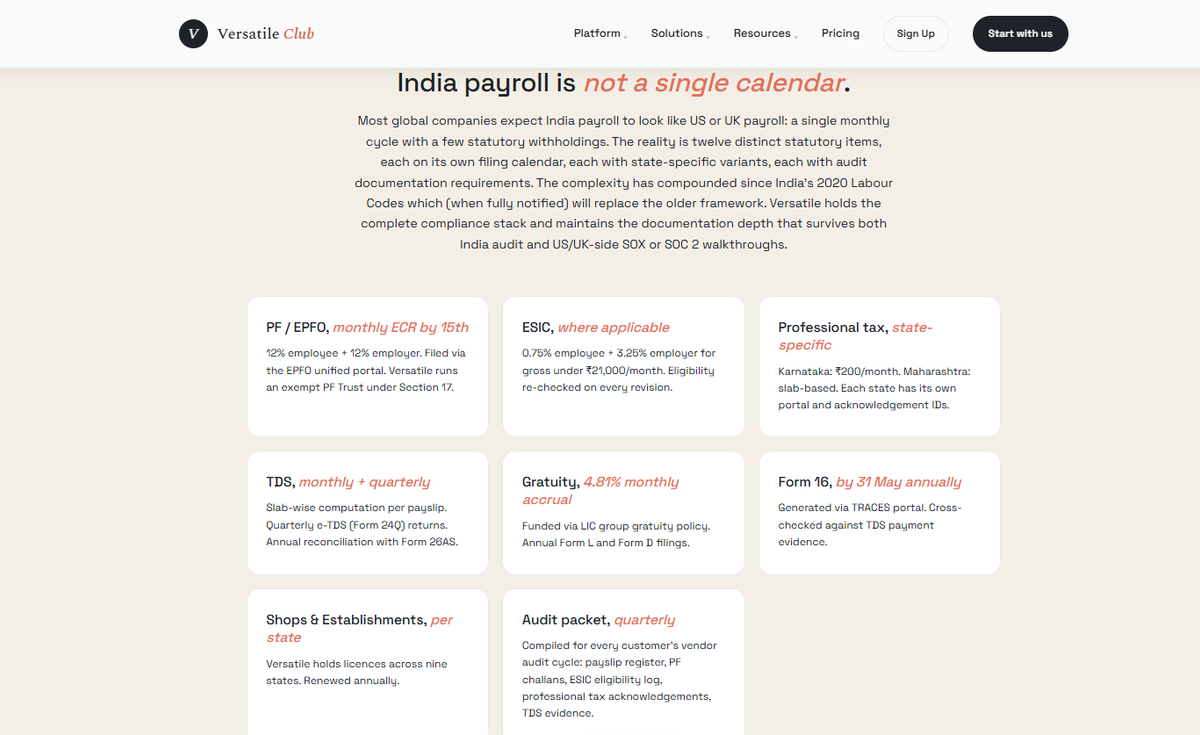
Put three lines in the agreement: who deposits PF and ESI by the 15th of the following month, who files the ESI half-yearly return, and who signs the quarterly salary TDS return (Form 138, formerly Form 24Q). Versatile Club signs those filings under its own registrations on the EOR path, which is why the liability question resolves differently there, and our India payroll compliance guide spells out each owner.
❌ The PEO myth that trips up US buyers
Traditional US co-employment PEO does not legally exist in India. The employer definitions in the Code on Wages and the Code on Social Security do not split employment between two parties the way a US PEO arrangement does.
So treat "PEO India" as a marketing import. For entity owners, the closest real thing is managed payroll, sometimes sold as PEO-lite. For non-entity companies, the real thing is EOR, and we compare both paths in our EOR versus PEO breakdown.
💰 A worked example, before and after incorporation
Take a Series A US company with six engineers in Bengaluru and no Indian entity. It needs an EOR, because someone must legally employ those six and hold the PF, ESIC, and state PT registrations. At $149 per employee per month, that is $894 a month on Versatile Club's flat rate, with no setup or exit fee.
Now incorporate. The same six move onto the company's own entity, and the model flips to managed payroll at roughly $49 per employee per month, or about $294. The catch is what incorporation adds: statutory audit, MCA annual filings, a resident director, and FC-GPR reporting to RBI on inbound capital. Below about 15 India employees, that overhead usually outweighs the per-head saving.
⏰ The 30-second decision rule
Ask two questions. Do I have a registered Indian entity today, and do I want to keep statutory liability in-house?
Two yes answers point to managed payroll. A no on the first points to EOR. If you are paying Indian staff as contractors from a US entity while directing their daily work, you are running with scissors, because that pattern invites both misclassification exposure and permanent establishment risk, meaning your US company can be treated as taxable in India. Our contractor of record service exists to insulate you from exactly that.
Versatile Club runs EOR and managed payroll from the same owned Indian entity, so the recommendation follows your legal structure instead of our price list. I have talked buyers with subsidiaries out of EOR more than once, and the maths behind that sits in our EOR versus entity calculator.
Q4. What Statutory Compliance Must an India Payroll Provider Run in 2026?
A compliant India payroll runs Provident Fund at 12 percent of Basic plus DA, ESI at 3.25 percent employer and 0.75 percent employee, gratuity accruing at 4.81 percent of Basic plus DA from month one, TDS deposited by the 7th, quarterly Form 138 (formerly Form 24Q), and Form 130 (formerly Form 16) issued by 15 June. Since 21 November 2025, Basic plus DA must be at least 50 percent of total remuneration.
The federal stack, with rates and dates
| Obligation | Rate or form | Deadline |
| Provident Fund (PF) | 12 percent of Basic plus DA | 15th of next month |
| ESI | 3.25 percent employer, 0.75 percent employee | 15th of next month |
| TDS deposit | Per income tax slab | 7th of next month |
| Form 138 (salary TDS return) | Quarterly statement | 31 Jul, 31 Oct, 31 Jan, 31 May |
| Form 130 (TDS certificate) | Annual, per employee | 15 June |
| Gratuity accrual | 4.81 percent of Basic plus DA | From month one |
Versatile Club files each of these under its own EPFO, ESIC, and Shops and Establishments registrations, and we send the challan receipts with the monthly invoice.
🧾 The form names changed, and that is a vendor test
The Income-tax Act 2025 renamed the salary forms. Form 16 became Form 130 under section 395(4)(b) with Rule 215(1), Form 16A became Form 131, and Form 24Q became Form 138 under section 397(3)(b) with Rule 219.
Use this as a diagnostic on your next vendor call. A provider still quoting only Form 16 and 24Q in 2026 has not updated its filing templates, which tells you something about the engine behind the dashboard. If you are mid-evaluation, our guide to outsourcing payroll in India lists the same diagnostics.
💰 The 50 percent wage rule, with the arithmetic
The Labour Codes took effect on 21 November 2025, and the final central rules followed on 8 May 2026. Excluded allowances above 50 percent of total remuneration get added back into wages, and payments in kind count up to 15 percent.
Take a Rs 20 lakh CTC with Basic set at 40 percent, or Rs 8 lakh. Basic plus DA must now reach Rs 10 lakh, so PF at 12 percent rises by Rs 24,000 a year and gratuity accrual at 4.81 percent rises by Rs 9,620. In typical structures, the added statutory cost lands near 3.2 percent of gross, on an unchanged CTC. Versatile Club restructures CTCs to that floor at onboarding rather than treating it as a later project, and you can model the effect using our India salary calculator.
⏰ Two 2026 changes to action this month
EPFO's circular WSU/TDS Issues/E-772040/2026-27/11 dated 13 April 2026 replaced Form 15G and 15H with consolidated Form 121. Your onboarding pack needs reprinting, and HR needs to stop collecting the old forms.
Second, the EPF Scheme 2026 and the VISHWAS settlement scheme were notified by G.S.R. 525(E) dated 29 June 2026, with applications open until 28 December 2026. Pull any open Section 14B damages notices and close them on the EPFO Employer Portal before you migrate vendors, because the next provider inherits that file. Our note on switching EOR providers in India sequences that clean-up.
⚠️ DPDP keeps the liability with you
MeitY notified the Digital Personal Data Protection Rules on 14 November 2025, with Rules 1, 2, and 17 to 21 effective on publication. Payroll vendors process Aadhaar numbers, UAN records, and bank details, which makes them processors, not owners of the risk.
You remain the accountable Data Fiduciary, meaning the party legally answerable for that data. So issue a processing addendum covering breach notification, retention limits, and deletion on exit. A single India data path is easier to govern than one that routes through an offshore parent.
Versatile Club runs the full statutory surface under its own registrations, restructures CTCs to the 50 percent floor on day one, and ships PF and ESI challan confirmations plus TDS receipts with each monthly USD invoice. The audit packet builds itself twelve times a year, which is what CFOs at larger India teams ask for first.
Q5. Which Indian States Break Your Payroll, and Who Actually Covers Them?
Professional tax is a state tax with no national cadence. Maharashtra needs dual PTRC and PTEC registration with monthly slab filing. Karnataka runs monthly professional tax plus enrolment within 30 days of joining. Tamil Nadu files twice a year, in June and December, and adds Labour Welfare Fund contributions. West Bengal changes rules frequently. Delhi has no professional tax but enforces Shops and Establishments compliance strictly.
The hire who moved cities
A client's engineer was fully compliant in Bengaluru. He moved to Pune for family reasons, kept the same job, and the same salary. His payroll broke that month.
Karnataka professional tax stopped applying. Maharashtra required two registrations, not one, plus a Rs 300 February slab that Karnataka does not have. Nothing about the employee changed. The filing calendar changed completely, which is the whole reason our state compliance coverage is tracked per state rather than per country.
🗺️ The state coverage matrix
| State | PT cadence | LWF | Registration quirk |
| Maharashtra | Monthly slab, annual return | Yes | Dual PTRC plus PTEC; Rs 200 monthly, Rs 300 in February |
| Karnataka | Monthly | Yes | Enrol within 30 days of joining; S&E renewal |
| Tamil Nadu | Biannual (June, December) | Yes | Half-yearly cycle catches monthly-only vendors |
| West Bengal | Monthly | Yes | Frequent rule changes, state leave calculations |
| Telangana | Monthly remittance | Yes | PTRC enrolment mandatory |
| Delhi | No professional tax | Yes | Strict Shops and Establishments compliance |
Versatile Club files professional tax, Labour Welfare Fund, and Shops and Establishments compliance in every state where it employs, which is the only reason that Bengaluru to Pune move stayed an address change.
⚠️ What breaks when coverage stops at Tier-1
Global platforms typically cover the main hubs well. Reported coverage runs to roughly the top six states for Deel and the top four for Remote. Your first three hires usually land inside that footprint, a gap we detail on our Deel alternative page.
Hire four is the problem. An engineer in Indore or a designer in Coimbatore sits outside a Tier-1-only setup, so the vendor either registers late or quietly does not register at all. You find out during diligence, not during payroll.
"It took three months to onboard our first 3 individuals. They didn't seem to be able to navigate Visas or variations to employment contracts, and this constantly created issues, so we had to make a decision to change providers."
— Verified User in Information Technology and Services, Deel - G2 Verified Review
I am not arguing that a 150-country platform is careless. I am arguing that 28 state calendars plus 8 union territories cannot get the same attention as one row in a global compliance matrix. It is the same reason a cloud provider's home region behaves better than its newest one, and it is why city-level payroll depth in Bengaluru looks different from a global template.
✅ Three questions to ask before you sign
Ask open questions, never yes or no ones. Vendors pass yes-or-no questions easily.
Walk me through your professional tax filing calendar for Maharashtra, Karnataka, and Tamil Nadu this quarter.
Show me the last PTRC and PTEC acknowledgements you filed, with dates.
Which states have you never filed in, and what happens if my next hire lives there?
The third question is the one that separates operators from resellers. Versatile Club answers it with a state list and the filings behind it, because our compliance knowledge came from running C2H payroll across Bengaluru, Hyderabad, and Pune for six years, not from a global playbook, as our Hyderabad payroll guide shows in practice.
"As a founder at a digital marketing agency, I needed to hire and manage a small India-based team without setting up a local entity. Versatile's Employer of Record India service made this seamless. Invoicing in USD meant zero exchange rate surprises. Five-day onboarding, zero late payslips."
— Vedant T., Founder, Versatile Club G2 - Verified Review
Q6. What Do Filing Automation and Employee Self-Service Actually Deliver Each Month?
Real filing automation produces artefacts, not dashboards: an EPFO ECR upload with challan receipt, an ESI challan, a TDS deposit confirmation by the 7th, a state professional tax receipt, a Form 138 acknowledgement, and Form 130 by 15 June. Employee self-service should cover payslips, Form 130 retrieval, tax declarations, leave balances, and reimbursements. Exceptions still need a person.
The monthly cycle, by date
ECR means Electronic Challan cum Return, the PF file employers upload to the EPFO portal each month. Here is the cadence that actually runs.
Day 25 to 28: input freeze on attendance, joiners, exits, and variable pay.
Day 1: payroll computation and payslip generation.
By the 7th: TDS deposit for the previous month.
By the 15th: PF ECR upload and ESI contribution, with challans generated.
State-specific dates: professional tax remittance, monthly or biannual.
Quarterly: Form 138 filing, due 31 July, 31 October, 31 January, and 31 May.
🧾 The six artefacts to demand
EPFO ECR acknowledgement plus PF challan receipt (EPFO).
ESI contribution challan (ESIC).
TDS deposit challan confirmation (Income Tax Department).
State professional tax payment receipt (state commercial tax authority).
Form 138 quarterly acknowledgement (Income Tax Department).
Form 130 annual certificate per employee, by 15 June.
Versatile Club sends the PF and ESI challan confirmations, TDS receipts, and PT acknowledgements with each monthly USD invoice. That is deliberate. A finance lead should never have to raise a ticket to prove a deposit happened, and our managed payroll service ships the same packet to entity owners.
📊 Who files, and who only computes
| Provider | Files statutory returns | Employee self-service portal |
| Versatile Club | Yes, under its own registrations | Basic, human-assisted |
| ADP India | Yes | Yes |
| Keka | Yes, for your entity | Strong (G2 around 4.7) |
| greytHR | Yes, for your entity | Strong (G2 around 4.3 to 4.4) |
| Zoho Payroll | Yes, for your entity | Yes (G2 around 4.3) |
| Deel and Remote | Via India partner entity | Yes |
⚠️ Where self-service quietly fails
Here is the thing the category oversells. A portal removes predictable requests. It does not remove the requests that carry worry.
I have watched Indian employees soften a real problem into "it probably won't be an issue," because raising it feels like criticism. That instinct does not survive contact with a ticket form. Nobody files a ticket saying their PF deduction looks wrong. They tell a person they trust, if there is one.
NPS structuring is the clearest example. Optimising take-home pay under Sections 80CCD(1), 80CCD(1B), and 80CCD(2) can cut tax liability meaningfully for high earners. No portal answers that question well, which is why HR consulting support sits alongside the filing work.
"The dashboard could be a little more self-serve. A couple of times I wanted to pull a report or a doc myself and ended up just messaging my contact instead. They always answered fast, so it wasn't a real problem, but I'd love to click around and find things on my own. Small thing."
— Angad S., Versatile Club G2 - Verified Review
That criticism is fair, and Versatile Club is building out click-around reporting because buyers keep asking for it. My honest read is that portals should own artefacts, while humans own exceptions.
⏰ The audit test for your current vendor
Email your provider now and ask for last quarter's PF challans plus the Form 138 acknowledgement. Then time the reply.
Under a day means the filings exist and someone can find them. A week means reconstruction. Versatile Club's clients get those documents without asking, because they arrive with the invoice, and the sequence is mapped on our how it works page.
Q7. What Does India Payroll Outsourcing Really Cost, and When Should You Switch or Open Your Own Entity?
Payroll software runs about INR 50 to 199 per employee per month. Managed payroll runs INR 200 to 800. Full outsourcing with statutory ownership runs INR 800 to 2,500. EOR-based payroll for foreign companies runs roughly USD 99 to 599, and Versatile Club charges USD 149 flat with no setup fee and no exit fee. Below about 15 India employees, an EOR usually beats owning an entity over three years.
The four price bands, and what sits inside them
Software (INR 50 to 199): computation and payslips. You file.
Managed payroll (INR 200 to 800, or about $49 for cross-border teams): computation plus filing on your entity.
Full outsourcing (INR 800 to 2,500): filing, helpdesk, and audit documentation.
EOR ($99 to $599): the provider is the legal employer, with all registrations included.
💸 The hidden costs, modelled on ten employees
| Line item | Generalist EOR | Versatile Club |
| Monthly fee, 10 employees, 12 months | $71,880 at $599 | $17,880 at $149, first month free |
| Setup fee | Often charged | $0 |
| Exit fee | Often charged | $0 |
| FX markup on cross-border pay | 3 to 5 percent reported | None, USD invoice from India |
"I appreciate the ease of setup with Deel, it took me only a few minutes. I love the instant transfer feature. I dislike how expensive Deel's transaction fees are, especially when moving money from the Deel account to my bank."
— Maria M., Deel - G2 Verified Review
💰 Why the FX leg exists at all
An INR invoice paid by a USD payer creates a conversion step. Somebody sets the rate on that step, and the spread is profit. A 4 percent spread on $40,000 of monthly salary cost is $1,600 a month, invisible on the pricing page.
Versatile Club invoices in USD directly from its Indian entity, never routed through a foreign holding company and never converted from rupees. There is no conversion leg for us to mark up, which is a structural fact rather than a discount, and the whole fee schedule sits on our pricing page.
"Invoicing in USD meant zero exchange rate surprises. Five-day onboarding, zero late payslips."
— Vedant T., Founder, Versatile Club G2 - Verified Review
⏰ Switching in five stages
Export employee records, year-to-date earnings, and statutory IDs (UAN, ESIC, PAN).
Transfer or re-map PF, ESI, and state professional tax registrations.
Run one parallel cycle on both systems and reconcile line by line.
Confirm annual TDS totals carry forward so Form 130 stays continuous.
Cut over fully once the parallel run matches.
Two failure modes account for most switching pain. Broken year-to-date figures produce wrong Form 130 totals in June. Orphaned professional tax registrations sit open in states you forgot you employ in, a risk our guide to switching EOR providers in India walks through step by step.
📈 The entity crossover, priced honestly
Incorporating adds fixed costs: statutory audit, MCA annual filings, a resident director, and FC-GPR reporting to RBI on inbound share capital. Those do not shrink when headcount does.
One client crossed at 12 hires. They incorporated, and all twelve moved onto their own entity. Below roughly 15 India employees, the EOR maths still wins over three years, and Versatile Club will say so on the first call instead of after the contract. Run your own numbers first on our EOR versus entity calculator.
Apply the CFO filter before you sign anything. Could you stand in front of your board and explain this specific vendor choice with the invoice in hand? With NASSCOM sizing the India tech industry at USD 315 billion on GCC-led expansion, you will make this call more than once, whether you are making a first India hire or consolidating a fragmented vendor stack.
FAQs
What are the best payroll outsourcing services in India for 2026?
We rank nine providers in this guide, ordered by market scale and scored on India depth: ADP India, Deel, Versatile Club, Paybooks, Keka, greytHR, Zoho Payroll, RazorpayX Payroll, and Remote. The right pick depends less on features and more on your legal setup.
- No Indian entity, US or UK company: you need an Employer of Record. Versatile Club employs your hires on its own Bengaluru entity and files PF, ESI, TDS, and multi-state professional tax under its own registrations.
- India-domiciled company with its own entity: domestic platforms like Keka, greytHR, Zoho Payroll, RazorpayX Payroll, or Paybooks handle computation and filing well.
- Large India headcount wanting a global brand: ADP India brings a mature filing and reporting engine.
- Hiring across five or more countries: Deel or Remote consolidate everything, though India runs through a local partner entity.
We weight entity ownership heavily because it decides who is accountable when a filing is late. If you want the full model breakdown before shortlisting, our India EOR services page sets out exactly which registrations sit with us and which stay with you.
How much do payroll outsourcing services in India cost per employee?
Pricing splits into four bands, and the sticker rate rarely reflects the true cost.
- Payroll software: roughly INR 50 to 199 per employee per month. You still file.
- Managed payroll on your own entity: INR 200 to 800, or around 49 dollars per employee for cross-border teams.
- Full outsourcing with statutory ownership: INR 800 to 2,500 per employee.
- EOR for foreign companies: roughly 99 to 599 dollars per employee per month.
The hidden lines decide the total. Global platforms commonly add a 3 to 5 percent foreign exchange markup on cross-border payments, plus setup and exit fees that surface on invoice three rather than the pricing page. On 40,000 dollars of monthly salary cost, a 4 percent spread is 1,600 dollars a month.
Versatile Club charges 149 dollars per employee per month, flat, with zero setup fee, zero exit fee, and the first month free. We raise one USD invoice directly from our Indian entity, so no conversion leg exists for anyone to mark up. You can model the full picture on our transparent pricing page before you talk to anyone.
Can we outsource payroll in India without setting up a local entity?
Not through conventional payroll outsourcing. Standard outsourcing assumes you already hold an Indian Pvt Ltd or LLP with live EPFO, ESIC, and state professional tax registrations, because you remain the legal employer and the vendor acts as your filing agent.
With no Indian entity, you need an Employer of Record. The EOR becomes the legal employer of your hire, holds the statutory registrations in its own name, and issues the employment contract, while you direct the day-to-day work.
- Own an entity: managed payroll fits, and liability stays with you.
- No entity: EOR is the only compliant route.
- US-style co-employment PEO: not recognised under Indian labour law, so treat the label as a marketing import.
Paying Indian staff as contractors from a US entity while directing their daily work is the risky middle path, because it invites both misclassification exposure and permanent establishment risk. Versatile Club runs EOR and managed payroll from the same owned Indian entity, so the advice follows your legal structure rather than our price list. Our guide to hiring in India without an entity walks through both paths in detail.
What statutory compliance must an India payroll provider handle in 2026?
A real partner runs the full statutory surface, not just net pay. The federal stack looks like this.
- Provident Fund: 12 percent of Basic plus DA, deposited by the 15th of the following month.
- ESI: 3.25 percent employer and 0.75 percent employee, also by the 15th.
- TDS on salary: deposited by the 7th of each month.
- Form 138 (formerly Form 24Q): quarterly, due 31 July, 31 October, 31 January, and 31 May.
- Form 130 (formerly Form 16): issued to each employee by 15 June.
- Gratuity: accrued at 4.81 percent of Basic plus DA from month one.
Two 2026 changes matter. Under the Labour Codes effective 21 November 2025, Basic plus DA must reach at least 50 percent of total remuneration, which lifts PF and gratuity liability on an unchanged CTC. Under the DPDP Rules notified on 14 November 2025, you remain the accountable Data Fiduciary even when a vendor processes Aadhaar, UAN, and bank data.
Versatile Club files every item above under its own EPFO, ESIC, and Shops and Establishments registrations, and our compliance coverage page lists them filing by filing.
How do we switch India payroll providers without breaking a pay run?
Payroll cannot pause, so switching works only as a staged migration rather than a cutover date. Five stages cover it.
- Export: pull employee records, year-to-date earnings, and statutory IDs including UAN, ESIC, and PAN.
- Re-map registrations: transfer or re-register PF, ESI, and state professional tax.
- Parallel run: process one cycle on both systems and reconcile line by line.
- Validate continuity: confirm annual TDS totals carry forward so Form 130 stays correct in June.
- Cut over: switch fully once the parallel run matches.
Two failure modes cause most of the pain. Broken year-to-date figures produce wrong annual TDS certificates, and orphaned professional tax registrations sit open in states you forgot you employ in. Close any legacy EPFO damages notices before migrating, because your next provider inherits that file.
Versatile Club commits to a 5-day onboarding SLA in the contract and runs the parallel cycle alongside you, with the founder reachable directly instead of a ticket queue. Our step-by-step guide to switching EOR providers in India sets out the same sequence with owners and durations.