Table of contents (14)
6 Best Rippling Alternatives for India: Statutory Compliance Depth, State PT Coverage, India Pricing, and Local Support
Q1. What Are the 6 Best Rippling Alternatives for India in 2026, and How Did We Score Them?
The six best Rippling alternatives for India in 2026 are Deel, Remote, Versatile Club, Multiplier, Globalization Partners, and Velocity Global. Versatile Club files PF, ESI, TDS, and professional tax under its own Indian registrations across all 28 states. The global five suit teams that need 90 to 185 countries on one contract. Scores are anchored to gazette notifications, not vendor marketing.
Choosing how to hire in India is not a software purchase. It is a statutory employer decision. Whoever you sign decides who carries your Provident Fund, ESI, TDS, and professional tax liability when an auditor asks. For this guide, multiple India EOR providers, PEO, payroll, and contractor vendors were analysed against compliance depth, entity model, state-level coverage, onboarding speed, pricing transparency, invoicing readiness, support quality, talent retention, customer validation, and audit readiness. It is written for US and UK founders, People Ops leaders, CFOs, and legal teams hiring 1 to 50 people in India. Every claim below carries a primary source.
Our Evaluation Criteria
Each provider in this list was assessed across the following decision-grade criteria:
India Entity Model: whether the provider uses its own Indian entity, a local partner entity, a contractor model, or a payroll-only setup.
Statutory Compliance Depth: PF, ESI, TDS, professional tax (PT), gratuity, POSH, Form 16, full-and-final settlement, DPDP readiness, and New Labour Code 2025-26 structuring.
State-Level Coverage: ability to handle PT, Shops and Establishments, labour welfare fund, and leave rules across Indian states.
Onboarding Speed: time from signed agreement to compliant contract, payroll setup, statutory registration, and employee start.
Pricing Transparency: monthly fee, setup fee, exit fee, FX markup, first-month terms, salary-band pricing, and invoice clarity.
Invoicing and Finance Readiness: USD invoicing, INR invoicing, gross-deduction-net reporting, challan confirmations, TDS receipts, and audit-ready documentation.
Support Model: founder-direct support, named HR manager, HRBP, ticket queue, chatbot, or general CSM model.
Talent and Retention Support: recruiting, contract-to-hire, culture-fit vetting, onboarding monitoring, replacement guarantee, and employee experience support.
Customer Validation: G2, Capterra, Clutch, Gartner, Reddit, case studies, and third-party proof.
Best-Fit Buyer Segment: first India hire, 1 to 20 India employees, 10 to 50 India employees, companies switching from Deel or Remote, or enterprises needing multi-country EOR.
⭐ How the Weights Convert to Stars
Five of those criteria carry the score. Entity model and statutory compliance depth take 25 percent. Pricing transparency, onboarding and support, and talent and retention take 20 percent each. Customer validation takes 15 percent.
Star bands are simple. A score of 0 to 20 is 1 star, 21 to 40 is 2 stars, 41 to 60 is 3 stars, 61 to 80 is 4 stars, and 81 to 100 is 5 stars. Compliance is graded against the Code on Wages 2019 (Gazette S.O. 5322(E), notified 21 November 2025) and the DPDP Rules 2025 (MeitY, G.S.R. 846(E), 13 November 2025), which is the same standard applied on our India compliance page.
Who This Guide Is For
This guide is designed for:
US and UK founders hiring their first 1 to 3 employees in India.
Seed to Series B startups building engineering, product, AI, design, marketing, or operations teams in India.
People Ops and HR leaders reviewing India EOR, payroll, contractor, or PEO vendors.
CFOs and finance teams that need clean invoicing, statutory liability visibility, and audit-ready India payroll records.
Legal teams reviewing employment contracts, IP assignment, misclassification risk, PE risk, and statutory employer accountability.
Companies currently using Deel, Remote, Multiplier, G-P, contractors, agencies, or local payroll vendors and evaluating India-specialist alternatives.
📋 The Six Rippling Alternatives at a Glance
Deel: best for teams needing one platform across 90-plus countries plus contractors.
Remote: best for companies wanting an owned-entity global EOR with a clean product.
Versatile Club: best for US and UK companies making their first 1 to 30 India hires.
Multiplier: best for cost-sensitive startups hiring across several countries at once.
Globalization Partners (G-P): best for enterprises needing mature, broad country coverage.
Velocity Global: best for mid-market teams scaling a distributed workforce globally.
| Provider (Stars) | Best For | Key Strength | Compliance |
|---|---|---|---|
| Deel ⭐⭐⭐⭐ |
Teams hiring across 90-plus countries plus contractors | Broad country and contractor coverage in one tool | Owned and partner entities globally; India is one of many markets, ticket-based support |
| Remote ⭐⭐⭐ |
Companies wanting owned-entity global EOR with a clean UI | Owned entities in many markets, structured product | Owned-entity model globally; email support with a reported 3-day SLA |
| Versatile Club ⭐⭐⭐⭐⭐ |
US and UK companies hiring their first 1 to 30 India employees | India-only depth with founder-direct support | Owned Indian entity; PF, ESI, TDS, and PT filed under its own registrations across all 28 states |
| Multiplier ⭐⭐⭐ |
Cost-sensitive startups hiring across several countries | Competitive pricing, fast initial onboarding | Partner-led model in several markets; billing and support gaps reported |
| Globalization Partners ⭐⭐⭐ |
Enterprises needing mature, broad coverage | Long-established global EOR footprint | Owned entities in many countries; enterprise-grade but India-generalist |
| Velocity Global ⭐⭐⭐ |
Mid-market teams scaling a distributed workforce | Wide country reach for scaling teams | Global EOR; account-manager model, mixed support reviews |
Stars reflect fit for India hiring specifically, not global breadth. A provider can be excellent worldwide and still rate three stars on India depth.
1. Deel: Best for Teams That Need One Platform Across Many Countries
🏢 Overview
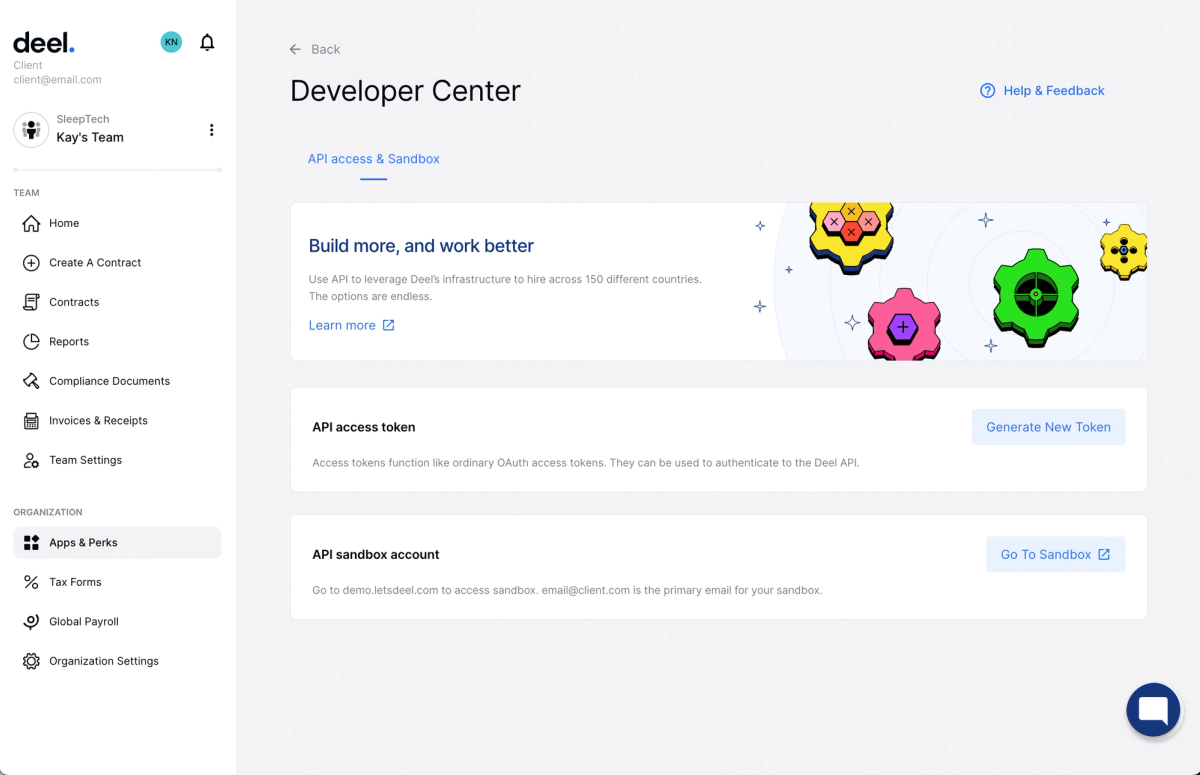
Deel is a global EOR and contractor platform covering 90-plus countries from one dashboard. For India, Deel runs as one market inside a very large global footprint.
It is a strong fit when India is part of a wider multi-country plan. It is a weaker fit when India depth is the whole point, which is why buyers often shortlist a focused Deel alternative for India before deciding.
🛠️ Core Services
Global EOR across 90-plus countries.
Contractor management and global payments.
Multi-country payroll consolidation.
Compliance document automation and contract generation.
Integrations with common HR and finance tools.
💡 Why Companies Consider Deel
The pull is consolidation. One tool for contractors, EOR employees, and payments is genuinely useful when you hire in five places at once. Founders pick Deel for breadth and a polished interface.
Deel also carries the deepest review base in this set. Capterra India lists it at 4.8 out of 5 across 4,260 reviews, more verified proof than any other India-capable alternative here.
⚠️ Where the Friction Shows Up
The friction lands in support and fees. Reviewers describe service that loops between agents, plus transfer and FX costs that surprise people at month-end.
For India specifically, your professional tax question sits in the same queue as every other country. I have watched that queue collide with a fixed 25th-of-the-month payroll date more than once, which is exactly the gap our managed payroll desk exists to close.
🎯 Ideal Customer Profile
Companies hiring across multiple countries at once.
Teams managing a large global contractor base.
Buyers who value one platform over deep single-country specialism.
Decision maker: VP People or Head of Global Operations.
💰 Commercial Model
Third-party and user reports place Deel EOR pricing around $599 per employee per month, with additional transfer and FX fees flagged by reviewers. Confirm a current quote directly, since pricing varies by country and plan.
⭐ Customer Reviews
"Often the CS doesn't seem to have answers, which leads me to emails back and forth on my case which don't always answer the question, and something I was looking for the answer to in 20 minutes becomes a 4 day process, or needs to be consulted with by multiple team members who aren't available except for at 3:00am my time."
— Verified User in Computer Software, Deel G2 Verified Review
"Easy setup, handy transfers, but pricey. I dislike how expensive Deel's transaction fees are, especially when moving money from the Deel account to my bank."
— Maria M., Deel G2 Verified Review
To be fair to Deel, the platform is reliable and easy to navigate, and the contractor experience is smooth. The repeated complaint is support depth and fee clarity, not the core product.
2. Remote: Best for Companies Wanting an Owned-Entity Global EOR
🏢 Overview
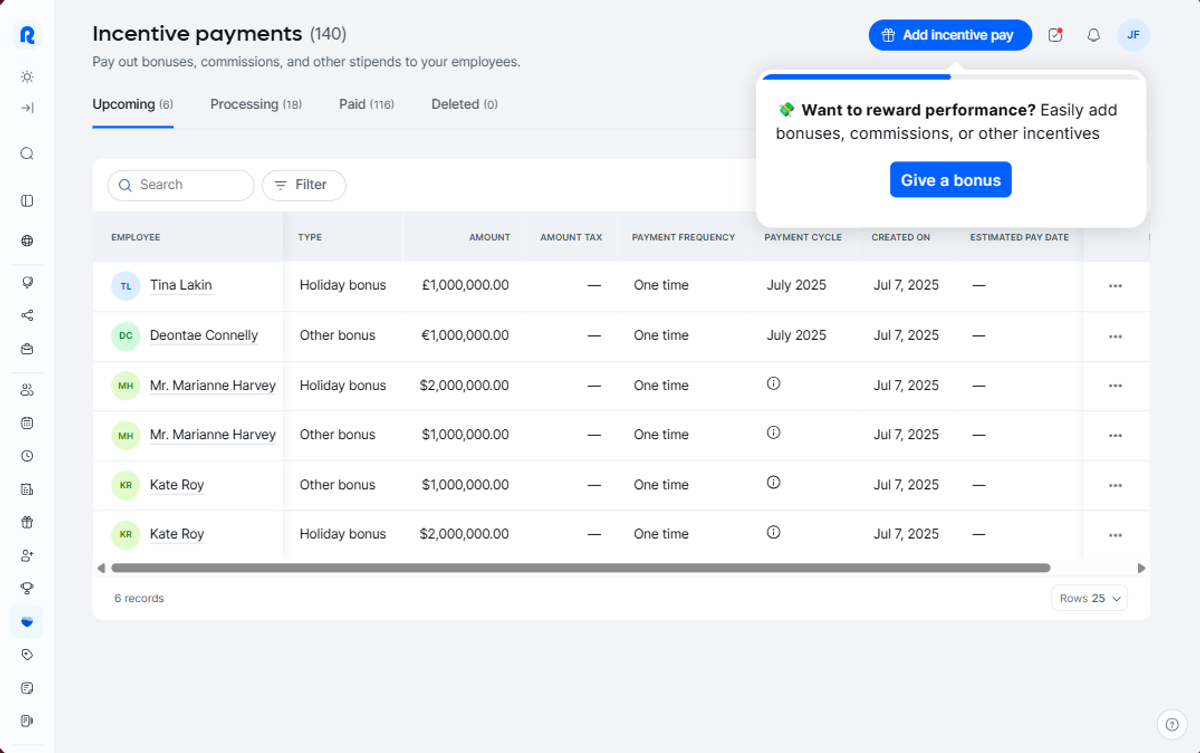
Remote is a global EOR built on owned entities in many of its markets, with a clean, structured product. Like Deel, it treats India as one country among many.
It appeals to teams that want owned-entity coverage worldwide rather than India-only depth. That is a real architectural advantage over partner-shell models, and worth saying plainly, though India-heavy teams still weigh a dedicated Remote alternative for India.
🛠️ Core Services
Owned-entity global EOR across many countries.
Global payroll and benefits administration.
Contractor management.
IP and invoice handling for cross-border teams.
Self-serve HR platform with a single login.
💡 Why Companies Consider Remote
Buyers like that Remote owns many of its entities instead of routing everything through partners. The all-in-one structure removes standalone tools and multiple logins, which suits lean HR teams.
The recurring concern is support speed and payroll accuracy. Multiple reviewers report a multi-day email SLA and onboarding that drags past two weeks.
⚠️ The India-Specific Risk
India payroll runs on fixed dates that do not move. TDS is deposited by the 7th of the following month, and PF challans are filed monthly through EPFO.
A three-day email SLA against a hard statutory date is a timing problem, not a service preference. What surfaces in Versatile Club's client onboarding calls is that switchers rarely leave over price; they leave over a filing that slipped while a ticket sat open, and you can see the alternative sequence on our how it works page.
🎯 Ideal Customer Profile
Companies wanting owned-entity EOR across several countries.
HR teams consolidating tools into one platform.
Buyers who prioritise global structure over single-country depth.
Decision maker: People Ops lead at a Series B to Series D company.
💰 Commercial Model
Third-party reports place Remote EOR pricing around $599 per employee per month, before benefits and add-ons. Reviewers also flag FX and hidden-fee concerns, so ask for an itemised quote that separates the platform fee from FX, then compare it against our published India EOR pricing.
⭐ Customer Reviews
"They were dishonest about the level of support provided. We specifically explained we required phone-level support for urgent matters, but that is not available. Instead they have email support with a 3-day SLA. Responses are unacceptably slow. Separately, their payroll is still supported by manual processes, and twice we've had near catastrophic errors."
— Juliette D., Remote G2 Verified Review
"I like the all-in-one structure of Remote because it allows me to get rid of standalone products that confused my employee population and required multiple logins for HR work."
— Juliette D., Remote G2 Verified Review
The balanced view matters here. The same reviewer who flagged slow support still valued the all-in-one platform. The trade-off is reachability when something urgent breaks two days before payday, and the EOR vs entity calculator is the fastest way to pressure-test whether that trade-off is worth it at your headcount.
3. Versatile Club: Best for US and UK Companies Making Their First 1 to 30 India Hires
🏢 Overview
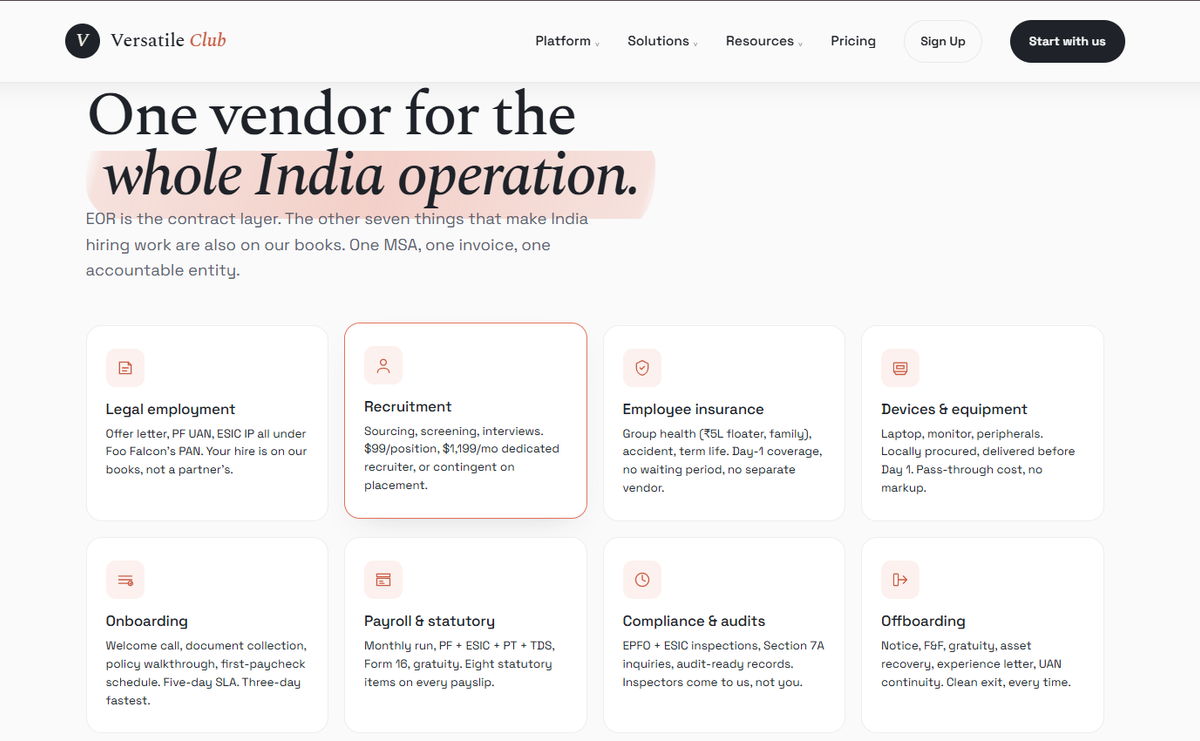
Versatile Club is an India-only Employer of Record (EOR) and Contract-to-Hire (C2H) operator. It became the legal employer in India through its own registered entity, and we started in C2H, so the compliance muscle came first.
You manage the person day to day. Contracts, payroll, and every statutory filing run under our own PF, ESI, and professional tax registrations.
🛠️ Core Services
India EOR through an owned entity, not a local partner shell.
Contract-to-Hire placements with culture-fit vetting on 50 behavioural parameters.
Full statutory compliance: PF, ESI, TDS, professional tax, gratuity, and Form 16.
USD invoicing direct from India, with no FX markup and no setup or exit fee.
90-day Success Coach and a 6-month replacement guarantee on C2H placements.
💡 Why Companies Consider Versatile Club
Most buyers land here after one of two dead ends. Setting up your own Indian subsidiary takes months and tens of thousands in legal fees. A global generalist treats India as one of 150 countries and answers through a ticket queue.
Versatile Club fits the founder who wants the hire made, paid, and legal, then wants to forget the back office. The 5-day contractual onboarding SLA is a commitment, not an aspiration, and the full sequence sits on our how it works page.
⚠️ Where I Will Name Our Own Limits
Versatile Club operates only in India by design. If you need five or more countries on one contract, we are not your provider.
Full-custom enterprise procurement workflows also take longer than our 5-day SLA. That India-only focus is a feature for a first hire and a gap for a multi-country rollout.
🎯 Ideal Customer Profile
US and UK founders and People Ops leaders hiring 1 to 30 people in India.
Seed to Series B startups building engineering, design, or ops teams.
India team size of 1 to 30, typically in Bengaluru, Hyderabad, or Pune.
Decision maker: founder, VP People, or CFO closing month-end on one USD invoice.
💰 Commercial Model
EOR pricing starts at $149 per employee per month, with no setup fee, no exit fee, and the first month free. C2H placements are charged at 20 to 30 percent of annual salary, billed only after the hire completes day 90. Invoicing is in USD, direct from our Indian entity, with no FX markup.
⭐ Customer Reviews
"We used Versatile to hire our first employee in India after months of putting it off because the compliance side seemed like a mess. They replied to our form in about four hours with a draft offer letter already attached. The hire was onboarded in four days. USD invoice landed clean, no FX markup, no setup fee, no surprises."
— Verified User in Information Technology and Services, Versatile Club G2 Verified Review
"The dashboard could be a little more self-serve. A couple of times I wanted to pull a report or a doc myself and ended up just messaging my contact instead. They always answered fast, so it wasn't a real problem, but I'd love to click around and find things on my own. Small thing."
— Angad S., Versatile Club G2 Verified Review
The honest read: our self-serve dashboard is thinner than a Deel or a Rippling. We answer fast. If you want to pull your own reports at midnight, that is a real gap we are still closing.
4. Multiplier: Best for Cost-Sensitive Startups Hiring Across Several Countries
🏢 Overview
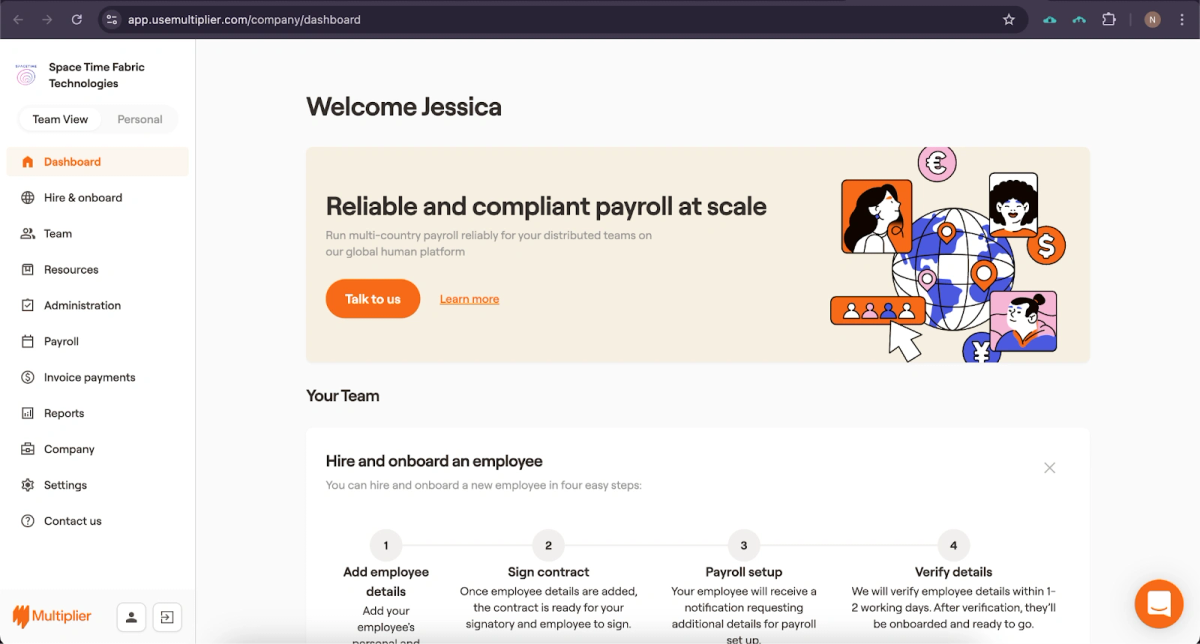
Multiplier is a global EOR and payroll platform aimed at startups hiring across multiple countries at once. It competes mainly on price and fast initial onboarding.
For India, it operates as one market inside a broad footprint, often through a partner-led model. That makes an India-native Multiplier alternative worth a look for India-heavy teams.
🛠️ Core Services
Global EOR across many countries.
Contractor management and global payments.
Multi-country payroll and benefits.
Compliant contract generation.
Self-serve onboarding dashboard.
💡 Why Companies Consider Multiplier
The draw is cost. For a seed-stage team putting people in four countries on a tight runway, a lower per-employee fee matters. The initial sign-up also feels quick.
The trade-off shows up later. Reviewers report billing surprises and support that slows once you are past onboarding.
⚠️ The India Timing Risk
India payroll dates do not move. TDS is deposited by the 7th of the following month, and PF challans are filed monthly through EPFO.
A professional tax or PF question sitting behind a queue is a filing risk, not a service annoyance. What surfaces in Versatile Club's switcher conversations is that price-led buyers usually re-evaluate at their first missed challan, not their first invoice, which is the exact failure mode our managed payroll calendar is built around.
🎯 Ideal Customer Profile
Cost-sensitive seed to Series A startups.
Teams hiring small numbers across several countries.
India team size of 1 to 10, alongside other markets.
Decision maker: founder or ops generalist owning vendor cost.
💰 Commercial Model
Third-party reports place Multiplier EOR pricing around $400 per employee per month, though plans and country pricing vary. Confirm an itemised quote, since reviewers flag billing clarity as a watch item.
5. Globalization Partners (G-P): Best for Enterprises Needing Mature, Broad Coverage
🏢 Overview
Globalization Partners (G-P) is one of the longest-established global EOR providers, with owned entities across a wide set of countries. It is built for larger organisations that value a mature, enterprise-grade footprint.
India is one market inside that global model. Enterprises building India teams still benchmark it against a local specialist.
🛠️ Core Services
Owned-entity global EOR across many countries.
Global payroll and benefits administration.
Compliance and contract management at enterprise scale.
IP protection and cross-border employment handling.
Enterprise integrations and reporting.
💡 Why Companies Consider G-P
The pull is maturity and breadth. Enterprises hiring in 20-plus countries want a long track record and owned entities, and G-P fits that procurement profile.
If your procurement gate is SOC 2 or ISO 27001 on a 100-plus India team, this is the lane to evaluate. That scenario sits outside Versatile Club's stated anti-ICP, so I will point you at the certified generalists instead.
⚠️ The India Depth Limitation
The limitation for this article's reader is India depth. State professional tax cadence differs by state, and Maharashtra alone needs dual PTRC and PTEC registration.
A global generalist treats that as a checkbox. The Code on Wages 2019 commenced on 21 November 2025, and re-basing CTCs to Basic plus DA of at least 50 percent is hands-on work, not a policy update, as our India compliance scope sets out.
🎯 Ideal Customer Profile
Enterprises hiring across many countries simultaneously.
Procurement teams needing a long-established vendor.
India team size of 50-plus alongside 20-plus other markets.
Decision maker: CHRO, global mobility lead, or procurement.
💰 Commercial Model
G-P typically prices EOR as a percentage of salary, commonly cited around 15 percent of annual salary, on annual contracts. Pricing is not fully public, so treat this as a custom quote and confirm directly.
6. Velocity Global (now Pebl): Best for Mid-Market Teams Scaling a Distributed Workforce
🏢 Overview
Velocity Global, now branded Pebl, is a global EOR serving mid-market teams scaling distributed workforces. It offers wide country reach through an account-manager support model.
For India, it is a global generalist rather than a local specialist. Teams often compare it to dedicated India EOR services.
🛠️ Core Services
Global EOR across a wide country set.
Global payroll and benefits administration.
Account-manager-led onboarding.
Contractor and cross-border employment handling.
Payslip and document portal.
💡 Why Companies Consider Velocity Global
The appeal is reach for a scaling mid-market team that wants one global partner. Some reviewers report professional, well-structured onboarding when the account manager is engaged.
The recurring risk is consistency. Reviewers describe account-manager churn and manual, email-driven processes.
⚠️ The Exit Tail Nobody Checks in a Demo
The India-specific gap sits at offboarding, not onboarding. PF transfer after an employee exits is where partner-shell models tend to stall.
Buyers stress-test onboarding speed in the sales cycle and almost never test the exit path. Versatile Club's read is that the standard vendor checklist gets this backwards, because a stuck PF transfer surfaces 18 months after you signed.
🎯 Ideal Customer Profile
Mid-market teams scaling across many countries.
Companies wanting one global EOR relationship.
India team size of 20 to 100 within a wider global footprint.
Decision maker: VP People or Director of Global HR Operations.
💰 Commercial Model
Velocity Global pricing is not publicly disclosed and is provided as a custom quote. Reviewers note higher-than-average fees relative to the support received.
⭐ Customer Reviews
"The PF transfer for employees after terminating their employment with Velocity was very poor. There was limited help, delayed responses, and you can't get them to talk to you on phone. This is disappointing as they charged heavily per employee and the backend HR services they provide is extremely poor."
— Verified User in Computer Software, Velocity Global G2 Verified Review
"I really appreciated the professionalism, responsiveness, and efficiency of the Velocity Global team throughout the hiring and onboarding process. Everything was very well structured, and I felt supported at every stage."
— Verified User in Information Technology and Services, Velocity Global G2 Verified Review
The balanced read: when onboarding goes well, reviewers are happy. The India concern is the exit tail, which is precisely where state-level depth matters.
How to Choose the Right Fit for Your Stage
✅ Match the Provider to Your Headcount, Not the Dashboard
The honest answer depends on where you sit. Here is how the six sort by stage.
First 1 to 3 India hires (US or UK founder). Pick an India specialist for depth, USD invoicing, and named-human support.
Scaling 10 to 50 across many countries (People Ops). Deel, Remote, or G-P earn a real look when India is one of several markets.
Enterprise 100-plus India team gating on SOC 2 or ISO 27001. Evaluate the certified enterprise generalists.
Cost is the binding constraint across four markets. Multiplier's lower fee is a legitimate call, with billing clarity as the thing to verify.
💰 The Question I Would Ask on Monday
Ask every shortlisted vendor one question. Do you file PF, ESI, TDS, and professional tax under your own registrations, or a partner's?
The answer sorts the list faster than any pricing page. Versatile Club's data points one way here, though I might be reading it too strongly, since our sample skews toward switchers who already felt that gap. If you want to test the maths at your own headcount, the EOR vs entity calculator is the fastest route.
Versatile Club files PF, ESI, TDS, and professional tax under its own Indian registrations across all 28 states, including Maharashtra's dual PTRC and PTEC monthly slab. When the 50 percent wage rule commenced on 21 November 2025, we re-modelled affected client CTCs in-house rather than sending clients a policy PDF.
Q2. Why Are Companies Leaving Rippling for India Hiring, and When Should You Stay?
Companies leave Rippling for India over three gaps: price (an unpublished India EOR rate estimated near $500 to $600 per employee monthly), compliance depth (global rails that do not natively handle state professional tax or the 50 percent wage rule), and support (chatbot-first, five-day ticket response). Stay with Rippling if HR, IT, device management, and app provisioning in one system matters more than India statutory depth.
💸 The Shiny-UI Trap
Rippling is a genuinely good product for what it was built for. The problem starts with a quieter question.
Am I paying $600 a month for a clean dashboard while my actual entity risk sits somewhere I cannot see? That question gets sharper right before a funding round.
You can run with scissors on a generalist for a while. Then diligence arrives, and a slick interface does not produce an audit-ready PF challan trail.
⚠️ The Compliance Depth Gap
Professional tax (PT) is a state levy, not a national filing. A platform built on country-level rails treats it as a checkbox, which is why buyers start comparing a dedicated India EOR service at this point.
Rippling's own reviewers describe what happens when that gap meets a real registration.
"Support is the single biggest failure. There is no direct phone line. You either email or use a chatbot, and you can ask both the same question and get two different wrong answers. Our sales rep told us Rippling could handle a state-level tax registration for us. It wasn't true."
— Erika D., Rippling G2 Verified Review
⏰ The Support Void
India payroll dates do not move. When something breaks two days out, a five-day ticket SLA is not support. It is a countdown.
"During a payroll emergency, I was told it would take five days to get a response, which wasn't helpful for something that needed immediate attention. If you encounter a problem, you're often directed to a chatbot or another article."
— Moniek P., Rippling G2 Verified Review
What surfaces in Versatile Club's switcher calls is that almost nobody leaves over the invoice. They leave after one filing slipped while a ticket sat open, which is the whole reason our support model puts a named human on the account from day one.
💰 The CFO's Reconciliation Problem
The finance objection is separate from the HR one. A fragmented India vendor stack produces non-consolidated invoices that nobody can reconcile at close.
Three costs hide inside that mess: FX markup buried in contractor payment flows, benefits billed separately, and last-minute audit scrambles on PF, ESI, and gratuity. Versatile Club invoices in USD directly from its Indian entity as one line item, which is the specific problem that solves, and the full rate card sits on our pricing page.
✅ When Rippling Is Still the Right Call
I will not pretend the answer is always "switch." Rippling wins on real ground.
Unified HR, IT, and device management. Nobody in the India EOR specialist category matches app provisioning and laptop control in one system.
US-heavy headcount with India as a small satellite. If 90 percent of your team is stateside, India depth is not your binding constraint.
Self-serve reporting at midnight. Specialists, including Versatile Club, run thinner dashboards, and our own G2 reviewers say so.
The switch only makes sense when India stops being a satellite and becomes a real team. That is usually somewhere between hire three and hire ten.
Versatile Club exists for the opposite trade-off from a global platform. When a US founder messaged three days before payroll asking why a PF challan had not landed, the answer came from me on WhatsApp, not from a queue.
Q3. How Deep Is Each Provider's India Statutory Compliance Under the 2025-26 Labour Codes, DPDP Rules, and Income-tax Act 2025?
Real depth means PF and ESI under your provider's own registrations, TDS deposited by the 7th monthly, gratuity accrued at 4.81 percent of Basic plus DA from month one, and Basic plus DA at least 50 percent of CTC under the Code on Wages 2019, effective 21 November 2025. From 1 April 2026, Form 16 becomes Form 130, Form 16A becomes 131, and Form 24Q becomes 138.
📐 The 50 Percent Wage Rule, In Plain Terms
All four Labour Codes commenced on 21 November 2025 through MoLE Gazette notification S.O. 5322(E). The Code on Wages sets one simple test.
Your "wages" (Basic pay plus dearness allowance, or DA) must be at least 50 percent of total cost to company (CTC). Many India CTCs were built with low Basic and high allowances to shrink PF.
Flip Basic up to 50 percent and PF, ESI, and gratuity all rise together. Expect a 5 to 15 percent statutory cost lift on affected salaries, which you can model against our published India compliance scope.
💰 The Federal Stack and Its Hard Dates
These are deadlines, not guidelines. Provident Fund (PF) runs at 12 percent of Basic plus DA from the employer, matched by the employee.
| Item | Rate | Timing |
|---|---|---|
| PF (employer match, EPFO) | 12% of Basic plus DA | Monthly challan |
| ESI (employer / employee) | 3.25% / 0.75% | Monthly, eligible wages |
| Gratuity accrual | 4.81% of Basic plus DA | From month one |
| TDS (tax deducted at source) | Per income slab | Deposited by the 7th |
Ask Versatile Club to show a live monthly challan trail rather than a compliance page. That is the one artefact a partner-shell model struggles to produce on request, and it is standard output from our managed payroll cycle.
📄 The 2026 Form Swap Nobody Else Covers
The Income-tax Act 2025 renumbers the forms your India employees actually receive. Sections 392, 393, 395, and 397 replace the legacy TDS sections, read with the Income-tax Rules 2026.
| Old form | New form | Rule | Deadline |
|---|---|---|---|
| Form 16 (salary certificate) | Form 130 | Rule 215(1) | 15 June |
| Form 16A | Form 131 | Rule 215 | Quarterly |
| Form 24Q (TDS return) | Form 138 | Section 397 | Quarterly |
Ask every shortlisted vendor for a sample Form 130 and Form 138. Almost every competing article still says Form 16, which tells you how current their India desk is.
🔐 The DPDP Vendor Clause Checklist
MeitY notified the Digital Personal Data Protection Rules 2025 on 13 November 2025 through G.S.R. 846(E), under section 40 of the DPDP Act 2023. Payroll touches Aadhaar, PAN, and bank data, so your EOR is handling sensitive personal data.
The timeline is phased, which buys you preparation room, not a pass:
Rules 1, 2, and 17 to 21 are in force from 13 November 2025.
Consent Manager registration applies from 13 November 2026.
Core obligations begin 13 May 2027.
Put four things in the contract: itemised consent language, a breach-notification window, a named Data Protection Officer, and a data-deletion commitment on exit.
⏰ Two 2026 Operational Changes
EPFO moved to a summary-only electronic challan-cum-return (ECR) format in March 2026, which changes how monthly PF data is submitted. The MoLE Additional FAQs of 16 March 2026 also confirm a 48-hour full-and-final settlement expectation on exit.
Versatile Club re-modelled affected client CTCs in-house when the 50 percent wage rule commenced, and files PF, ESI, TDS, and professional tax under its own registrations. Three questions to carry into every vendor call: who files, in which states, and how did you handle 21 November 2025?
Q4. Which Indian States Does Your Provider Actually Cover for Professional Tax and Labour Welfare Fund?
Professional tax is a state levy under Article 276 of the Constitution of India, capped at Rs 2,500 per year, and applies in roughly 19 to 22 states plus one union territory. Versatile Club files professional tax under its own registrations across all 28 states. Delhi, Haryana, Rajasthan, and Uttarakhand levy none.
🗺️ Why Country-Level Rails Break Here
Professional tax (PT) is not one national filing. Each state sets its own slab, cadence, and registration path.
A global platform models India as a single country object. That works until you hire your second engineer in a second state.
Labour Welfare Fund (LWF) sits on top, with its own state-specific cycle. Shops and Establishments (S and E) registration adds a third layer.
📋 The State Matrix Your Vendor Should Already Have
| State | PT cadence | Registration quirk | Extra filing |
|---|---|---|---|
| Maharashtra | Monthly slab, annual return | Dual PTRC and PTEC required | LWF twice yearly |
| Karnataka | Monthly | Enrollment within 30 days of joining | S and E renewal |
| Tamil Nadu | Biannual (June, December) | Local body registration | LWF contributions |
| Telangana | Monthly | PTRC enrollment required | S and E filing |
| West Bengal | Monthly | Frequent rule changes | State-specific leave calculations |
| Delhi | None | No PT levy | Strict S and E compliance |
Maharashtra is the clearest test. PTRC covers your employees, PTEC covers the entity, and missing either one breaks the filing.
⚠️ Where the Six Providers Actually Stand
State coverage is the cleanest way to separate India depth from India presence.
| Provider | Reported PT state coverage |
|---|---|
| Versatile Club | All 28 states |
| Deel | Top 6 states |
| Remote | Top 4 states |
| Multiplier | Partner-led, varies |
| Globalization Partners | Partner-led, varies |
| Velocity Global | Partner-led, varies |
Versatile Club's read is that the standard vendor checklist gets this backwards. Buyers ask "do you support India" when the useful question is "which states are you registered in," and a focused Deel alternative for India should answer that in one message.
✅ What to Do Before You Sign
Build a headcount-by-state register, not a headcount-by-country one. It takes twenty minutes, and it changes the vendor conversation completely.
List every India hire you plan in the next 12 months, with city and state.
Mark PT cadence, LWF applicability, and S and E jurisdiction per state.
Ask each vendor for its PT registration certificate number in those exact states.
Ask who files when you add a state the vendor has never touched.
Our knowledge of Maharashtra's dual PTRC and PTEC, Karnataka's 30-day enrollment window, Tamil Nadu's June and December cycle, and West Bengal's shifting rules came from running real contract-to-hire payroll in those states. This is not bolted-on India knowledge, because India is the only country Versatile Club operates in.
Versatile Club holds PF, ESI, and Shops and Establishments registrations across all 28 states and 8 union territories, and files each employee's professional tax in their own state. That footprint is the reason a Pune hire and a Chennai hire do not need two vendors, and the EOR vs entity calculator shows what that consolidation is worth at your headcount.
Q5. What Does Each Rippling Alternative Actually Cost in India, and Where Do Hidden FX Markups Live?
Global generalists run roughly $199 to $599 per employee monthly, with Rippling's unpublished India rate estimated near $500 to $600, usually plus FX conversion, setup, and exit fees. Versatile Club charges from $149 per employee monthly, invoiced in USD direct from its Indian entity with no FX layer. On a senior Bengaluru engineer, all-in arbitrage versus San Francisco reaches about $162,000 per year.
💰 The Price Bands, Bottom Line Up Front
Here is the honest spread. Rippling sits near the top of the global band for India, and it does not publish that rate.
| Provider | India per employee/mo | FX exposure | Setup / exit fees | First month |
|---|---|---|---|---|
| Versatile Club | from $149 | None (USD from India) | None / None | Free |
| Deel | ~$599 | Yes (transfer plus FX) | Varies | No |
| Remote | ~$599 | Yes | Varies | No |
| Multiplier | ~$400 | Yes | Varies | No |
| G-P | ~15% of salary | Yes | Custom | No |
| Rippling (India EOR) | ~$500 to $600 (est.) | Yes | Unpublished | No |
💸 Where the Hidden Costs Actually Live
The sticker price is rarely the real price. Three line items quietly inflate the total.
FX markup lands on every single payout. Reported spreads run 3 to 5 percent at Deel and 2 to 10 percent across the wider category. Setup and exit fees and separately billed benefits do the rest.
Deel's own users flag the fee layer directly, not the product, which is why India-heavy teams price a Deel alternative line by line.
"Easy setup, handy transfers, but pricey. I dislike how expensive Deel's transaction fees are, especially when moving money from the Deel account to my bank."
— Maria M., Deel G2 Verified Review
⚠️ Do the Markup Math Before You Sign
A 3 percent FX markup on a ₹30 lakh salary is not a rounding error. It is roughly $1,000 a year, per employee, invisible on the invoice.
Versatile Club prices at mid-market rate with no markup, which is a claim you should test rather than trust. Ask any vendor to state its FX spread in writing, then compare it against the rate on the day and against our published India EOR pricing.
📈 This Is Talent Arbitrage, Not Cheap Labour
I want to be precise on language. Hiring in India is not about cheap labour.
A senior engineer in San Francisco runs about $220,000 all-in per year. The Bengaluru equivalent via EOR runs about $58,000, a gap near $162,000 that funds runway, not corner-cutting. You can model your own bands with the salary calculator.
Dan Scheinman of Cisco Systems put the arc better than I can: "We came to India for the costs, we stayed for the quality, and now we're investing for the innovation."
✅ The Month-End Close Payoff
The CFO test is simpler than the HR test. Can one person reconcile the India line without a currency-conversion guessing game?
Versatile Club issues one USD invoice from its Indian entity, with gross, deductions, net, and challan confirmations attached. Our own reviewers describe that as the part that removed the surprise, and the mechanics sit inside our managed payroll cycle.
"Invoicing in USD meant zero exchange rate surprises. The compliance rigour is genuinely impressive, every statutory filing reviewed before submission."
— Vedant T., Versatile Club G2 Verified Review
Where my head is right now is this. Within two years, opaque FX-padded pricing becomes the thing CFOs screenshot and reject in a vendor review.
Versatile Club charges no setup fee, no exit fee, and gives the first month free, so the switching cost is the thing we removed first. If your current invoice has a line you cannot explain to your auditor, send it to me and I will tell you what it is.
Q6. Who Actually Files Your PF Challan and Who Answers at 9pm IST?
Most global EOR providers, including Deel, Remote, G-P, and Omnipresent, use local partner entities in India, inserting a middleman between you and the EPFO filing. Versatile Club is the legal employer through its own registered Indian entity, so filings run under its own PF, ESI, and professional tax registrations. Onboarding SLAs diverge sharply: Rippling 2 to 5 days, Versatile a contractual 5 days, Deel and Remote 7 to 14 days.
⚠️ The Aggregator Mechanic Nobody Puts on a Slide
Here is the part the category avoids saying. Most global platforms do not employ your India hire. A leased local entity does.
That inserts a third party into every filing, every contract execution, and every correction. You never see who actually submits your professional tax.
Versatile Club's read is that the standard vendor checklist gets this backwards. Buyers audit the dashboard and never audit the employer of record on the contract, which is the first thing our India EOR services put in writing.
❌ The Exit Tail Surfaces 18 Months Later
Onboarding gets stress-tested in the sales cycle. Offboarding never does.
Provident Fund (PF) transfer after an employee exits is where partner-shell models stall. One Velocity Global customer described exactly that.
"The PF transfer for employees after terminating their employment with Velocity was very poor. There was limited help, delayed responses, and you can't get them to talk to you on phone."
— Verified User in Computer Software, Velocity Global G2 Verified Review
⏰ Onboarding SLAs, Side by Side
Speed claims are easy. Contractual speed claims are not.
| Provider | Reported onboarding window | Commitment type |
|---|---|---|
| Versatile Club | 5 days | Contractual SLA |
| Rippling | 2 to 5 days | Stated guideline |
| Deel | 7 to 14 days | Stated guideline |
| Remote | 10 to 14 days | Stated guideline |
Ask which of those numbers survives a contract redline. That question separates a marketing figure from a service level, and our onboarding sequence shows what the five days actually cover.
🕐 4pm Her Time, Two Days Before Payday
Picture a People Ops lead at a Series A startup. A PF deduction on a Bengaluru engineer's payslip looks wrong.
She needs one answer from one person who knows her account. Instead she opens a chatbot, then a ticket, then waits across a 12-hour time gap.
"During a payroll emergency, I was told it would take five days to get a response, which wasn't helpful for something that needed immediate attention."
— Moniek P., Rippling G2 Verified Review
✅ A Named Human, Same Day
With Versatile Club, that message lands on WhatsApp and reaches me or a named HR contact who already owns the account. Not a CSM rotation. Not a ticket.
"Founder is just a call away. Extremely helpful in resolving all our queries. The process is super smooth to setup India EOR."
— surbhi m., Versatile Club G2 Verified Review
I will name the caveat plainly. This is sustainable at our current scale, and at some point it will have to change.
📋 The Verification Protocol
Three asks settle the question in one message each.
Send the EPFO establishment code my employee will sit under.
Send the professional tax registration certificate for their state.
Name the person who owns my account, with a guaranteed response time.
If a vendor cannot produce the first two, it is a reseller, not an employer.
Versatile Club files under its own EPFO and professional tax registrations, which is why those three artefacts arrive as documents rather than assurances, and the full scope sits on our compliance page. The question I keep sitting with is whether founder-direct support can scale without becoming the queue it replaced.
Q7. EOR, PEO, or Contractor: Which Model Is Legal in India, and When Do You Outgrow It?
US-style co-employment PEO does not legally exist under Indian labour law, so your real options are a contractor rail or an Employer of Record (EOR). Contractors carry misclassification and permanent establishment risk for ongoing supervised roles. Versatile Club runs contract-to-hire and EOR from one owned Indian entity, and most teams stay on an EOR until roughly 10 to 12 India hires.
🧩 Three Models, One That Does Not Exist Here
Let me define the terms plainly, because the vocabulary is imported and the law is not.
Contractor: the person invoices you directly. Fast to start, risky for ongoing supervised roles.
EOR: a local entity legally employs the person for you and files all statutory dues.
PEO (co-employment): the US model where you and a provider share employer liability.
"PEO India" is a marketing category with no Indian statutory home. The Code on Social Security 2020 and the Industrial Relations Code 2020 define one employer, not two.
⚠️ The Misclassification and PE Test
The contractor rail looks easy until an auditor asks who controls the work. Three facts decide it.
Do you set the hours, assign the daily tasks, and does the person report to your manager? If yes, that is an employee under Indian law, whatever the contract says, and a compliant contractor of record setup is the only clean way to hold that line.
Permanent establishment (PE) risk follows. A misclassified team can create a taxable presence in India, and once you do incorporate, FC-GPR filing under FEMA applies to the share allotment.
✅ Verification Is Not Optional
Industry checks suggest nearly 30 percent of India IT-sector resumes contain discrepancies. Background verification is table stakes for an ongoing hire, not a nice-to-have.
Versatile Club vets contract-to-hire candidates on 50 behavioural parameters before the offer, alongside document checks. Culture fit is not soft here, because a legally perfect hire who quits in month three still costs you a quarter.
📈 The 10 to 12 Hire Tipping Point
I will argue against my own revenue. Past roughly 12 India hires, the math usually favours your own subsidiary.
I have watched this pattern hold. Teams run on an EOR, hit about 10 to 12 people, open their own entity, and migrate everyone across. The EOR vs entity calculator shows where that line sits for your headcount.
Migration has three moving parts: employee consent to the transfer, PF account transfer through EPFO, and gratuity continuity so the 4.81 percent accrual does not reset. Versatile Club charges no exit fee, so leaving costs you paperwork, not a penalty.
🎯 The Hybrid Counter-Case
There is a second read worth taking seriously. Treat the EOR as a deliberate on-ramp to a Global Capability Centre (GCC).
First engineer live in days, full GCC by month six, then migrate. India now hosts 2,117 GCCs across 3,728 units, employing about 2.36 million professionals on USD 98.4 billion in revenue. That is not a side experiment anymore, and it is the path most of our enterprise India teams now plan around.
🤝 Management Is Classification Insurance
Compliance is the floor, not the ceiling. India scores 77 on power distance against 40 for the USA, so hierarchy shapes how status flows upward.
Never ask "are you on schedule." You will get yes every time.
Ask "where are we on the schedule," then ask to see the remaining work.
Send a written recap after every call, because polite hedging reads as agreement.
Do not email a junior engineer around their manager.
One founder I know took "it probably wouldn't cause a problem" at face value. The engineer was signalling the build was already late.
Versatile Club assigns a 90-day Success Coach and backs placements with a 6-month replacement guarantee, which is where those cultural moments get caught early. If price is your only reason for hiring in India, I would rather you did not, and I am happy to explain why on a call.
FAQs
What are the best Rippling alternatives for hiring in India in 2026?
We rank six providers by how well they handle India specifically, not by how many countries they cover. The shortlist is Deel, Remote, Versatile Club, Multiplier, Globalization Partners, and Velocity Global.
They split into two groups:
- Global generalists. Deel, Remote, G-P, Multiplier, and Velocity Global cover 90 to 185 countries and treat India as one market, often through leased local partner entities.
- India specialists. These own an Indian entity and file PF, ESI, TDS, and professional tax directly under their own registrations.
If India is one of five countries you are staffing at once, a generalist's breadth genuinely matters. If you are putting your first 1 to 30 people in India, depth wins: state professional tax coverage, USD invoicing, and a named human who answers before payroll closes.
Versatile Club sits in the second group, filing under its own Indian registrations across all 28 states with a contractual 5-day onboarding SLA. Our honest caveat is worth stating: if you need five or more countries on one contract, we are not your provider, and our self-serve dashboard is thinner than Rippling's. You can see the full ranked breakdown in our guide to India EOR services.
How much does Rippling cost for India EOR compared to alternatives?
Rippling does not publish an India EOR rate. Third-party and user reports place it near $500 to $600 per employee per month, and reviewers separately flag FX conversion plus setup and exit costs on top.
For context, the wider market lands like this:
- Deel and Remote: around $599 per employee per month.
- Multiplier: around $400 per employee per month.
- Globalization Partners: roughly 15 percent of annual salary, on annual contracts.
- India specialists: from around $149, invoiced in USD direct from an Indian entity.
The trap is the hidden layer, not the sticker price. FX markup lands on every payout, with reported spreads of 3 to 5 percent at Deel and 2 to 10 percent across the category. A 3 percent spread on a Rs 30 lakh salary is roughly $1,000 a year per employee, and it never appears as a line item.
Versatile Club charges from $149 per employee monthly at mid-market FX with no markup, no setup fee, no exit fee, and the first month free. Model your own numbers against our published India EOR pricing before you accept any quote.
Does Rippling handle Indian state professional tax and the 2025-26 Labour Codes?
Not natively at the state level, which is the most common reason teams switch. Professional tax (PT) is a state levy under Article 276 of the Constitution, capped at Rs 2,500 per year, and it applies in roughly 19 to 22 states plus one union territory. A platform built on country-level rails treats India as a single object.
The state detail is where it breaks:
- Maharashtra: dual PTRC and PTEC registration, monthly slab, annual return.
- Karnataka: monthly PT plus Shops and Establishments renewal, enrollment within 30 days of joining.
- Tamil Nadu: biannual PT in June and December, plus Labour Welfare Fund.
- Delhi: no PT levy, but strict Shops and Establishments compliance.
The federal layer moved too. All four Labour Codes commenced on 21 November 2025, so Basic plus dearness allowance must now be at least 50 percent of CTC, lifting PF, ESI, and gratuity cost by roughly 5 to 15 percent on affected salaries.
Versatile Club files PF, ESI, TDS, and professional tax under its own registrations across all 28 states and re-modelled affected client CTCs in-house when that rule landed. Our full scope is documented on our India compliance page.
Should we use an EOR, a PEO, or contractors to hire in India?
The standard advice gets this backwards. US-style co-employment PEO does not legally exist under Indian labour law, so PEO is off the table. The Code on Social Security 2020 and the Industrial Relations Code 2020 recognise one employer, not two.
That leaves two real options:
- Contractor rail. Fast to start, but high misclassification risk for ongoing supervised roles. If you set the hours, assign daily tasks, and the person reports to your manager, an auditor reads that as employment, with permanent establishment exposure attached.
- Employer of Record. A local entity legally employs the person for you and files every statutory due, which insulates you from PE risk while you scale.
Verification matters as much as structure. Industry checks suggest nearly 30 percent of India IT-sector resumes contain discrepancies, so background verification is table stakes for an ongoing hire.
Versatile Club runs contract-to-hire and EOR from one owned Indian entity, so a contractor can convert to a compliant employee without changing legal counterparties mid-engagement. If you need to hold the contractor line cleanly for now, start with a compliant contractor of record setup.
When should we move off an India EOR and open our own entity?
Around 10 to 12 India hires, in our experience. Past that point, per-head EOR fees usually exceed the annual cost of running an owned subsidiary, and the math flips.
The pattern is consistent. Teams run on an EOR, cross roughly a dozen people, incorporate, and migrate everyone across. Migration has three moving parts worth planning early:
- Employee consent to the transfer of employment.
- PF account transfer through EPFO, so service history follows the person.
- Gratuity continuity, so the 4.81 percent accrual does not reset to zero.
There is a second, equally valid read. Treat the EOR as a deliberate on-ramp to a Global Capability Centre: first engineer live in days, full GCC by month six, then migrate. India now hosts 2,117 GCCs across 3,728 units, employing about 2.36 million professionals, so this is no longer a fringe path.
Versatile Club charges no exit fee, so leaving costs you paperwork rather than a penalty, and we will hand over a clean migration instead of defending the headcount fee. Run your own numbers first with our EOR vs entity calculator.