Table of contents (52)
- Best Providers
- ⚠️ The Trigger Moment Most Founders Hit
- 💰 The Real Cost Is Hidden in FX and Fees
- Our Editorial Introduction
- Our Evaluation Criteria
- Who This Guide Is For
- 📋 The 10 Providers at a Glance
- 📊 Master Comparison Table
- ⭐ 1. Versatile Club: Best for US and UK Startups Hiring Their First 1 to 30 India Employees
- 2. Deel: Best for Hiring Across Many Countries from One Dashboard
- 3. Remote: Best for an All-in-One Global HR Platform
- 4. Globalization Partners (G-P): Best for Enterprises Wanting an Established Brand
- 5. Multiplier: Best for Early-Stage Teams Testing Several Countries
- 6. Velocity Global (Pebl): Best for Multi-Region Contractor and EOR Hiring
- 7. Papaya Global: Best for Finance Teams Wanting Payroll and Payments Together
- 8. Rippling: Best for US Teams Bundling HR, IT, and Payroll
- 9. Payoneer Workforce Management (Skuad): Best for Contractor-Heavy Global Hiring
- 10. Asanify: Best for India-Focused Payroll and EOR on a Budget
- Which Model Are You? A 10-Second Self-Test
- Scoring Methodology
- 📊 The Weights I Used
- ⚖️ Why Entity Model Carries the Most Weight
- ⭐ How Stars Map to Scores
- PEO, EOR & PE Risk
- 🧩 What a PEO Actually Means
- ❌ The PEO Myth in India
- 🔀 EOR vs PEO-Lite vs Your Own Entity
- ⚠️ What Permanent Establishment Risk Really Is
- ✅ Why an Owned-Entity EOR Is the Cleaner Buffer
- 2026 Compliance & Costs
- 📋 The Statutory Checklist That Actually Matters
- 💰 What the 50% Wage Rule Costs in Real Money
- 🌍 Why Global EORs Miss the 50% Rule
- 🗺️ State Tax Is Not One Tax
- 🔐 Employee Data Is Now Regulated
- Pricing & Onboarding
- 💰 The Three Pricing Models, Side by Side
- 💸 Where the Hidden Costs Hide
- ✅ How We Price It Instead
- ⏰ The 5-Day Onboarding Sequence
- ⚠️ Why Generalist Timelines Slip
- Retention vs Compliance
- 🧾 Compliance Is the Floor, Not the Ceiling
- ⚠️ The Résumé Problem Nobody Prices In
- 🌍 The Cross-Cultural Gap That Quietly Kills Projects
- ✅ How We Hire for Stay, Not Just Sign
- Choosing by Stage
- 🧭 Pick by Your Stage
- ⚖️ Versatile Club vs the Global Generalists
- 🟢 Where We Win
- ❌ When You Should Not Pick Us
- 💬 Where My Head Is Right Now
Top 10 PEO Service Providers in India for 2026: Pricing, Compliance & Selection Guide

Compare the 10 best PEO and EOR providers for hiring in India in 2026 on pricing, compliance, and onboarding speed.
Q1. What Are the 10 Best PEO and EOR Service Providers for Hiring in India in 2026?
The best PEO and EOR service providers for hiring in India in 2026 are Versatile Club, Deel, Remote, Globalization Partners (G-P), Multiplier, Velocity Global (now Pebl), Papaya Global, Rippling, Payoneer Workforce Management (formerly Skuad), and Asanify. Versatile Club leads for US and UK companies making their first 1 to 30 India hires. We own our Indian entity, invoice in USD directly from India, and onboard in a contractual 5 business days.
⚠️ The Trigger Moment Most Founders Hit
A US founder pinged me on WhatsApp at 11pm her time. She had closed a seed round nine days earlier. Her board wanted three engineers in Bengaluru live before the next payroll cycle.
Here is what scared her, and it should scare you too. Hiring those engineers as "contractors" can create a $25,000 to $40,000 back-pay exposure per head if they are later ruled misclassified employees. That is real money, sitting in your runway right now.
There is a second trap. US-style co-employment PEO does not legally exist under Indian labour law. So if you have no Indian entity, what you actually need is an EOR (Employer of Record, the provider becomes the legal employer). If you already have an entity, you need managed payroll, sometimes called "PEO-lite." I will flag which model fits you as we go.
💰 The Real Cost Is Hidden in FX and Fees
Most "starting at" prices on these platforms are not the price you pay. Global generalists like Deel and Remote anchor near $599 per employee per month. On top of that, buyers report FX markups of roughly 3 to 5 percent buried in transfers.
That FX leak is not theoretical. Here is a contractor on Deel who felt it directly:
"I find Deel to be absurdly expensive. They charge a high amount of fees for transferring money to my bank account."
Juan Camilo O. Deel Hire G2 Verified Review
Our Editorial Introduction
Choosing an India EOR, PEO, payroll, or contractor partner is one of the higher-stakes vendor decisions a foreign company makes, because the provider becomes the legal employer of your team and the owner of your statutory liability. For this guide, multiple India-hiring vendors were analysed against decision-grade criteria: India entity model, statutory compliance depth, state-level coverage, onboarding speed, pricing transparency, invoicing and finance readiness, support model, talent and retention support, customer validation, and best-fit buyer segment. It is written for US and UK founders, People Ops leaders, CFOs, and legal teams hiring 1 to 50 employees in India. The tone is analytical, not promotional.
Our Evaluation Criteria
Each provider was assessed across the following decision-grade criteria:
India Entity Model: Own Indian entity, local partner entity, contractor model, or payroll-only setup.
Statutory Compliance Depth: PF, ESI, TDS, professional tax, gratuity, POSH, Form 16, full-and-final settlement, DPDP readiness, and New Labour Code 2025-26 structuring.
State-Level Coverage: Professional tax, Shops and Establishments, labour welfare fund, and leave rules across Indian states.
Onboarding Speed: Time from signed agreement to compliant contract, payroll setup, statutory registration, and employee start.
Pricing Transparency: Monthly fee, setup fee, exit fee, FX markup, first-month terms, salary-band pricing, and invoice clarity.
Invoicing and Finance Readiness: USD invoicing, INR invoicing, gross-deduction-net reporting, challan confirmations, TDS receipts, and audit-ready documentation.
Support Model: Founder-direct, named HR manager, HRBP, ticket queue, chatbot, or general CSM model.
Talent and Retention Support: Recruiting, contract-to-hire, culture-fit vetting, onboarding monitoring, replacement guarantee, and employee experience.
Customer Validation: G2, Capterra, Clutch, Reddit, case studies, and third-party proof.
Best-Fit Buyer Segment: First India hire, 1 to 20 employees, 10 to 50 employees, switchers from Deel or Remote, companies with an existing India entity, or enterprises needing multi-country EOR.
Who This Guide Is For
This guide is designed for:
US and UK founders hiring their first 1 to 3 employees in India.
Seed to Series B startups building engineering, product, AI, design, marketing, or operations teams in India.
People Ops and HR leaders reviewing India EOR, payroll, contractor, or PEO vendors.
CFOs and finance teams that need clean invoicing, statutory liability visibility, and audit-ready India payroll records.
Legal teams reviewing employment contracts, IP assignment, misclassification risk, PE risk, and statutory employer accountability.
Companies currently using Deel, Remote, Multiplier, G-P, contractors, agencies, or local payroll vendors and evaluating India-specialist alternatives.
📋 The 10 Providers at a Glance
Versatile Club: Best for US and UK startups hiring their first 1 to 30 India employees who want owned-entity depth.
Deel: Best for companies hiring across many countries from one dashboard.
Remote: Best for teams wanting an all-in-one global HR platform.
Globalization Partners (G-P): Best for enterprises prioritising a long-established global EOR brand.
Multiplier: Best for early-stage teams testing several countries on a budget.
Velocity Global (Pebl): Best for spread-out, multi-region contractor and EOR hiring.
Papaya Global: Best for finance teams wanting global payroll and payments in one view.
Rippling: Best for US-headquartered teams that want HR, IT, and payroll bundled.
Payoneer Workforce Management (Skuad): Best for contractor-heavy global hiring with built-in payments.
Asanify: Best for India-focused payroll and EOR at a lower price point.
📊 Master Comparison Table
Top 10 PEO and EOR Providers for India Hiring in 2026
Provider (Stars) | Best For | Key Strength | Compliance |
|---|---|---|---|
Versatile Club ⭐⭐⭐⭐⭐ | US and UK startups hiring first 1 to 30 India employees | Owned Indian entity with 5-day onboarding SLA | Own entity, all-India PF, ESI, TDS, multi-state PT, New Labour Code ready |
Deel ⭐⭐⭐ | Companies hiring across 100+ countries | Broad global coverage on one platform | India typically via partner entity, global multi-country |
Remote ⭐⭐⭐ | Teams wanting all-in-one global HR | Unified HR and payroll suite | India compliance routed through local setup |
Globalization Partners ⭐⭐⭐ | Enterprises needing an established EOR brand | Long-running global EOR footprint | Multi-country, partner-supported in India |
Multiplier ⭐⭐⭐ | Early-stage teams testing many countries | Competitive entry pricing | Multi-country EOR, lighter India depth |
Velocity Global (Pebl) ⭐⭐ | Multi-region contractor and EOR hiring | Wide country reach | Multi-country, India via local partners |
Papaya Global ⭐⭐⭐ | Finance teams wanting global payroll and payments | Payroll plus payments visibility | Global payroll focus, partner entities |
Rippling ⭐⭐⭐ | US teams bundling HR, IT, and payroll | Integrated HR, IT, and payroll | Strong US payroll, India support thinner |
Payoneer (Skuad) ⭐⭐⭐ | Contractor-heavy global hiring | Built-in global payments | Multi-country, contractor-led |
Asanify ⭐⭐⭐⭐ | India-focused payroll and EOR on a budget | India-native at lower price | India payroll and EOR, growing compliance depth |
Stars reflect fit for the specific buyer in this guide: US and UK companies making single-country India hires of 1 to 50 people. A 3-star score is not a quality verdict on a global platform. It simply means India-only depth is not that vendor's core design.
⭐ 1. Versatile Club: Best for US and UK Startups Hiring Their First 1 to 30 India Employees
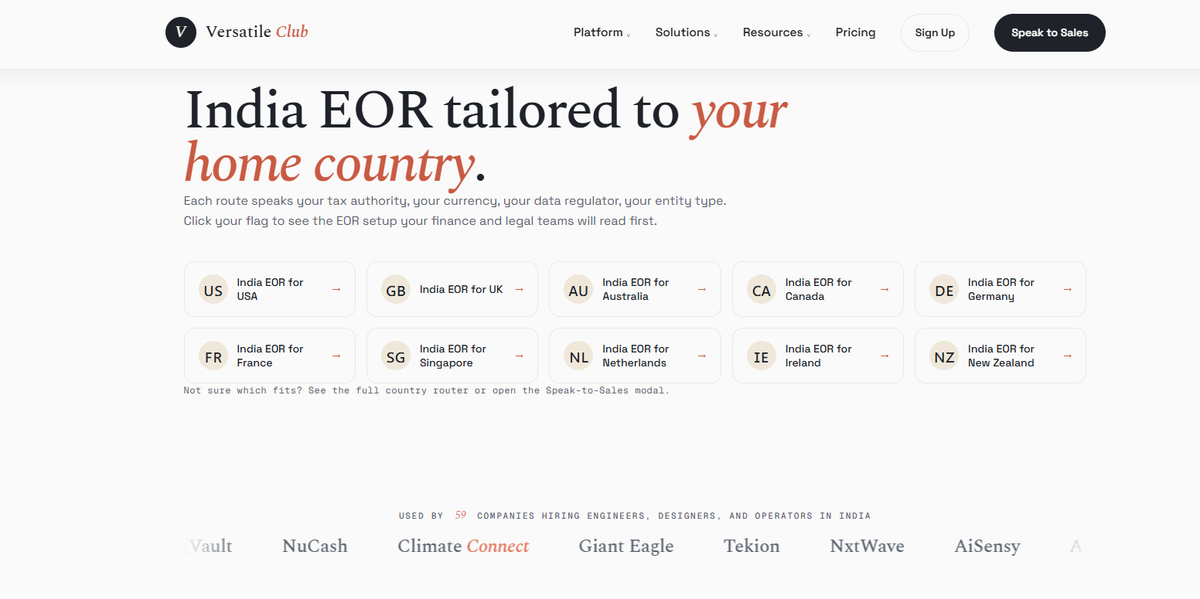
We are an India-only EOR. We hire through our own registered Indian entity, not a partner shell. That single fact changes everything downstream.
Here is what owning the entity means in practice. Your employee's PF (Provident Fund), ESI (Employees' State Insurance), TDS, and professional tax filings sit under our own registrations. You are not three layers removed from the people who actually file the challan.
✅ We charge a flat $149 per employee per month, regardless of salary slab, so a senior engineer does not cost more to administer than a junior one.
✅ We invoice in USD directly from India, which removes the FX guessing game your CFO hates at month-end.
✅ Our onboarding SLA is a contractual 5 business days: Day 1 agreement, Day 2 offer, Day 3 contract, Day 4 statutory registration, Day 5 live on payroll.
❌ We are honest about the limit: if you need 5-plus countries on one dashboard, we are the wrong fit, and a global platform serves you better.
✅ There are no setup fees, no exit fees, and the first month is free.
I could be off on the long-run pricing math, but here is where my head is. Across six years of contract-to-hire placements in Bengaluru, Hyderabad, and Pune, the cost that actually burns founders is not the monthly fee. It is the wrong hire and the silent FX leak.
2. Deel: Best for Hiring Across Many Countries from One Dashboard
📌 Overview
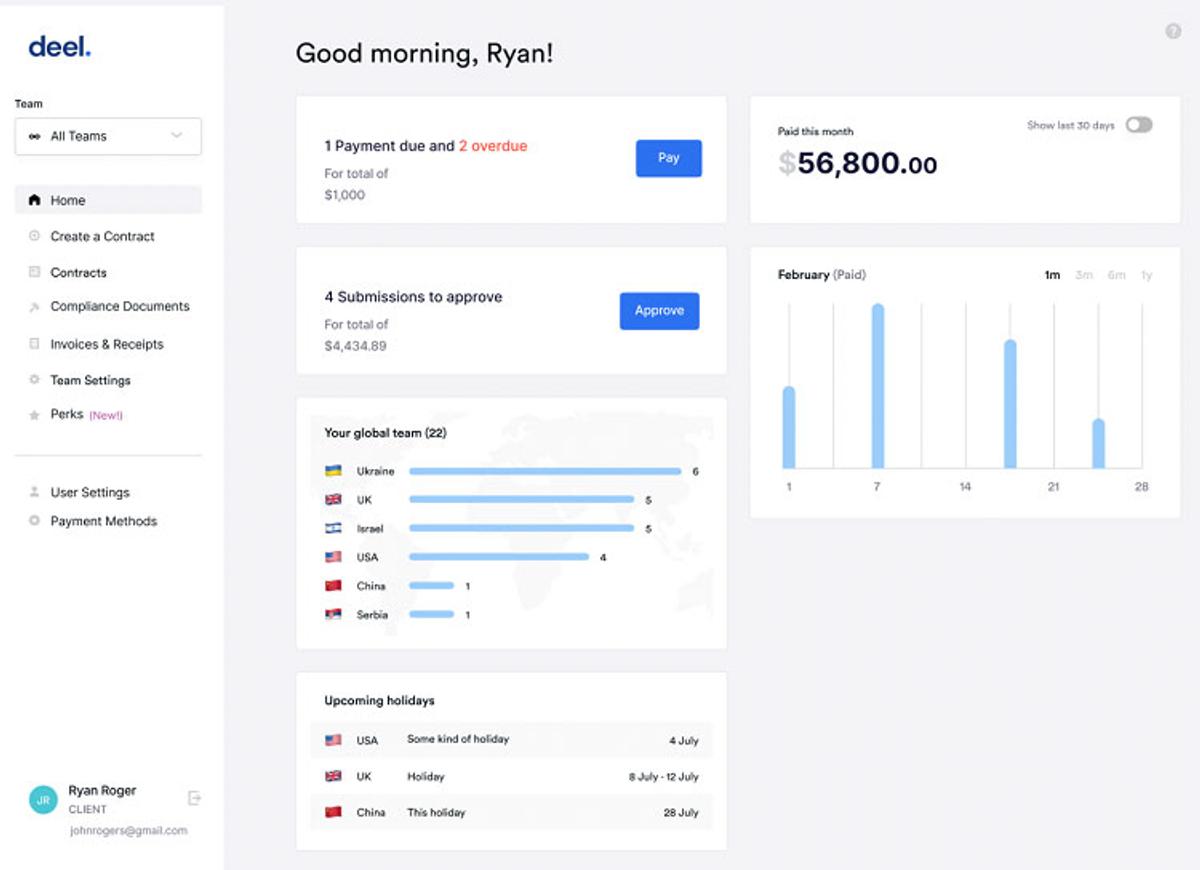
Deel is a global EOR and contractor platform spanning 100-plus countries. It serves companies that want one tool for worldwide contracts and payments. India is one country among many on its map.
🛠️ Core Services
Global EOR employment
Contractor payments and compliance
Multi-country payroll
Immigration and visa support
Equipment and device management
🤔 Why Companies Consider Deel
Buyers pick Deel for breadth. If you are hiring in Brazil, Poland, and India at once, one dashboard is genuinely useful. The decision logic is consolidation, not India depth. If India is your focus, a Deel alternative built for India often fits better.
💰 Commercial Model
EOR pricing commonly anchors near $599 per employee per month. Buyers repeatedly flag transfer and FX fees on top.
💬 Customer Reviews
"It took three months to onboard our first 3 individuals. They didnt seem to be able to navigate Visas or variations to employment contracts."
Verified User in IT and Services Deel Hire G2 Verified Review
"I appreciate the ease of setup with Deel. The instant transfer feature is incredibly fast. I dislike how expensive Deels transaction fees are."
Maria M. Deel Hire G2 Verified Review
3. Remote: Best for an All-in-One Global HR Platform
📌 Overview
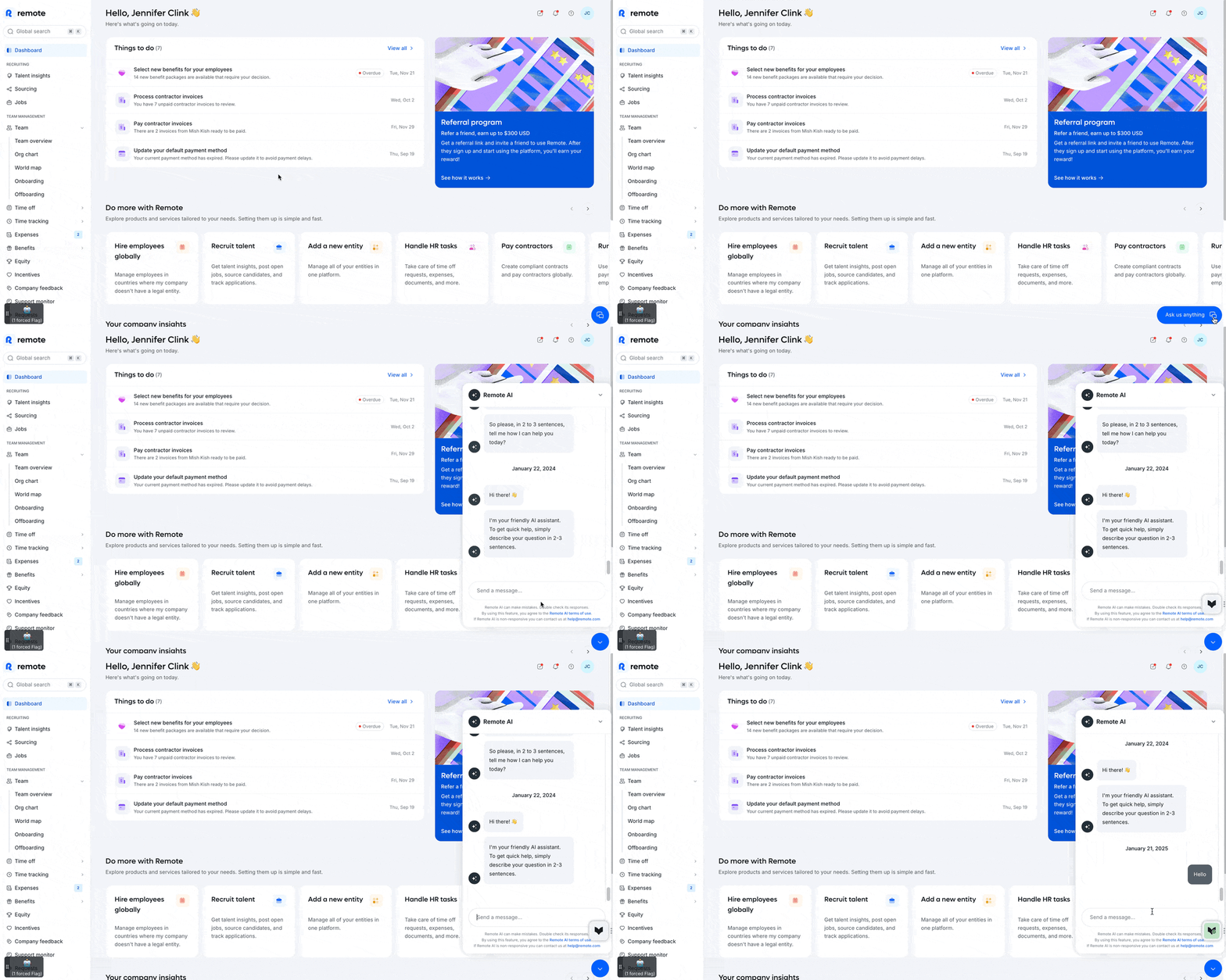
Remote is a global employment platform offering EOR, payroll, and contractor management. It appeals to teams wanting one HR system across borders. India is supported within that global model.
🛠️ Core Services
Global EOR employment
International payroll
Contractor management
Benefits administration
HR information system
🤔 Why Companies Consider Remote
The pull is a single, tidy HR suite that replaces several point tools. Buyers want fewer logins and one place for global employment. Teams focused on India sometimes weigh a Remote alternative with deeper local coverage.
💰 Commercial Model
EOR pricing commonly anchors near $599 per employee per month. Some buyers report fees above the advertised rate.
💬 Customer Reviews
"They were dishonest about the level of support provided. We specifically explained we required phone-level support for urgent matters. Instead they have email support with a 3-day SLA."
Juliette D. Remote G2 Verified Review
"I find Remote super complicated to use at a platform level. There are hidden fees everywhere, and I end up paying roughly 30% more than whats stated."
Javier G. Remote G2 Verified Review
4. Globalization Partners (G-P): Best for Enterprises Wanting an Established Brand
📌 Overview
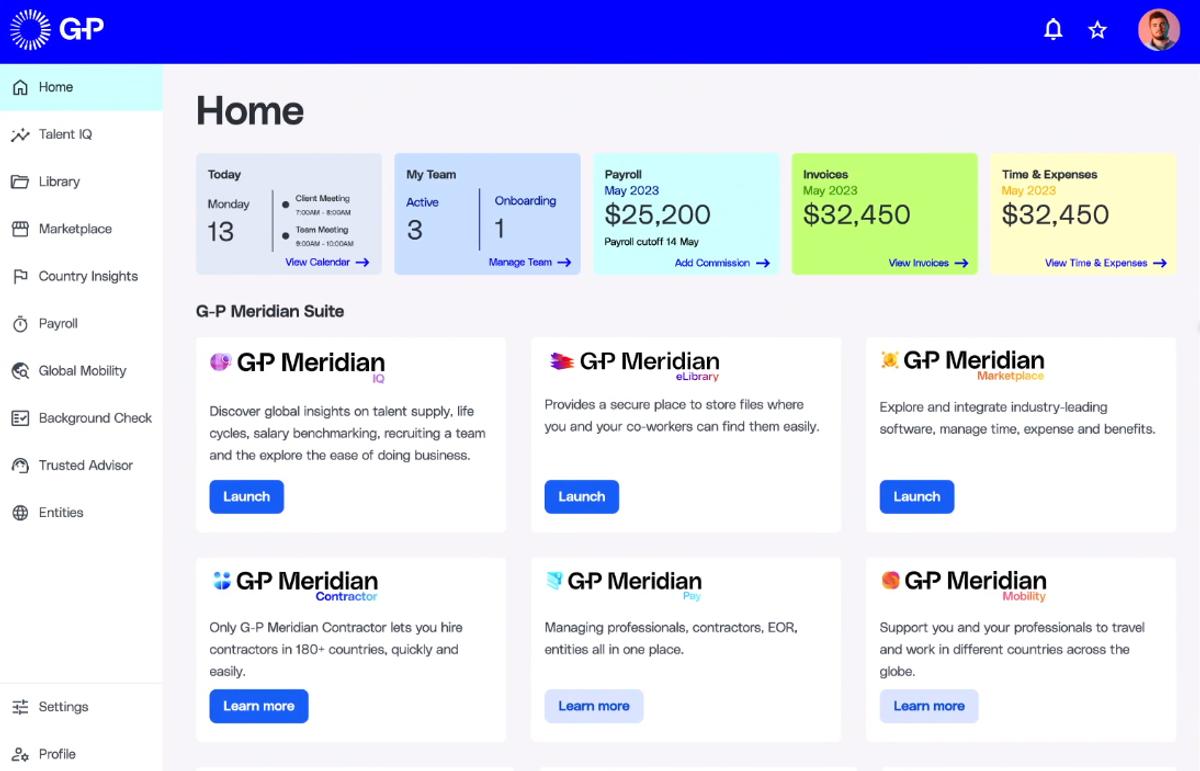
G-P is one of the older global EOR providers, covering a large country footprint. It suits enterprises that value a long operating history. India sits inside its multi-country model.
🛠️ Core Services
Global EOR employment
Multi-country payroll
Compliance and contracts
Onboarding workflows
Benefits administration
🤔 Why Companies Consider G-P
The decision logic is enterprise risk comfort. Procurement teams like an established brand with a wide footprint when buying across regions. Larger India teams can compare it against our enterprise hiring approach.
💰 Commercial Model
G-P typically uses custom enterprise quotes, often structured as a percentage of salary. Pricing is not publicly fixed, so treat any number as quote-dependent.
💬 Customer Reviews
No verified G-P customer reviews were available in the provided source set for this provider.
5. Multiplier: Best for Early-Stage Teams Testing Several Countries
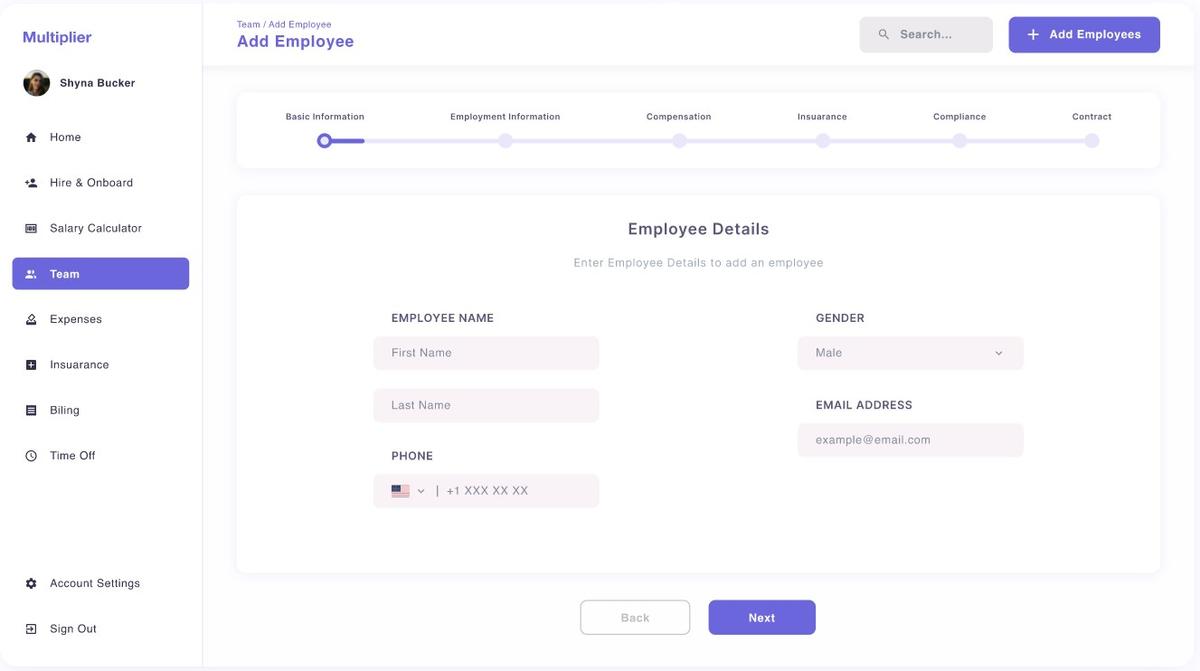
📌 Overview
Multiplier is a global EOR platform aimed at startups expanding into multiple countries. It markets competitive entry pricing. India is one of many supported markets.
🛠️ Core Services
Global EOR employment
Contractor management
Multi-country payroll
Benefits administration
Expense and time tracking
🤔 Why Companies Consider Multiplier
The draw is price and a quick start for multi-country tests. Cash-conscious founders like the lower entry point. Those concentrating spend in India often review a Multiplier alternative first.
💰 Commercial Model
Entry pricing is competitive, often cited around $400 per employee per month for EOR. Buyers report added deposits and fees, so model the all-in number.
💬 Customer Reviews
"Multiplier has fairly competitive EOR pricing, although its also a bit of a you get what you pay for. They introduced some new deposits and fees that werent originally in our contract."
Verified User in IT and Services Multiplier G2 Verified Review
"Extremely disorganized on-boarding process. Late payment of payroll. We were double invoiced multiple times."
Verified User in Online Media Multiplier G2 Verified Review
6. Velocity Global (Pebl): Best for Multi-Region Contractor and EOR Hiring
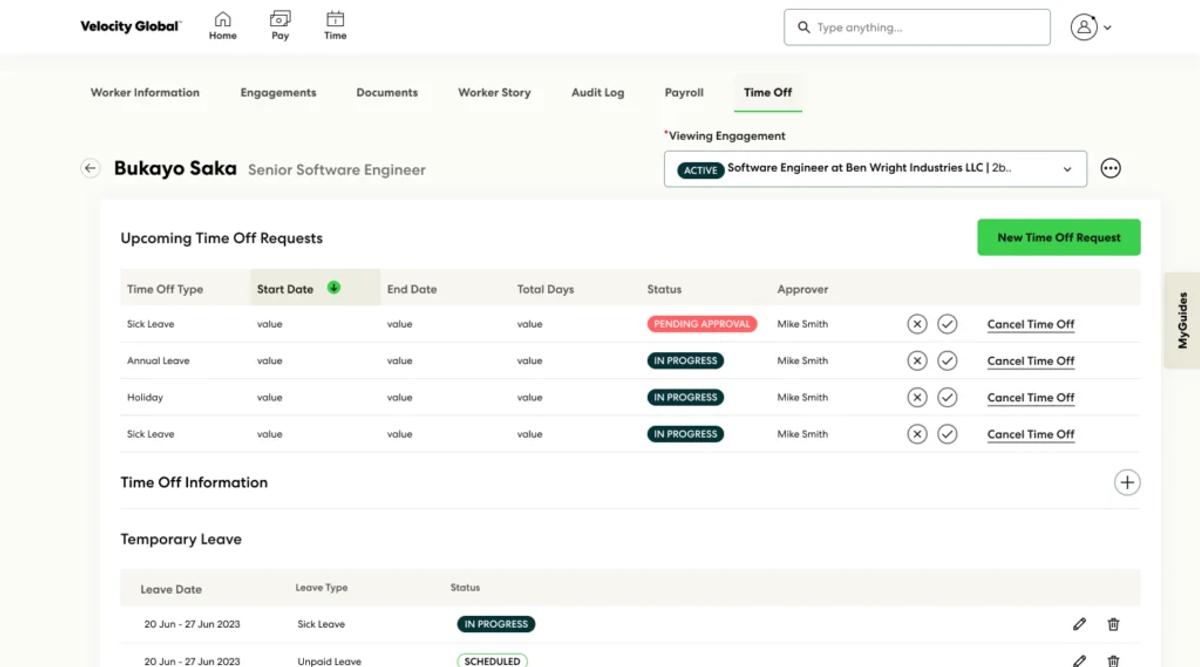
📌 Overview
Velocity Global, now branded Pebl, offers EOR and contractor services across many countries. It targets spread-out, multi-region teams. India hiring runs through its global model.
🛠️ Core Services
Global EOR employment
Contractor management
Multi-country payroll
Immigration support
Benefits administration
🤔 Why Companies Consider Velocity Global
Buyers choose it for wide geographic reach when staff sit across several regions at once. For India-only contractor needs, our contractor of record service is a closer fit.
💰 Commercial Model
Pricing is custom and quote-based. Some long-term buyers report fees on the higher end, so confirm the all-in cost.
💬 Customer Reviews
"I encountered many frustrations with the onboarding, and continue to find the portal difficult to use. My contract had the wrong start date and other errors."
Verified User in Non-Profit Management Pebl (Velocity Global) G2 Verified Review
"Velocity offers great local knowledge. POC Account Managers are quick. Processes are manual. From the request to onboard to approving quotes, everything happens via email."
Verified User in Computer Software Pebl (Velocity Global) G2 Verified Review
7. Papaya Global: Best for Finance Teams Wanting Payroll and Payments Together
📌 Overview
Papaya Global focuses on global payroll and workforce payments. It appeals to finance-led buyers who want cost visibility in one platform. India is part of its global coverage.
🛠️ Core Services
Global payroll
Workforce payments
EOR employment
Cost and invoice reporting
Compliance management
🤔 Why Companies Consider Papaya
The logic is finance visibility. Teams want one place for payroll inputs, outputs, and invoices across countries. For India payroll specifically, our managed payroll service covers the same need with local depth.
💰 Commercial Model
Pricing is custom and quote-based. Buyers note it sits on the higher end, so confirm scope before signing.
💬 Customer Reviews
"Papaya platform is very user-friendly. Its also incredibly helpful for obtaining our monthly invoices and detailed cost breakdowns. Response times can sometimes be very slow."
Cherry H. Papaya Global G2 Verified Review
"Papaya held our deposit return over a month past the due date. Overall, the communication is abysmal, you must follow up many times and escalate to get an answer."
Verified User in Civic and Social Organization Papaya Global G2 Verified Review
8. Rippling: Best for US Teams Bundling HR, IT, and Payroll
📌 Overview
Rippling bundles HR, IT, and payroll into one US-centric platform with global add-ons. It suits US-headquartered teams that want everything integrated. India support is lighter than its US core.
🛠️ Core Services
HR information system
US and global payroll
IT and device management
Benefits administration
EOR add-on
🤔 Why Companies Consider Rippling
The pull is integration. Teams want HR, identity, devices, and payroll in one system rather than stitched-together tools. India-focused buyers can see how our model works for local hiring.
💰 Commercial Model
Pricing is modular and quote-based, with add-ons priced separately. Confirm which modules you actually need.
💬 Customer Reviews
"Support is the single biggest failure. There is no direct phone line. You either email or use a chatbot, and you can ask both the same question and get two different wrong answers."
Erika D. Rippling G2 Verified Review
"I find the entire integrated payroll system very easy to use. The implementation process for Rippling Spend has been a truly terrible experience."
Patrick W. Rippling G2 Verified Review
9. Payoneer Workforce Management (Skuad): Best for Contractor-Heavy Global Hiring
📌 Overview
Payoneer Workforce Management, formerly Skuad, offers EOR and contractor management with built-in payments. It fits contractor-heavy global teams. India is one supported market.
🛠️ Core Services
Contractor management
Global EOR employment
Cross-border payments
Compliance documentation
Onboarding workflows
🤔 Why Companies Consider Skuad
Buyers like worldwide coverage paired with integrated payments through Payoneer. Companies centred on India often weigh a Skuad alternative with local entity ownership.
💰 Commercial Model
Pricing is quote-based. Some buyers report disputes over agreed per-person rates, so lock pricing in writing.
💬 Customer Reviews
"Skuad has allowed us to expand internationally and wean off the reliance from direct vendors. The onboarding process didnt allow us to send out an offer prior to the deposits."
Verified User Payoneer (Skuad) G2 Verified Review
"Everything is super complicated and takes weeks to complete. There are way too many outsourcing chains in the process, and this makes it a terrible support interaction."
Verified User Payoneer (Skuad) G2 Verified Review
10. Asanify: Best for India-Focused Payroll and EOR on a Budget
📌 Overview
Asanify is an India-focused payroll and EOR provider serving foreign companies hiring in India. It suits buyers wanting India-native handling at a lower price point. Its compliance depth is growing.
🛠️ Core Services
India EOR employment
India payroll processing
Contractor management
Statutory compliance
Onboarding support
🤔 Why Companies Consider Asanify
The logic is India focus at a friendly price, attractive to smaller teams watching cash. Early-stage teams can also compare our offering for startups.
💰 Commercial Model
Asanify markets lower India EOR pricing than global generalists. Confirm the current rate directly, as published tiers change.
💬 Customer Reviews
No verified Asanify customer reviews were available in the provided source set for this provider.
Which Model Are You? A 10-Second Self-Test
If you have no Indian entity and want full-time hires, you need an EOR, and an owned-entity EOR keeps your Permanent Establishment risk cleaner. If you already run an Indian entity, you need managed payroll, the "PEO-lite" model, not a true co-employment PEO, because that structure has no legal basis in India. Tell me which one you are, and I will point you to the right two providers, even if one of them is not us. You can also talk it through with me directly.
Q2. How Did We Score These Providers? (Independent Selection Criteria & Scorecard)
I scored every provider on five weighted criteria that add up to 100 percent: India Entity Model and Compliance Depth (25 percent), Pricing Transparency and Commercial Model (20 percent), Onboarding Speed and Support Model (20 percent), Talent and Retention Support (20 percent), and Customer Validation from G2, Capterra, Clutch, and Reddit (15 percent). Scores then convert to stars on a simple band.
📊 The Weights I Used
Here is the rubric, with nothing hidden behind "editor's choice."
Weighted Scoring Rubric for India Hiring Providers | ||
Criteria | Weight | What It Measures |
|---|---|---|
India Entity Model and Compliance Depth | 25% | Own entity vs partner shell; PF, ESI, TDS, PT, gratuity coverage |
Pricing Transparency and Commercial Model | 20% | Flat vs slab pricing, FX markup, setup and exit fees |
Onboarding Speed and Support Model | 20% | Days to live payroll; founder-direct vs ticket queue |
Talent and Retention Support | 20% | Vetting, replacement guarantee, success coaching |
Customer Validation | 15% | G2, Capterra, Clutch, Reddit signal |
⚖️ Why Entity Model Carries the Most Weight
I put India Entity Model at the top for one reason. When a provider uses a local partner shell, you are several layers removed from the people who actually file your PF (Provident Fund) challan.
That distance creates two risks. It muddies your Permanent Establishment position, and it slows down accountability when payroll breaks. So entity ownership earns the heaviest weight, at 25 percent, which is exactly why our owned-entity EOR model in India sits at the centre of how we operate.
⭐ How Stars Map to Scores
The bands are deliberately boring, because boring is honest.
0 to 20 points: ⭐
21 to 40 points: ⭐⭐
41 to 60 points: ⭐⭐⭐
61 to 80 points: ⭐⭐⭐⭐
81 to 100 points: ⭐⭐⭐⭐⭐
One disclosure, stated plainly: yes, we built Versatile Club, and we score 5 stars on this rubric. I could be accused of grading my own homework, so I am showing you the math instead of asking you to trust a badge. You can pressure-test the same logic yourself with our EOR vs entity calculator. If a global platform scores 3 stars here, that is not an insult to its product. It simply means single-country India depth is not what that platform was designed to do.
Q3. What Is a PEO, Why Doesn't True Co-Employment Exist in India, and How Do EOR & Entity Compare on PE Risk?
A PEO (Professional Employer Organisation) is a "co-employment" model where you and the provider share employer duties. The catch most articles skip is this: US-style co-employment PEO has no legal basis under Indian labour law. If you have no Indian entity, you need an EOR (Employer of Record, the sole legal employer). If you do have one, a "PEO-lite" managed-payroll model fits. The bigger stake is Permanent Establishment risk, which I will unpack below.
🧩 What a PEO Actually Means
In the US, a PEO becomes a co-employer. You keep day-to-day control, and the PEO shares legal employer duties like payroll and benefits.
That shared structure is the whole idea. Two parties sit on the employment contract together. It works because US law recognises co-employment.
❌ The PEO Myth in India
Here is the part the category quietly avoids. Indian labour law does not recognise US-style co-employment. So a true "PEO" in the American sense does not legally exist here.
When a vendor sells you "PEO services in India," they almost always mean one of two real models. The standard read gets this backwards, so let me make it concrete with our managed payroll setup as the reference point.
🔀 EOR vs PEO-Lite vs Your Own Entity
Picture a US founder, post-seed, hiring two engineers in Bengaluru. Her options are simple once you strip the jargon.
No Indian entity? Use an EOR. The provider is the sole legal employer, and your team works under it, which is the core of our EOR services.
Already have an Indian entity? Use managed payroll, the "PEO-lite" model, where you stay the employer and the vendor runs payroll and filings.
Plan to scale past 10 to 12 hires? Now opening your own entity may pay off, though it costs real money and 12 to 18 months.
⚠️ What Permanent Establishment Risk Really Is
Permanent Establishment, or PE, is the risk that hiring in India makes your foreign company taxable in India. India's Significant Economic Presence rule can trigger a taxable "business connection" at 2 crore rupees of payments, or 300,000 users.
That is not a theoretical footnote. Misclassifying an engineer as a contractor can also expose you to roughly $25,000 to $40,000 in back-pay liability per head if it surfaces during due diligence, a risk our compliance approach is built to neutralise.
✅ Why an Owned-Entity EOR Is the Cleaner Buffer
This is where Versatile Club's structure matters in practice, not in pitch copy. Because we own our Indian entity, your employee's PF, ESI, and TDS filings sit under our own registrations. The person shows up as employed by Versatile in the EPFO and ESIC systems, not by an unnamed partner shell.
A partner-shell EOR adds a layer between you and that record. I might be slightly conservative here, but a cleaner record is a cleaner PE story when investors run diligence. One caution: confirm employer-of-record status in EPFO yourself, and run your specific PE facts past a tax advisor.
Q4. What India Compliance Must Your Provider Handle in 2026, and What Does the 50% Wage Rule Cost You?
Your India provider must handle the new Labour Codes' rule that Basic plus DA (Dearness Allowance) be at least 50 percent of wages, monthly TDS (Tax Deducted at Source) deposited by the 7th, PF and ESI under its own registrations, state-by-state professional tax (Maharashtra needs dual PTRC and PTEC), gratuity, POSH, and DPDP-compliant data handling with 72-hour breach reporting. The 50 percent rule alone can lift PF and gratuity costs, so model it before you sign.
📋 The Statutory Checklist That Actually Matters
These are the items I check on every single placement. Vague "we handle compliance" claims do not survive a real payroll cycle, which is why we publish our full India compliance coverage.
India Statutory Compliance Checklist for 2026 | ||
Item | Rule | Deadline / Rate |
|---|---|---|
50% wage rule | Basic + DA at least 50% of wages | In force from 21 Nov 2025 |
TDS | Deduct and deposit monthly | By the 7th |
PF | Employer contribution | 12% of Basic + DA |
ESI | Employer / employee split | 3.25% / 0.75% |
Gratuity | Accrual on Basic + DA | 4.81% per month |
DPDP breach | Notify Data Protection Board | Within 72 hours |
💰 What the 50% Wage Rule Costs in Real Money
The Labour Codes came into force on 21 November 2025, and the headline rule is the 50 percent floor. Many traditional India salary stacks set Basic low, around 30 to 40 percent, to reduce PF and gratuity.
When Basic rises to 50 percent, the costs that ride on Basic rise too. Here is a simple illustration on a 100,000 rupee monthly CTC, and you can run your own numbers with our India salary calculator.
Cost Impact of the 50% Basic Plus DA Wage Rule | ||
Component | Old Stack (40% Basic) | Compliant Stack (50% Basic) |
|---|---|---|
Basic + DA | ₹40,000 | ₹50,000 |
PF at 12% | ₹4,800 | ₹6,000 |
Gratuity accrual at 4.81% | ₹1,924 | ₹2,405 |
That is roughly 1,681 rupees more per month, per employee, just on PF and gratuity. ⚠️ Multiply that across a team, and the "cheap" quote that ignored the rule gets expensive fast.
🌍 Why Global EORs Miss the 50% Rule
Many global platforms run India as one country among 150. So their salary templates often lag the new floor, and the gap surfaces at audit, which is one reason India-focused teams weigh a Deel alternative built for India.
After running multi-state payroll across Bengaluru, Hyderabad, and Pune for six years, what I notice is simple. The 50 percent restructure is not optional, and getting it wrong creates back-dated liability.
🗺️ State Tax Is Not One Tax
Professional tax is set state by state, not nationally. Maharashtra alone needs two registrations: PTRC and PTEC. Its slab runs nil up to 7,500 rupees, 175 rupees from 7,501 to 10,000, and 200 rupees above that, with 300 rupees in February.
Karnataka files monthly. Tamil Nadu files twice a year. A global playbook abstracts this away, and that is exactly where filings get missed, so it pays to choose a provider that treats multi-state India compliance as its core job.
🔐 Employee Data Is Now Regulated
The DPDP Rules 2025 were notified on 13 November 2025. If employee payroll data is breached, you must notify the Data Protection Board within 72 hours.
Ask any vendor three questions before you sign. Do you file under your own registrations? How do you implement the 50 percent rule? And what is your DPDP breach process? If you want to walk through your own setup, you can book a working session with us.
Q5. What Do These Providers Cost, and How Fast Can You Actually Onboard in India?
India EOR and PEO pricing runs three ways: flat per employee per month (Versatile Club at $149, all salary bands), salary-slab pricing that climbs with seniority, and percentage-of-payroll. Global generalists like Deel and Remote sit near $599 per month and can add a 3 to 5 percent FX (foreign exchange) markup. Speed matters too. Onboarding ranges from a contractual 5 business days to the 10 to 14 days typical of generalists.
💰 The Three Pricing Models, Side by Side
Here is how the money actually works once you strip the marketing, and you can pressure-test it against our published India EOR pricing.
India EOR Pricing and Fee Comparison | |||
Provider | Monthly Fee | FX Markup | Setup / Exit Fees |
|---|---|---|---|
Versatile Club | $149 flat, all bands | None (USD direct from India) | None, first month free |
Deel | ~$599 | ~3 to 5% reported | Varies |
Remote | ~$599 | Reported by users | Varies |
Multiplier | ~$400 | Reported deposits | Varies |
💸 Where the Hidden Costs Hide
The advertised price is rarely the real price. Slab pricing often starts low, then climbs as your engineer gets more senior. FX markups quietly ride on every transfer.
Buyers feel this directly, not in theory, which is one reason teams scoping India weigh a Remote alternative:
"I find Remote super complicated to use at a platform level. There are hidden fees everywhere, and I end up paying roughly 30% more than whats stated."
Javier G. Remote G2 Verified Review
✅ How We Price It Instead
We charge a flat $149 per employee per month, no matter the salary band. So a senior hire does not quietly cost more to administer than a junior one.
We invoice in USD directly from our Indian entity, which removes the FX guessing game your CFO hates at month-end. There are no setup fees, no exit fees, and the first month is free. I am not here to win on "cheaper," I am here to win on predictable, and our EOR services in India are built around that promise.
⏰ The 5-Day Onboarding Sequence
Speed is a contract for us, not a wish. Here is the exact sequence we commit to, and you can see the full flow on our how it works page.
Day 1: Agreement signed.
Day 2: Offer issued to the candidate.
Day 3: Employment contract executed.
Day 4: Statutory registration completed.
Day 5: Employee live on payroll.
⚠️ Why Generalist Timelines Slip
Global platforms route India through partner setups, so onboarding often runs 10 to 14 days. When it breaks, it really breaks, which is why some teams compare a Deel alternative:
"It took three months to onboard our first 3 individuals. They didnt seem to be able to navigate Visas or variations to employment contracts."
Verified User in IT and Services Deel Hire G2 Verified Review
A US founder once messaged me on WhatsApp at 11pm her time, three days before payroll. Her engineer's start was at risk, and we closed it inside the SLA. That is the difference depth makes.
Q6. Why Does "Compliance-First" EOR Miss the Real Problem, Hiring People Who Stay?
Most EORs solve the "legal hire on paper" problem and stop. They do not solve the "good hire who stays" problem. With nearly 30 percent of Indian IT résumés containing discrepancies, and a US-India Power Distance gap of 77 versus 40, a compliant payslip does not guarantee a productive, retained engineer. Culture-fit-first hiring, a 90-day Success Coach, and a 6-month replacement guarantee close that gap.
🧾 Compliance Is the Floor, Not the Ceiling
The category sells compliance as the finish line. I think the standard read gets this backwards.
A legally correct payslip is table stakes. The hard part is whether the person you hired is real, capable, and still here in six months, which is the whole point of our recruitment process.
⚠️ The Résumé Problem Nobody Prices In
Background checks exist for a reason. Industry screening data shows nearly 30 percent of IT-sector résumés in India carry some discrepancy.
That is not a small rounding error. Hire fast without vetting, and you can fund a "legal hire" who was never the person on the CV, a risk our contract-to-hire model is designed to absorb.
🌍 The Cross-Cultural Gap That Quietly Kills Projects
Here is the part global playbooks ignore. India scores 77 on Hofstede's Power Distance index, versus 40 for the US. That gap shapes how people speak up, or stay silent.
One American manager told me an offshore engineer asked permission, over instant message, every time he took a dinner break. He insisted, "because I'm your subordinate." If you do not build a real relationship, people may tell you everything is fine while the project quietly burns.
✅ How We Hire for Stay, Not Just Sign
This is the territory we built Versatile Club around, and it is where compliance-first vendors go quiet. We screen culture fit across 50 behavioral parameters, not just skills on paper, and you can sample our approach through the culture fit quiz.
Then we back it operationally:
A 90-day Success Coach who checks in through the risky early window.
A 6-month replacement guarantee on placements.
C2H pricing charged only after the hire clears day 90.
Across the C2H placements we have converted to full-time over six years, what I notice is simple. The relationship is the contract. A compliant payslip is necessary, but it never made anyone stay.
Q7. How Do You Choose the Right Provider for Your Stage, and How Does Versatile Compare to Global Generalists?
Match the provider to your stage. Your first 1 to 3 India hires need an owned-entity EOR with founder-level support and a fast SLA. Scaling 10 to 100 weights retention and multi-state compliance. A CFO weights flat, FX-free pricing and a clean PE position. Against generalists, Versatile Club trades breadth for India depth: flat $149 per month, no FX markup, 5-day onboarding, founder on WhatsApp. Need 90-plus countries? Pick a generalist.
🧭 Pick by Your Stage
Your stage decides your priorities more than any feature list does, and our offering for startups maps to the earliest one.
India Hiring Provider Fit by Company Stage | ||
Stage | Top Priorities | Recommended Model |
|---|---|---|
First 1 to 3 India hires (Seed to Series B) | Speed, founder access, clean PE | Owned-entity EOR |
Scaling 10 to 100 (Series A to C) | Retention, multi-state compliance | Owned-entity EOR plus C2H |
CFO at $5M to $50M ARR | Flat pricing, FX clarity, audit-ready | Flat-fee EOR, USD invoicing |
⚖️ Versatile Club vs the Global Generalists
Here is the honest contrast, facts and drawbacks together.
Versatile Club vs Deel, Remote, and G-P | ||||
Factor | Versatile Club | Deel | Remote | G-P |
|---|---|---|---|---|
India entity | ✅ Owned | ❌ Often partner | ❌ Often partner | ❌ Often partner |
Monthly fee | ✅ $149 flat | ~$599 | ~$599 | % of salary |
Onboarding | ✅ 5 days | 7 to 14 days | 10 to 14 days | 1 to 2 weeks |
Support | ✅ Founder on WhatsApp | Chatbot first | Ticket queue | CSM model |
🟢 Where We Win
For single-country India hiring, depth beats breadth. We own the entity, so your PF, ESI, and TDS sit under our own registrations, which is the heart of our EOR services.
Buyers feel the generalist support gap acutely:
"Support is the single biggest failure. There is no direct phone line. You either email or use a chatbot, and you can ask both the same question and get two different wrong answers."
Erika D. Rippling G2 Verified Review
❌ When You Should Not Pick Us
I would rather lose the deal than mis-sell. Pick a global generalist if you need 5-plus countries on one dashboard, or if you are a 100-plus India team that requires SOC 2 or ISO 27001 as a procurement gate, the kind of profile our enterprise approach still aims to support where it fits.
Also watch the tipping point. Around 10 to 12 India hires, opening your own entity can start to pay off, though it costs real money and 12 to 18 months, and you can model that crossover with our EOR vs entity calculator.
💬 Where My Head Is Right Now
What I think shifts in the next two years is this. India stops being "one country on the global EOR map" and becomes its own specialist category. If you are making your first India hires, tell me what you are building, and you can grab time with me directly. First month is free, and there are no setup or exit fees.
FAQs
What are the best PEO and EOR service providers for hiring in India in 2026?
We rank ten providers for US and UK companies hiring in India in 2026: Versatile Club, Deel, Remote, Globalization Partners, Multiplier, Velocity Global (Pebl), Papaya Global, Rippling, Payoneer Workforce Management (Skuad), and Asanify.
The right pick depends on what you actually need:
- Single-country India depth: an owned-entity specialist fits best, which is the heart of our EOR services in India.
- Many countries on one dashboard: a global generalist like Deel or Remote makes sense.
- India payroll on an existing entity: a managed-payroll model fits.
We lead for companies making their first 1 to 30 India hires, because we own our Indian entity rather than route through a partner shell. That means your PF, ESI, and TDS filings sit under our own registrations, with USD invoicing direct from India and a contractual 5-day onboarding SLA.
Global generalists treat India as one of 150 countries, so their multi-state compliance depth is usually thinner. We name that trade-off openly: if you need 5-plus countries, pick a generalist.
What is the difference between a PEO and an EOR for hiring in India?
A PEO (Professional Employer Organisation) co-employs staff with you, sharing legal employer duties. An EOR (Employer of Record) becomes the sole legal employer of your India team.
Here is the part most articles skip. US-style co-employment PEO has no legal basis under Indian labour law, so a true PEO in the American sense does not exist here.
What that means in practice:
- No Indian entity? You need an EOR, which is what our EOR services provide.
- Already have an Indian entity? You need a PEO-lite model, which our managed payroll service covers.
The bigger stake is Permanent Establishment risk, the chance that hiring in India makes your foreign company taxable here. An owned-entity EOR is the cleanest buffer, because the employee appears under our registrations in EPFO and ESIC, not under an unnamed partner shell.
We always recommend confirming employer-of-record status yourself and running your specific facts past a tax advisor.
How much does an EOR cost per employee in India, and what hidden fees should we watch for?
India EOR pricing runs three ways: flat per employee per month, salary-slab pricing that climbs with seniority, and percentage-of-payroll. Global generalists like Deel and Remote anchor near $599 per employee per month.
The advertised price is rarely the full price. Watch for:
- FX markups of roughly 3 to 5 percent buried in transfers.
- Slab pricing that quietly rises as your engineer gets more senior.
- Setup and exit fees that surface late.
We charge a flat $149 per employee per month across all salary bands, so a senior hire does not cost more to administer than a junior one. You can pressure-test the numbers against our published India EOR pricing.
We invoice in USD directly from our Indian entity, which removes the FX guessing game your CFO hates at month-end. There are no setup fees, no exit fees, and the first month is free.
One more cost to model in 2026: the Labour Codes' 50 percent wage rule lifts PF and gratuity, so factor it in before you sign.
What India compliance must an EOR handle in 2026, and what does the 50 percent wage rule cost?
Your India provider must handle a full statutory stack. We manage all of it under our own registrations, which you can review on our India compliance page.
The essentials for 2026 include:
- 50 percent wage rule: Basic plus DA must be at least 50 percent of wages, in force from 21 November 2025.
- TDS: deducted and deposited monthly by the 7th.
- PF and ESI: 12 percent PF, and a 3.25 percent / 0.75 percent ESI split.
- Professional tax: state by state, with Maharashtra needing dual PTRC and PTEC.
- Gratuity, POSH, and DPDP: including 72-hour breach reporting.
The 50 percent rule has a real cost. On a 100,000 rupee monthly CTC, moving Basic from 40 to 50 percent lifts PF and gratuity by roughly 1,681 rupees per employee, per month.
Global platforms that treat India as one country often lag this rule, and the gap surfaces at audit as back-dated liability.
How do we choose the right India hiring provider for our company stage?
Match the provider to your stage rather than to a feature list.
- First 1 to 3 hires (Seed to Series B): prioritise speed, founder access, and a clean PE position. An owned-entity EOR fits, and our offering for startups maps to this.
- Scaling 10 to 100 (Series A to C): weight retention and multi-state compliance, often pairing EOR with our contract-to-hire model.
- CFO at $5M to $50M ARR: weight flat pricing, FX clarity, and audit-readiness.
Against generalists, we trade global breadth for India depth: flat $149 per month, no FX markup, 5-day onboarding, and founder-on-WhatsApp support.
We are honest about when not to pick us. If you need 90-plus countries, or you are a 100-plus India team requiring SOC 2 as a procurement gate, a generalist serves you better.
Watch the tipping point too. Around 10 to 12 hires, your own entity can start to pay off, and you can model that crossover with our EOR vs entity calculator.
Tell us where you are on the decision.
A role you want to hire, a team you want moved, or just the two routes to compare. A named person replies in 4 to 6 hours.
What the first call covers
30 minutesA cost comparison for your headcount, on your numbers, both routes.
- A written cost breakdown
- Entity documents before the call
- PF, ESI, TDS, termination law
- No follow-up sequence
You pick the time, we send a Meet link. Any timezone.