Table of contents (13)
- Why Offshore SEO for SaaS, Fintech, and B2B in 2026
- What Separates Strong Offshore SEO Firms from Cheap Outsourcers
- How to Evaluate an Offshore SEO Partner: 7-Point Checklist
- Comparison of Top 10 Offshore SEO Companies
- Growfusely: B2B SEO at Startup Pace
- WebSpero: Enterprise SEO with Compliance
- First Page Sage: B2B Content and Link-Building Hybrid
- Directive: SaaS Demand Generation and SEO Fusion
- Skale: SaaS Retention and Expansion Focus
- Versatile: Hiring a Dedicated Offshore SEO Team via EOR
- Compliance Considerations for Fintech and SaaS Content
- FAQs: Offshore SEO for SaaS and Fintech
- How to Pick the Right Partner: A Founder's Close
Best Offshore SEO Companies for SaaS, Fintech, and B2B in 2026
Why Offshore SEO for SaaS, Fintech, and B2B in 2026
In 2026, B2B companies-especially SaaS and fintech startups-face unprecedented competitive pressure to rank higher than incumbents. The cost of in-house SEO teams in mature markets (US, UK, AU) has become prohibitive, while organic search remains the highest-ROI acquisition channel for B2B software companies. Offshore SEO partnerships offer a way to scale strategy and content production without breaking the budget.
Consider the numbers: a senior SEO strategist in San Francisco costs $120K-$150K annually plus 30-40% overhead (benefits, taxes, tools). That's $10K-$14K per month for one person. A mid-level SEO specialist in India with 5+ years of experience costs $2,000-$3,500 per month all-in. You can hire 3-4 people offshore for what one US hire costs-and spread expertise across strategy, content production, link building, and technical SEO.
SaaS and fintech companies operate in highly regulated verticals. SEO isn't just about rankings; it's about compliance-first content, thought leadership positioning, and converting educated decision-makers (often multiple stakeholders in a buying committee). Offshore firms that understand your vertical can deliver.
The reality: a mid-market SaaS company (ARR $2M-$10M) can hire a dedicated 3-person offshore SEO team for what it costs to employ a single senior in-house SEO manager in San Francisco. Yet many founders still hesitate, fearing quality loss, communication breakdown, or security risks. This guide cuts through the noise and shows you how to evaluate offshore SEO partners intelligently-and when to hire dedicated teams instead.
Why now? Three converging trends:
- AI-powered content tools: Offshore teams can now produce higher-quality content faster using tools like Claude, ChatGPT, and specialized SEO platforms. Quality gaps have narrowed significantly since 2024.
- Compliance maturity: Leading offshore firms now have ISO 27001, SOC 2, GDPR, and DPDP certifications. Hiring offshore for regulated industries is no longer a wild risk.
- Founder-friendly EOR platforms: Models like Versatile make it easy to hire and manage dedicated offshore teams without setting up foreign subsidiaries or dealing with complex employment law.
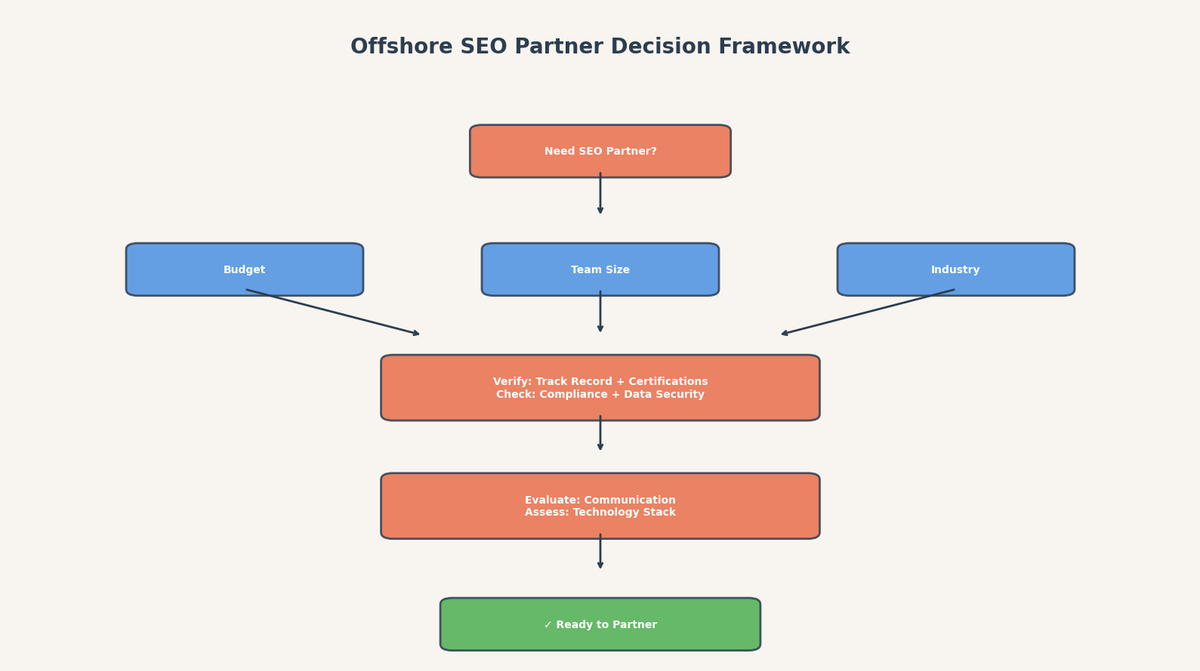
What Separates Strong Offshore SEO Firms from Cheap Outsourcers
Not all offshore firms are created equal. Cheap outsourcers typically deliver low-quality backlinks, plagiarized content, and zero accountability. You'll see tactics like:
- Scraped or spun content that reads like a robot wrote it-stuffed with keywords, no narrative flow, no original insight
- Low-DA backlinks from link farms, PBNs (private blog networks), and expired domains. These can trigger manual penalties.
- No tracking of actual business metrics: they report vanity metrics (rankings, impressions) but not leads, signups, or revenue impact
- Unresponsive support and ghosted communications-you reach out with a question, hear back in a week (or never)
- Zero compliance consideration-content published without GDPR/CCPA review, backlinks from spam sites, no data security audit
Strong offshore SEO firms, by contrast, have:
- Proprietary tools and data: Custom keyword research, SERP analytics, competitive intelligence platforms. They don't just use free tools. They invest in SEMrush, Ahrefs, and Moz professional licenses and combine them with proprietary models.
- Certified professionals: Google Partner status, core team with 5+ years B2B SEO experience, ongoing training budgets. They stay current on algorithm updates and best practices.
- Vertical expertise: Proven case studies in SaaS, fintech, or B2B software. They can speak to your pricing page strategy, trial signup funnel optimization, and upsell positioning. They've seen what works and what fails in your market.
- Transparent reporting: Weekly dashboards, direct communication, no black-box metrics. You can drill into keyword rankings, traffic sources, backlink quality, and conversion impact. No hiding behind pretty but meaningless reports.
- Compliance-first mindset: GDPR, CCPA, DPDP, and data security by design-not afterthought. They audit content for regulatory language and avoid risky outreach tactics. ISO 27001, SOC 2 Type II, or equivalent certifications.
- Collaborative process: They treat you as a partner, not a transaction. Regular strategy reviews, adaptive roadmaps, willingness to pivot if data shows a better path. They push back when they think you're wrong.
- Quality assurance processes: Content is reviewed by a dedicated QA person before publishing. Backlinks are manually verified before reporting. No shortcuts, no rubber-stamping bad work.
A strong offshore partner is a strategic extension of your marketing team, not a task mill. The best ones operate like a mini in-house team: they own the strategy, execute with discipline, and communicate proactively when challenges arise.
How to Evaluate an Offshore SEO Partner: 7-Point Checklist
- Track Record & Case Studies: Ask for 3+ public case studies (or NDA-signed client results). Look for SaaS/fintech companies, not just e-commerce. Verify keyword rankings via independent tools (SEMrush, Ahrefs). Request before/after screenshots, timelines, and quantified results (e.g., "drove 45K organic visitors in 9 months, converted to $180K ARR"). Red flags: vague case studies with no metrics, only vanity metrics, or claims that seem unrealistic (10x traffic in 3 months for a new domain). Ask for current client references-not hand-picked wins, but real clients you can call.
- Team Structure & Stability: Who is your dedicated account manager? What's employee turnover? Can you meet the core team (strategy lead, content lead, link-building lead)? Ideally, you should have direct Slack access to the execution team-not gatekept through an account manager. Ask how long their top 3 team members have been with the firm. High turnover (more than 20% annually) is a red flag; it signals instability or poor management. Strong teams have 3-5 year tenures for core roles.
- Technology Stack: Do they use proprietary tools or industry standards (SEMrush, Ahrefs, Moz, Content at Scale)? Can they integrate with your analytics (GA4, HubSpot)? Can they export data easily or are you locked into their dashboard? A strong partner should be vendor-agnostic and transparent about tooling decisions. Ask: "What if I want to switch platforms in 6 months? Can I take my keyword list and content roadmap with me?" Good partners say yes.
- Communication & Reporting: Do they offer real-time Slack or weekly calls? What does reporting include (rankings, traffic, conversions, backlinks)? Avoid static monthly PDFs. Ideal: weekly Slack updates, monthly video call, quarterly strategy review. Ask them what channels they monitor for urgent issues (your site goes down, competitor makes a ranking move). Do they proactively alert you to opportunities or only react to your requests?
- Compliance Certifications: ISO 27001 (data security), SOC 2 Type II, GDPR/CCPA attestations. For India-based teams: DPDP compliance and data residency policies. Ask to see their security audit reports and insurance certificates. If they balk at sharing, walk away. Fintech and regulated companies especially need this diligence. Get everything in writing-a DPA (Data Processing Agreement) in your contract.
- Contract Terms & Exit Strategy: 30-day termination clause? No long-term lock-in? Can you scale up/down headcount month-to-month? What happens to IP if you leave (content, keyword lists, strategic documents)? A good partner should make it easy for you to leave and take your work with you. That confidence is a good sign. Avoid 12-month mandatory contracts or "early termination fees." You want optionality.
- References & Peer Reviews: Call 2-3 existing clients. Check G2, Trustpilot, or industry forums (GrowthHackers, Indie Hackers, Reddit r/startups). Look for verified reviews, not just 5-star testimonials. Ask references specifically: "Would you hire this partner again?" and "What was the hardest part of working with them?" Honest feedback reveals strengths and weaknesses. Ask one reference: "How did they handle a dispute or underperformance?" You'll learn a lot from how they resolved conflict.
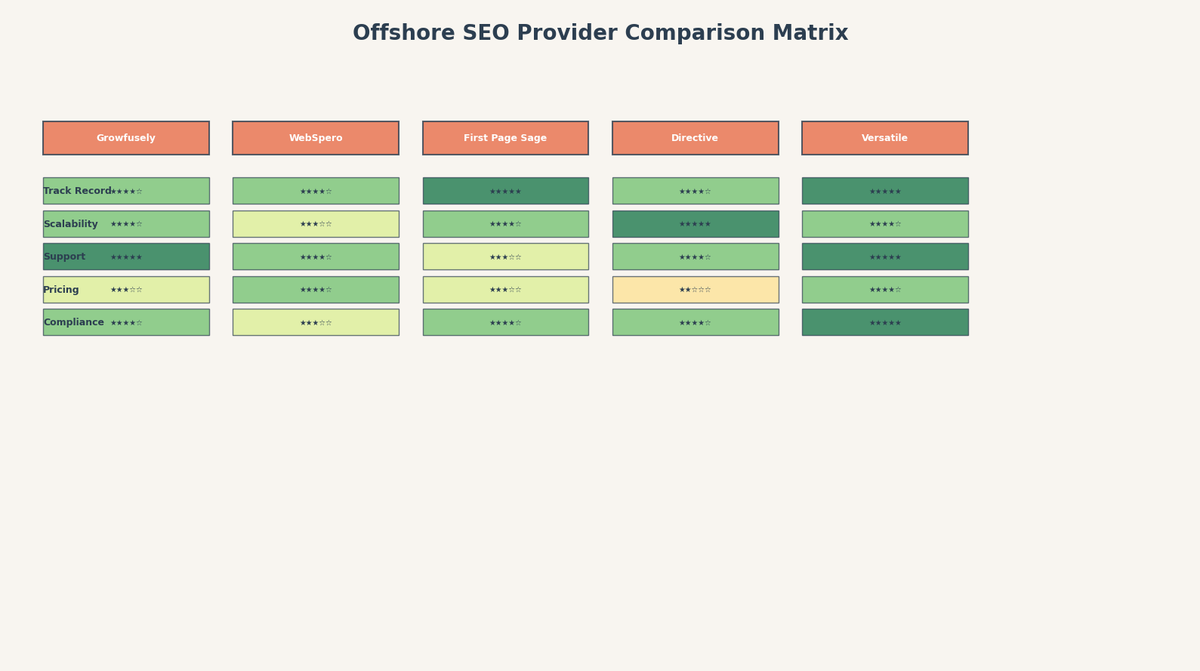
Comparison of Top 10 Offshore SEO Companies
Below is a curated comparison of leading offshore SEO firms. Prices, team sizes, and specializations are approximate as of August 2026 and vary by contract. Use this as a starting point; always request current pricing and case studies from the firm directly.
| Company | HQ | Specialization | Team Size | Avg. Monthly Cost | Best For |
|---|---|---|---|---|---|
| Growfusely | India | SaaS/B2B Growth | 12-50 | $3,000-$8,000 | Startups, early-stage SaaS, founder-driven |
| WebSpero | India | Enterprise SEO | 25-100 | $5,000-$15,000 | Mid-market, compliance-heavy, fintech |
| First Page Sage | USA (offshore team) | B2B Content & Link Building | 18-60 | $4,000-$12,000 | Lead-gen, B2B SaaS, high-intent |
| Directive | USA (hybrid) | SaaS-specific, Demand Gen | 40-150 | $6,000-$20,000+ | Growth-stage SaaS, VC-backed, revenue-focused |
| Skale | USA (hybrid) | SaaS Growth & Retention | 15-50 | $3,500-$10,000 | Retention-focused SaaS, product-led growth |
| Codeless | USA (offshore support) | Enterprise SaaS & Scale | 30-80 | $5,000-$18,000 | Enterprise, high-touch, process-heavy |
| Versatile Club | India (EOR-native) | Dedicated SEO Teams via EOR | Dedicated 1-5 | $2,500-$6,000 | Direct hire, full control, India-first, founder-owned |
| Scale Labs (Mumbai) | India | Performance SEO & PPC | 20-80 | $2,000-$6,000 | Budget-conscious, India-based teams, performance-based |
| Brandify | Philippines | Content & Technical SEO | 15-50 | $1,500-$4,000 | Very budget-constrained startups, content mills |
| Outrank | USA (hybrid AI-first) | AI-Native Content at Scale | Tech-driven | $2,000-$7,000 | Volume-heavy content, AI-assisted SEO, growth at scale |
Key insight: price isn't a reliable predictor of quality. Brandify is cheapest but may deliver lower-quality work; Directive is priciest but caters to revenue-stage SaaS where CAC optimization matters less and growth velocity is paramount. Choose based on your company stage, budget, risk tolerance, and hands-on management capacity.
"Best SEO partner we've worked with. Transparent reporting, no fluff. They understood our SaaS product better than most in-house teams. Delivered keyword wins in 8 weeks and we've sustained 30% YoY growth in organic traffic."
- Anonymous Buyer, G2 Verified Review
Growfusely: B2B SEO at Startup Pace
Growfusely specializes in SaaS and B2B marketing. Their India-based team offers lean SEO strategy paired with content production. They're known for rapid keyword research, competitive analysis, and founder accessibility. Many early-stage SaaS founders prefer Growfusely because the team moves fast and isn't rigid about process-there's no bloated project management layer between you and execution.
Typical deliverables: Monthly keyword roadmap, 8-12 blog posts (1200-2000 words each), 15-20 backlinks (DA 30-50), weekly Slack updates. Pros: Affordable ($3K-$8K/mo), fast delivery, founder-accessible, no long-term contract required, flexible scope. Cons: Smaller team (may lack enterprise-scale link-building resources or technical SEO depth), less formal process (documentation can be ad-hoc), communication can be async-only (no regular video calls as default).
"Growfusely gave us a 6-month SEO roadmap that actually made sense. Not a black box. We scaled from 5K to 40K organic visitors in 10 months and hired them for a second product."
- Founder, B2B SaaS Startup, G2 Verified Review
WebSpero: Enterprise SEO with Compliance
WebSpero is a mid-to-enterprise offshore SEO firm headquartered in India. They excel at large-scale content production, technical SEO audits, and compliance-first thinking. Particularly strong in fintech, healthcare tech, and regulated verticals. Their process is more formal than Growfusely-quarterly business reviews, documented SLAs, structured escalation paths, and regular compliance audits.
Typical deliverables: Quarterly strategy review with stakeholder presentation, 20-30 blog posts/month, 30-50 high-DA backlinks, technical SEO audits (quarterly), compliance audit (GDPR/CCPA/DPDP), monthly business review calls. Pros: Deep compliance expertise, large team (enables rapid scaling), proven enterprise track record, formal processes and documentation. Cons: Higher price point ($5K-$15K/mo), less flexible on scope changes, longer onboarding (2-3 weeks vs. 1 week for Growfusely).
"WebSpero handled our GDPR and CCPA audit seamlessly. Their content team is world-class and their link-building is careful and high-quality (no spam domains). Worth the premium for fintech."
- Marketing Lead, Fintech Platform, G2 Verified Review
First Page Sage: B2B Content and Link-Building Hybrid
First Page Sage operates a hybrid model: US-based account management and strategy, offshore execution team. Specializes in B2B SaaS lead generation and high-quality link building. Strong reputation for transparent reporting and client partnership. They focus on content that attracts inbound links naturally-research, guides, data reports, thought leadership-rather than chasing any link opportunity.
Typical deliverables: Content calendar with editorial strategy (3-month rolling), 10-15 high-quality posts/month, 20-30 premium backlinks (DA 50+), competitive analysis, lead tracking via HubSpot integration. Pros: Hybrid US/offshore blend (feels more US-based in communication), transparent metrics, B2B-focused approach that maps to lead generation. Cons: Mid-market pricing, typically requires 3-6 month commitment, less flexible on quick pivots.
Directive: SaaS Demand Generation and SEO Fusion
Directive combines SEO, content marketing, and paid performance into a unified demand-gen engine. Known for treating SEO as part of a broader revenue conversation, not a siloed function. Strong for VC-backed SaaS companies with higher budgets and growth ambitions. They've become a preferred partner for funded startups in the $5M-$50M ARR range.
Typical deliverables: Integrated demand-gen roadmap, SEO + PPC + content strategy, rapid experimentation cycles, paid+organic synergy optimization, monthly performance review. Pros: Demand-gen integrated (SEO feeds PPC and vice versa), rapid experimentation culture, high-touch leadership with regular founder/CMO access. Cons: Expensive ($6K-$20K+/mo), best for companies with $2M+ ARR, may overlap with your in-house team (requires alignment on decision-making).
Skale: SaaS Retention and Expansion Focus
Skale focuses on a unique angle: SaaS expansion and retention SEO. Their specialty is content for upsell, feature education, and onboarding-what they call "product-led SEO." Most agencies focus on top-of-funnel (landing page, blog, lead magnet); Skale treats SEO as a retention and expansion lever, helping existing customers discover new features and capabilities.
Typical deliverables: In-app content strategy, feature education pages, customer success content, internal linking optimization, expansion-focused keyword research. Pros: Retention-focused (rarer, valuable angle for SaaS), product-mindset and technical depth, mid-market pricing. Cons: Narrower vertical focus (best for PLG-native SaaS), may not suit B2B complex sales cycles well.
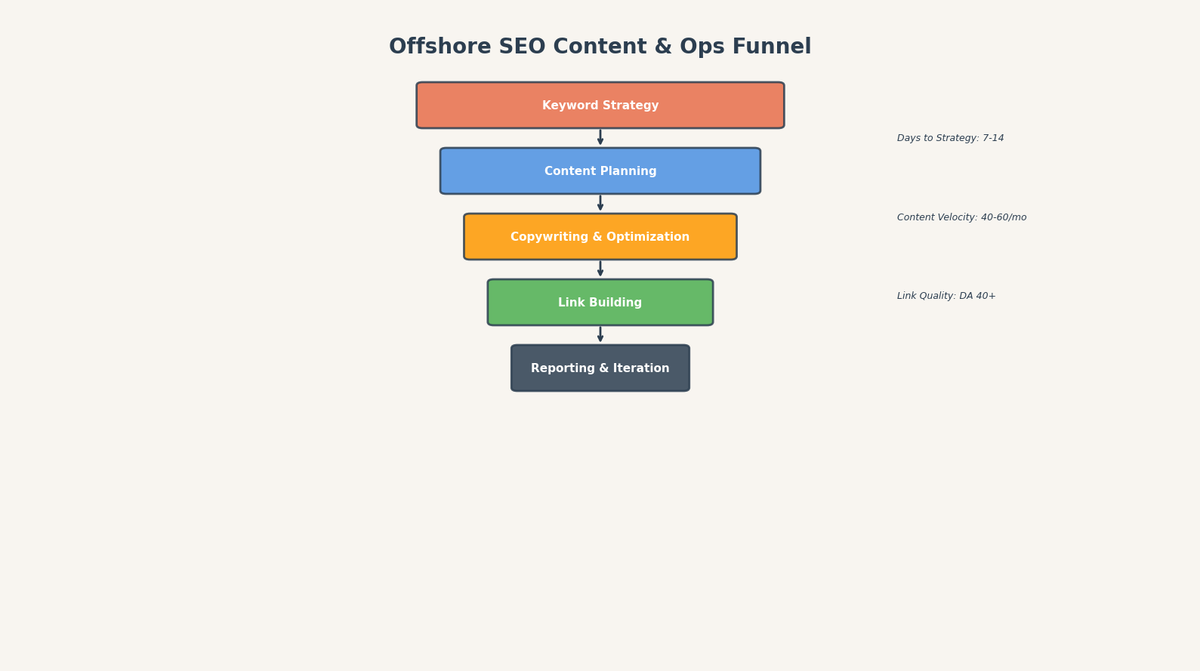
Versatile: Hiring a Dedicated Offshore SEO Team via EOR
Versatile Club offers a fundamentally different model from agencies: rather than outsource to an agency, you hire dedicated SEO professionals directly as remote employees via Employer of Record (EOR) in India. This is ideal for companies that want control, transparency, full ownership, and team building without agency overhead or markup.
How it works: Versatile sources, vets, and onboards a 1-5 person SEO team (strategy lead, content creators, link-building specialist) based on your budget. They're 100% dedicated to your company-no shared resources, no context-switching across other clients. You own the roadmap, processes, and KPIs. Versatile handles employment, compliance, taxes, and support; you manage day-to-day direction.
Cost structure: You pay salary + Versatile's vendor fee (~15-20%). A mid-level SEO specialist in India costs $1,500-$2,500/month all-in; a 3-person team (strategy, content, link-building) runs $5,000-$7,000/month. Compare to a US-based mid-level SEO hire: $120K salary + 30% overhead = $10K/month fully loaded. Versatile's model saves 40-60% without sacrificing quality.
Typical team structure:
- 1-person: Strategy + content writing (good for early-stage startups under $1M ARR)
- 2-person: Strategy lead + content specialist (content production focus, ideal for $1M-$5M ARR)
- 3-person: Strategy lead + 2 content creators + 1 link-building specialist (full-stack team for $5M+ ARR or high-velocity content plays)
Pros: Total control over roadmap and execution, lower cost than comparable US team, direct communication (no agency middleman), fully scalable headcount month-to-month, your team learns your product deeply over time, you own all IP and processes, no account manager markup. Cons: You manage hiring and training; requires more hands-on leadership and onboarding effort; time zone delays (India is 9.5-12.5 hours ahead of US); may feel less "agency-polished" at first until team ramps.
For founders and marketing leaders who want to build a real in-house SEO operation without the overhead of US payroll and benefits, Versatile's EOR model is transformative. You get a team that reports to you, not an agency. You control priorities. You iterate faster.
Learn more about hiring SEO talent via EOR in India or explore Versatile's full EOR service offerings.
"Versatile helped us build a dedicated team in India for half the cost of a Bay Area hire. We now own our SEO roadmap and can pivot quickly. After 4 months, they're more aligned to our product than an external agency ever was. We're planning to expand the team."
- Head of Growth, Series B SaaS, Anonymous
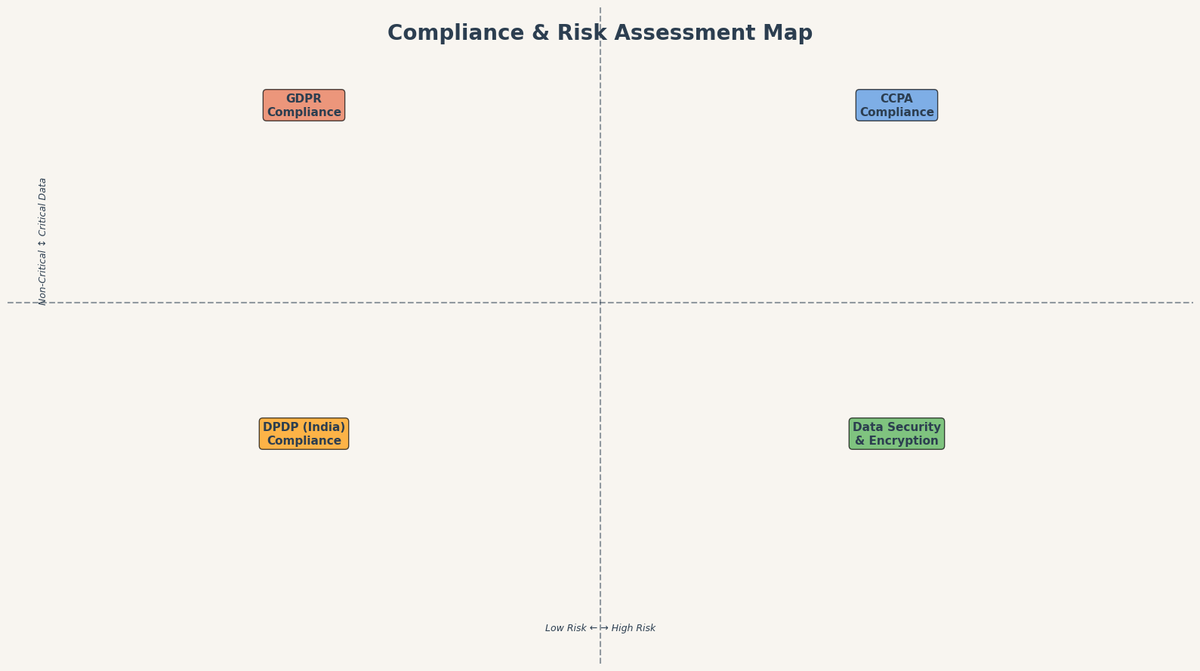
Compliance Considerations for Fintech and SaaS Content
SaaS and fintech companies operate in regulated spaces. An offshore SEO partner must understand the legal landscape or risk exposing your company to fines, content removal, and reputation damage. Here's what you need to know:
GDPR (European Data Protection)
If your target audience includes EU customers, your content and backlink outreach must comply with GDPR. This means consent-based data processing, clear privacy policies, and avoiding scraped or cold-contact link-building tactics that violate GDPR's anti-spam rules. A strong offshore partner should never cold-email from scraped lists or purchase link placements without transparent disclosure. They should also ensure your website's privacy policy and cookie banners are GDPR-compliant. GDPR fines start at EUR 10M or 2% of global revenue (whichever is higher) for minor violations; serious violations can trigger 4% of global revenue.
CCPA (California Consumer Privacy)
California's privacy law requires transparency around data collection, user rights to deletion, and opt-out mechanisms. SEO partners should audit your content for CCPA-compliant language and avoid dark patterns that hide privacy policies or make opt-out difficult. CCPA fines start at $2,500 per violation; class-action lawsuits are common. Your offshore partner should be trained on CCPA basics and should not assist in tactics that obscure your privacy practices.
DPDP (India's Digital Personal Data Protection Act)
If your offshore team is India-based, India's 2023 DPDP Act applies. It mirrors GDPR in many ways but with India-specific enforcement and definitions. Ensure your vendor contract includes a Data Processing Agreement (DPA) and that the team complies with data residency rules (personal data of Indian citizens can't leave India without explicit consent). For India-native hiring models like Versatile's EOR, DPDP compliance is built in-your team is already under Indian labor and data protection law.
Fintech-Specific: Anti-Money Laundering (AML) and Know Your Customer (KYC)
If your fintech company handles payments or financial data, your SEO partner cannot assist in any marketing that avoids financial regulatory disclosures. They must respect KYC/AML guidelines, FINRA (if US), PRA/FCA (if UK), and RBI (if India-focused). Content should never promise unregulated financial products or hide compliance details.
FAQs: Offshore SEO for SaaS and Fintech
Q: How long does it take to see results from an offshore SEO partner?
Expect 3-6 months for meaningful keyword ranking gains, 6-12 months for measurable traffic lift. SaaS and B2B SEO is slower than e-commerce because decision cycles are longer and competition for high-intent keywords is fierce. Quick wins (3-8 weeks): fixing technical SEO issues, low-competition content ranking, internal linking optimization. But don't expect explosive growth overnight; sustainable offshore SEO is a marathon, not a sprint. Many founders see 50-100% organic traffic growth by month 9-12 if the partner is executing well and your domain has some established authority.
Q: Should we use an offshore agency or hire a dedicated team (EOR model)?
Agencies are better if you want hands-off execution and don't want to manage people. You get proven playbooks, scale, and accountability to SLAs. EOR (dedicated hire) is better if you want control, direct team access, and a scalable in-house operation. Cost is often similar; the difference is control and flexibility. Agencies: easier onboarding, proven playbooks, no hiring burden. EOR: more ownership, faster pivots, lower overhead long-term, deeper product alignment. Choose based on your management bandwidth and growth stage. Rule of thumb: if you have a CMO or VP Marketing who can actively oversee SEO, EOR is better. If you want to ignore it and get consistent output, agency is better.
Q: What's the biggest risk with offshore SEO teams?
Communication gaps and quality inconsistency. Time zone delays, cultural misalignment, and language barriers can slow decision-making. Mitigate by: picking a partner with transparent async communication (Slack, Loom, async video updates), clear KPIs, and a trial period. Some companies run a 30-day pilot before committing long-term. Also: ensure your partner has English-fluent staff and can articulate strategy clearly, not just execute tactics. Schedule a weekly 30-minute call (async-friendly: recorded and shared, so anyone can catch up) to align on priorities and surface blockers early.
Q: Is it safe to hire offshore for fintech/regulated content?
Yes, if the partner has compliance certifications (SOC 2, ISO 27001, DPDP). You'll need a Data Processing Agreement (DPA) in your contract and regular audits of their security practices. Many fintech companies now hire offshore SEO teams successfully; the key is diligence upfront. Ask for security audit reports, insurance certificates, and references from other fintech clients. If they balk at sharing, walk away. Some fintech companies we know operate with India-native teams entirely via EOR; it's lower-risk because the team is already regulated under Indian law and can't move data outside India without legal permission.
Q: How do we know if the offshore partner is actually doing the work and not cutting corners?
Spot checks. Audit their backlinks via Ahrefs or SEMrush (verify domain authority, anchor text relevance, publication timeliness), read the content they produce personally (check for plagiarism via CopyScape or GPTZero), and ask to meet the team executing the work. Real-time Slack access and weekly calls help too. Transparent partners invite scrutiny and have nothing to hide. Agencies often hide execution; demand visibility into the process. Ask to sit in on their content review meetings or backlink vetting sessions monthly. If they resist, that's a red flag.
Q: What's the all-in cost for a dedicated SEO team via EOR (like Versatile)?
A 1-person SEO specialist (strategy + content): $2,500-$3,500/mo. A 3-person team (strategy, content, link-building): $5,000-$7,000/mo. Includes salary, taxes, benefits, vendor management, and Versatile's support. No hidden fees. Compare to: 1 US-based mid-level SEO hire (~$120K salary + 30% overhead = ~$10K/mo fully loaded). Offshore via EOR saves 40-60% and gives you a full team, not just one person. ROI typically positive in months 4-6 as organic traffic compounds. Many companies see payback in under a year if they scale to 3-5 people.
How to Pick the Right Partner: A Founder's Close
Choosing an offshore SEO partner is like hiring your first marketing manager. You're betting on their judgment, integrity, and ability to execute under pressure.
Start with the evaluation checklist above. But the real vetting happens in conversations. Ask them:
- "What's your typical timeline to first keyword ranking wins?" (Honest answer: 4-6 weeks for competitive keywords, 2-3 weeks for low-competition keywords.)
- "Show me a failed campaign and what you learned." (You want humility and learning, not just wins.)
- "How do you handle a scope-creep request?" (Do they have clear boundaries and push back?)
- "What's your communication cadence if something breaks?" (Real-time? Next business day?)
- "Can I talk to a customer in my vertical?" (Specificity matters-someone in your market who faced similar challenges.)
The best offshore partners feel like extensions of your team, not vendors. They understand your product, your market, and your revenue goals. They communicate clearly, hit deadlines, and take ownership when things go wrong.
If you're considering the EOR route-hiring a dedicated team via Versatile's India-native platform-get a founder call with Versatile. They can help you right-size your first hire and scale from there.
Ready to start your offshore SEO journey? Book a 20-minute call with a Versatile advisor to discuss your company's needs and explore whether an offshore partner or dedicated team is right for you: Schedule now.