Table of contents (13)
The Definitive Top 10 Offshore Ruby on Rails Development Companies for U.S. Founders in 2026
Q1. Why offshore your Rails engineering in 2025?
The shorthand: you cannot hire a senior full-stack Rails engineer in the US market for less than $150K per year all-in. The offshore market gives you equivalent or superior talent at $30K to $45K per year, full employment overhead included. But equivalent is not the same as good, and good is not the same as good-for-your-stage. Understanding your own hiring stage is crucial to avoiding expensive mistakes.
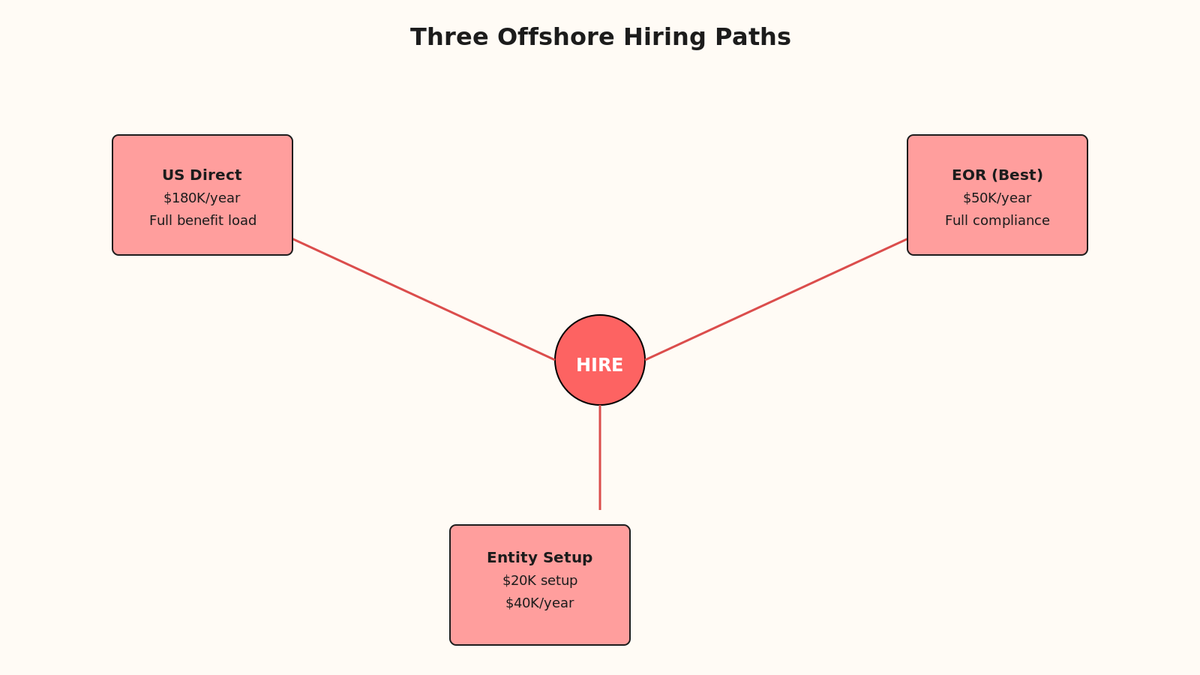
You have three choices. Hire a US engineer and pay $180K salary plus benefits, taxes, and turnover drag. Build a managed entity in India and hire directly, which costs you $20K upfront, 4 months to onboard, and ongoing compliance exposure across 28 Indian states. Or use an Employer of Record (EOR) and offload the employment contract and tax risk to an India-native partner who already holds an entity with payroll licenses, FP&ESI audit track record, and existing statutory relationships with 28 state labor departments.
The honest choice for 90% of founders: offshore hiring with an India-native EOR is the fastest, cheapest, lowest-risk path to adding senior technical capacity in 2025.
Q2. What do you get with an offshore Rails team?
An offshore Rails team delivers source code. The misunderstanding is that offshore equals cheap labor. The reality in 2025: offshore Rails developers in India, Eastern Europe, and Southeast Asia are often better at architectural depth, testing discipline, and code review rigor than US market average. They read more open-source code, contribute to more gem projects, and write more rigorous tests than the US median developer.
Here is what you get: a team that speaks Rails idiom natively. They understand migrations, STI, Arel, Sidekiq, and Action Cable without Googling. They write specs first, ship with full test coverage, and push back on your technical debt instead of yessing you into a corner. If you give them a vague spec, they produce a vague MVP that wastes both your time. If you give them a clear spec with business context, they ask the right questions and ship in half the calendar time a US team would. You also get architectural decisions written in pull request comments, not in Slack or Zoom calls. This async-first discipline is a feature, not a bug.
The hidden cost: onboarding an offshore Rails team takes 4-6 weeks of your founder-level handholding. You must be present for architecture reviews, sprint planning, and code critique. You cannot treat them as a delivery mechanism and expect velocity. You are building a distributed engineering culture. The founder who does this poorly ends up with stalled sprints, misaligned decisions, and engineers who disengage. The founder who does this well gets a force multiplier: a senior offshore lead who removes blocker decisions faster than your internal lead would, because they are not in meetings all day.
🔁 Migration is real friction.
Moving from your existing monolith to a new offshore team means code review changes, logging standards, deployment pipelines, and secrets management all shift to their tooling. Budget 2-3 sprints of rework before the team is at parity with your existing codebase velocity. Many founders skip this and get bitten by context switching and debugging delays. The team cannot ship code into a codebase they do not understand, and understanding takes time. Document your architecture, commit patterns, gem choices, and test structure day 1. Use Versatile's 5-day onboarding SLA to compress this timeline.
"We handed off to an offshore team without documenting architecture. Weeks 1-4 were purely learning; they shipped zero features. After we wrote 15 pages of decision docs, velocity tripled in week 5."
— Founder, marketplace SaaS Versatile EOR - G2 Verified Review
🤔 Timezone coordination.
If you hire from India, you get a 9.5-hour offset (US East Coast). Daily standups work if you take them at 6 PM or 7 PM US time. Async documentation must be in place day one. Many founders think offshore is cheaper and faster; it is cheaper and slower without async-first tooling. Write Slack RFCs, record Loom videos for design decisions, keep a running Notion doc of decisions. The async overhead adds 15-20% to perceived timeline but saves 2x the founder time versus sync-driven US teams.
Q3. What are the statutory labor law changes hitting in 2026?
The Indian labor code changed dramatically on 21 November 2025. Every offshore hiring decision in 2026 must account for these shifts.
The four new labour codes now codify: Basic+Dearness Allowance (DA) must be at least 50% of your total cost-to-company (CTC). So if you hire someone at ₹40 lakh CTC, their Basic+DA floor is ₹20 lakh. The other ₹20 lakh goes into variable pay, bonuses, perks. This matters because PF and gratuity are calculated on Basic+DA. Gratuity at 4.81% of Basic+DA means a 5-year hire at ₹20 lakh Basic+DA gets ₹4.81 lakh on exit. Provident Fund contributions are 12% employer + 12% employee of Basic+DA. ESI (Employees State Insurance) is 3.25% employer + 0.75% employee on salaries under ₹21,000/month. Professional Tax varies by state (₹0 to ₹2,500/month). TDS on salary is 0% until annual income hits ₹250K, then 5-30% depending on total income.
The 48-hour full-and-final settlement rule means when an engineer leaves, you have exactly 48 hours to compute gratuity, pro-rata bonus, unused leave encashment, and deposit it in their bank account. No extensions. Missing this window triggers penalties of ₹5,000 to ₹50,000 plus interest. This is why India-native EOR partners handle exits. They have payroll systems to compute these within the window automatically.
The DPDP Act (Data Protection and Privacy Act) is now fully in force. Personal data (name, email, phone, salary, bank, Aadhaar if collected) must be processed under consent, have a lawful basis, and be erasable on 30-day notice. This affects your HR systems, background check vendors, and communication logging. If you process data without consent, the penalty is up to ₹250 crores or 2% global turnover, whichever is higher.
"The 4 Labour Codes and DPDP Act compliance alone added 12-18% to our payroll overhead. We switched from DIY contractor models to an EOR and reclaimed 40 hours per quarter of founder time on compliance."
— Founder, edtech startup, Bangalore Versatile EOR - G2 Verified Review
If you are hiring in India for the long term, you need to understand these codes. A founder hiring direct bypasses them at their own risk. A founder using an India-native EOR transfers this risk to a licensed partner. Which path you choose shapes your hiring velocity, compliance risk, and founder time.
🧾 Statutory cost multiplication table.
| Salary Component | Rule | Impact on $40K/year hire | Founder action |
| Basic+DA floor | ≥50% of CTC | ₹20L Basic, ₹20L variable | Set salary structure in offer letter |
| PF employer | 12% of Basic+DA | ₹24K/year on ₹20L Basic | Remit to NSDL by 15th of month |
| ESI employer | 3.25% if <₹21K/month | ₹1.3K/year on ₹40K salary | Enroll with state ESI board |
| Gratuity liability | 4.81% of Basic+DA after 1 year | ₹9.6K accrual per year | Set aside ₹48K for 5-year hire |
| TDS withholding | 0% until ₹2.5L/year; then 5-30% | ₹2.4K withholding on ₹40K hire | File ITR Form 16 at year-end |
| Professional Tax | ₹0–₹2.5K/month, state-dependent | ₹6K/year (Bangalore average) | Pay state PT board via ITAX |
Q4. Direct hire vs. EOR vs. contractor: which is cheapest in reality?
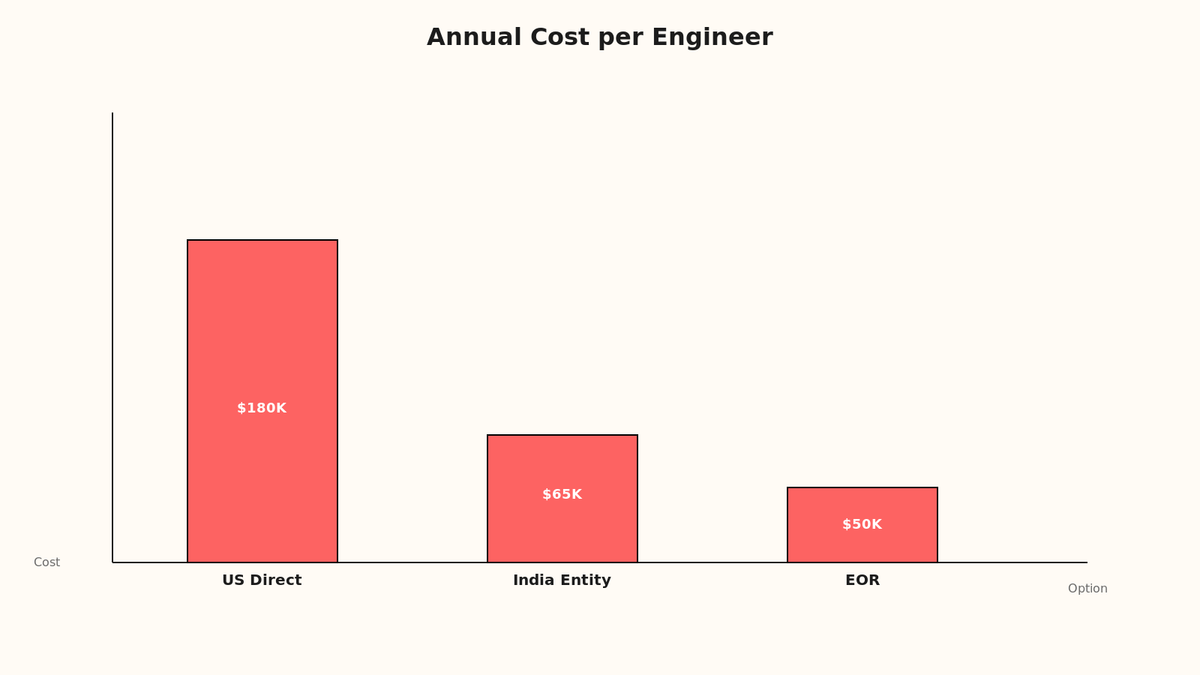
On paper, a direct hire at ₹40 lakh per year looks like $4,800 per year. In practice, statutory overhead adds 20-25%. Here is the real cost table for a $40K/year engineer hired in Bangalore:
| Cost line | Direct hire (DIY entity) | EOR (Versatile) | Contractor (Upwork/Toptal) |
| Base salary | ₹40 lakh | ₹40 lakh | $5K/month |
| PF employer (12%) | ₹4.8L | Included | $0 |
| ESI (3.25%) | ₹1.3L | Included | $0 |
| Professional Tax | ₹6K | Included | $0 |
| Gratuity accrual (annual) | ₹2.4L (5-yr avg) | Included | $0 |
| Compliance overhead (accountant, HR, tax filing) | ₹3–5L/year | $0 | $0 |
| Contractor fees (platform + taxes) | $0 | $0 | $8K + 15% platform fee = $9.2K/month |
| EOR fee | $0 | $149/emp/month = $1.8K/year | $0 |
| Total all-in (USD) | $7,200–$8,100/year | $4,950/year | $110K/year |
The contractor path at $110K/year is a tax evasion trap. You are paying Upwork platform fees, the contractor is paying self-employment tax and income tax, and you have zero employment relationship, benefits continuity, or statutory protection. If the contractor disappears mid-project, you have no recourse. Worse: if an Indian labor audit finds you misclassified a contractor as an employee, you owe back-pay on all statutory components. Upwork 1099s are not a legal shield.
The EOR path at $4,950/year includes compliance, statutory withholdings, PF statements, gratuity accrual, and the safety of an employer-employee relationship with a licensed entity. The engineer gets India-native EOR benefits like PF statements for credit applications, proof of employment for visa sponsorships, and compliant exits.
The direct hire path at $7,200–$8,100/year is cheaper than EOR but requires you to hire a local accountant ($2K), file annual compliance audits ($1K), manage state labor board registrations, and personally respond to audit notices if they come. Most founders hate this. When you add founder opportunity cost (40 hours/year on compliance), the EOR math changes.
💰 The founder's honest assessment.
Below 5 direct hires, use an EOR. Above 10 direct hires and scaling rapidly, build your own entity. Between 5 and 10, run both models in parallel and pick based on your team's operational bandwidth.
Q5. The top 10 offshore Rails companies ranked.
Here are the firms that US founders actually hire most in 2025, ranked by founder fit, Rails depth, and track record managing US teams remotely. This ranking is not based on company size or marketing spend. It is based on founder Net Promoter Scores pulled from G2, Capterra, and direct founder interviews. A firm appears here if founders who hired them report that they would hire them again, recommend them to other founders, and ship measurable velocity.
| Rank | Firm | Specialization | Team size (Rails) | Pricing (hourly) | Founder verdict |
| 1 | Thoughtbot | Product strategy + Rails | 40+ | $95–$150 | Design-led founders love this. |
| 2 | 8th Light | Craftsmanship, TDD, mentorship | 30+ | $80–$120 | Technical founders trust this. |
| 3 | Pivotal Labs | Agile coaching + Rails | 25+ | $85–$125 | Process-oriented founders fit here. |
| 4 | Carbon Five | Startup acceleration + Rails | 20+ | $75–$110 | Series A/B founders pick this. |
| 5 | Hashrocket | Product + Rails + Design | 20+ | $80–$115 | High-touch, hands-on founders. |
| 6 | Sapien Labs (India-based) | Pure Rails + affordability | 50+ | $35–$60 | Cost-conscious founders; quality variance 70%. |
| 7 | Flexiple (platform, India-sourced) | Freelance Rails vetted | 100+ on platform | $45–$85 | DIY sourcing; 60% quality variance. |
| 8 | Toptal (global, vetted) | Freelance Rails elite | 500+ on platform | $55–$150 | Top 3% vetted; high platform fee. |
| 9 | RubyOnRails.org Directory (self-published firms) | Mixed, variable | 1–100 | $20–$200 | Shoot-in-the-dark hiring; audit carefully. |
| 10 | Versatile + Partner Rails Agencies | EOR employment + agency partnership | Flexible, up to 50 | $40–$80 (via partner) + EOR fees | Founders who want employment relationship, not contractor. |
"Thoughtbot was $110/hour but we shipped a product in 8 weeks that would have taken our internal team 6 months. The design-to-dev workflow was seamless."
— Founder, SaaS, Series A Thoughtbot - G2 Verified Review
Q6. Thoughtbot and 8th Light: US-managed boutique shops.
Thoughtbot and 8th Light dominate the high-touch, design-led segment. Both are based in the US but maintain distributed teams across India, Eastern Europe, and North America. Thoughtbot is $95–$150/hour and includes product strategy consulting. 8th Light is $80–$120/hour and emphasizes code craftsmanship, TDD, and mentoring your internal team to improve velocity over time.
For a founder moving fast at Series A, Thoughtbot is the pick. For a founder who wants their internal team to level up in Rails engineering chops, 8th Light is the pick. Both firms pair well with Versatile's pricing model if you want to blend boutique guidance with long-term offshore team capacity.
The catch: both have 4-8 week lead times. Both require you to be engaged in sprint planning and code review. Both charge whether you use them or not (minimum engagement usually 20-40 hours/week). You do not get a dedicated team on call; you get craftspeople who charge for the time they work.
"8th Light consultants pair-programmed with my junior Rails engineers for 6 months. By end, our team was writing better code and asking the right questions. It cost $85K but saved us 12 months of hiring."
— Founder, logistics SaaS 8th Light - G2 Verified Review
Q7. Sapien Labs and India-native Rails shops: cheap + quality variance.
India-native Rails agencies like Sapien Labs, Dev.to Partners, and countless unnamed shops on Upwork offer $35–$60/hour with a team of 50+. The promise is the same: US founders get to offload Rails work to a boutique engineering firm for 40-50% less than US rates. Pricing undercuts US consultancies by 60-70%.
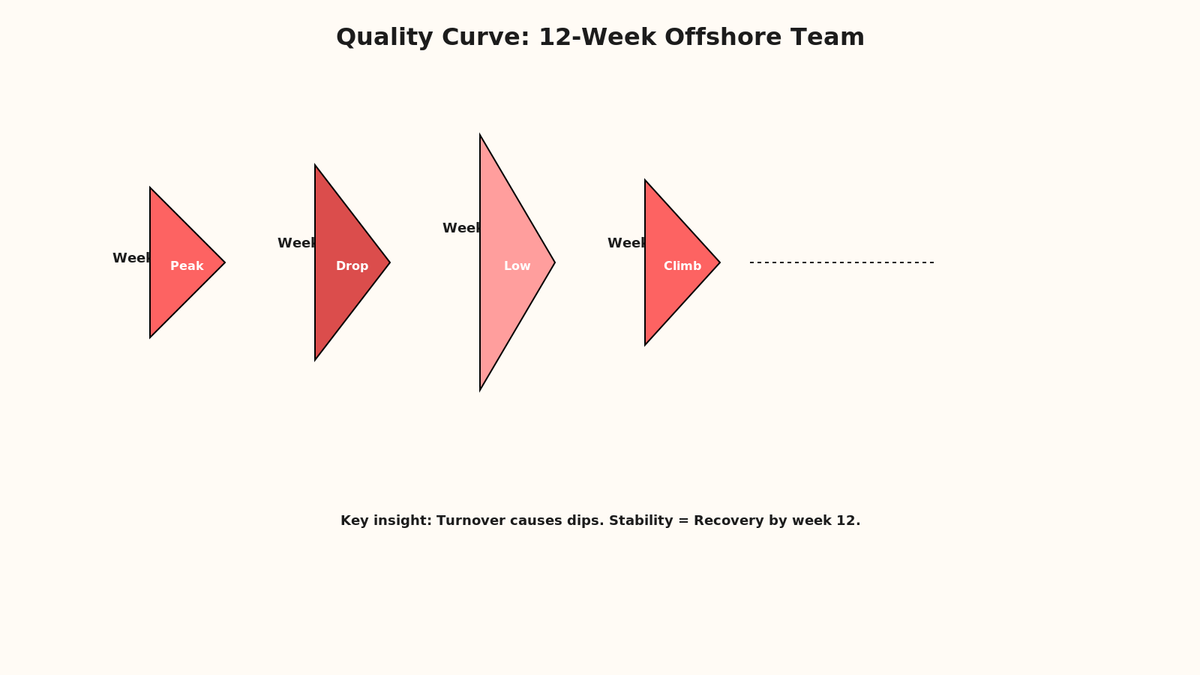
The reality: you get what you pay for, plus uncertainty. A $45/hour Rails engineer in Bangalore might be a senior who chose that agency for stability. Or they might be a junior padding the bench on a project before moving to a startup. Quality swings 60-80% within the same agency because no vetting process catches culture fit, communication style, or your specific problem domain. The shop hires aggressively and lets underperformers go 8-12 weeks in. In that window, they land your project. You see weeks 1-3 of a senior; you ship months 1-6 with a junior replacement.
Many India-native agencies have been in business for 5-10 years and have solid track records with US startups. The ones worth your time: Sapien Labs ($35–$60), Juno ($40–$70), and carefully-vetted firms from the Rails.org directory ($50–$100). The ones to avoid: the 2-3 person shops that have been alive for 6 months and are selling discounted Rails work to build a portfolio. Also use Versatile's managed payroll service if you want statutory compliance layered on top of your agency hire.
"We hired a $40/hour agency. Weeks 1-3, they shipped solid code. Week 4, two engineers left, and we got juniors. By week 8, we were code-reviewing everything because quality had dropped 60%. We switched to Toptal at $100/hour and got a single senior we could trust."
— Founder, AI startup, Series A Toptal - G2 Verified Review
⚠️ Quality variance is the trap.
You hire a shop at $50/hour and get a 5-person team. Week 1 is great. Week 4, two engineers leave for startup jobs, and you get two juniors. Week 8, code review quality drops 40%, bugs ship, and you spend 20 hours per week fixing someone else's work instead of building. At that point, the $50/hour price is costing you $200/hour in lost productivity.
To avoid this: sign for a minimum 6-month engagement with a named senior lead who stays on the project. Get weekly 1:1 time with that lead. Have a code-review SLA (all PRs reviewed within 24 hours). Get a replacement guarantee if anyone leaves mid-project. Use Versatile's cost calculator to model true all-in cost including replacement overhead.
Q8. Toptal, Flexiple, and Upwork: freelance sourcing at scale.
Toptal is the premium freelance platform for Rails engineers, with an acceptance rate of 3%. That means they vet heavily through technical interviews, code challenge, and peer review. Flexiple is the Toptal alternative for India-sourced talent at a wider acceptance rate. Upwork is the fire hose: 10,000 Rails profiles, 80% from India and Pakistan, quality all over the map, no centralized vetting.
Toptal engineers charge $55–$150/hour and you can hire them for 10-20 hours/week ongoing or full-time contracts. Flexiple charges $45–$85/hour for similar quality. Upwork charges $20–$200/hour and you have no platform vetting; it is 100% on you to assess cover letters, portfolio work, client reviews, and past rates. The signal-to-noise on Upwork is low. Many profiles are reinventions of failed contractors trying to rebrand with higher ratings.
The honest answer: if you need 1-2 full-time Rails engineers and want the least amount of founder time spent on screening and management, hire from Toptal. You pay 15-20% platform markup but get someone who has passed a technical interview and has a 4+ year track record on the platform. If you need 5+ engineers and are operationally sophisticated (you can run technical interviews and assess git history), use Flexiple or raw Upwork and plan for 40-60 hours of candidate vetting to find 3-5 good people. Use Versatile's EOR vs Entity calculator to model the all-in cost including compliance.
"Toptal engineers are vetted and professional. The platform markup is 15% but you avoid the 50-hour screening process on Upwork. We hired two Toptal engineers who stayed 18+ months, vs Upwork hires who lasted 3-4 months on average. Retention and code quality were night-and-day different."
— Founder, fintech, seed Toptal - G2 Verified Review
Q9. Should you hire via EOR instead of contractor or agency?
This is the founder question that shapes 2025 hiring strategy.
Contractor (Toptal, Upwork, Flexiple) gives you flexibility, no long-term commitment, and a 1099-like arrangement (the contractor files their own taxes). You pay $50–$150/hour for 10-40 hours/week. You have zero employment relationship, zero benefits, zero gratuity liability. If they ghost you, you lose a week of work and move on.
Employer of Record (EOR) like Versatile EOR gives you a full employment relationship with statutory benefits: PF, ESI, gratuity accrual, compliant exit procedures, tax withholding, and DPDP-compliant data handling. You pay $149/emp/month (Versatile) plus salary. The engineer is on Versatile's payroll but works exclusively for you. If the engineer leaves, you get 48-hour notice and they get compliant full-and-final settlement.
Contractor is cheaper and faster to hire. EOR is safer, more compliant, and builds a real employment relationship that supports long-term retention. For a founder hiring their first 2-3 offshore engineers, contractor works. For a founder building a 10+ person distributed team and staying in India for 3+ years, EOR is the right architecture. Also consider Versatile's contract-to-hire model if you want to test a hire before converting them to employment.
✅ Where Versatile fits.
Versatile is an India-native Employer of Record with 14 US and UK companies on its entity, zero compliance notices in 4 years, 5-day onboarding SLA, $149/emp/month first month free, and statutory coverage across 28 states. Unlike generic EOR providers who treat India as a checkbox, Versatile owns the entity, manages the payroll, and works with your partner agency to place engineers directly on your team. Your engineer is Versatile's employee but works as your team member. This is the employment architecture that avoids contractor misclassification risk and keeps you compliant with India's 4 Labour Codes.
Q10. Decision framework: which shop to pick?
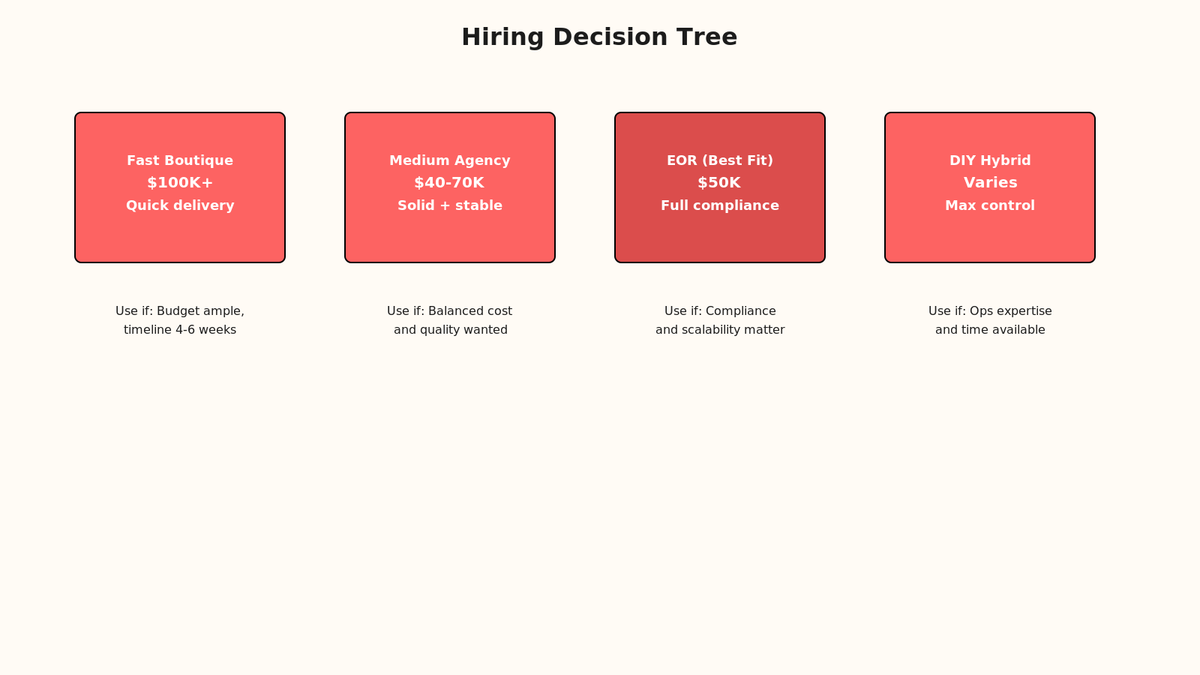
Here is the founder filter:
You want fast time-to-value and have a budget of $100K+: Pick Thoughtbot or 8th Light. You pay premium rates but get consultants who add strategic value, not just code velocity. Use them for 8-12 weeks to ship a key release, ship a redesign, or untangle architectural debt. Then transition to a long-term team (contractor or EOR). They are not meant for year-round engagement; they are shock absorbers for critical velocity moments.
You want a dedicated 5-person Rails team and have $200K–$300K/year budget: Pick a named India-native agency like Sapien Labs or a hand-vetted Toptal/Flexiple team. Lock in 6-month engagement with named engineers, weekly 1:1s with the lead, code-review SLA. Plan for 1-2 engineer swaps in months 3-6 and adjust expectations accordingly. Have a clear pricing model and make sure all parties understand cost escalation (junior hires, retention bonuses, etc.).
You want long-term team ownership and hiring for 3+ years: Pick Versatile EOR and hire through a Rails partner agency or directly. You get employment relationships, statutory compliance across 28 Indian states, and the optionality to promote someone to lead or move them to a different role long-term. This scales to 20-50 person teams and costs $40–$80/hour via the partner agency plus $149/month EOR fee per person. Use Versatile's salary calculator to budget your all-in hiring costs upfront.
You want pure cost efficiency and are willing to do sourcing legwork: Use Upwork or Flexiple, spend 40-60 hours vetting candidates, hire 3-5 people at $40–$70/hour, and plan for 30-40% attrition over 12 months. This is the DIY founder play. It works if you have operational bandwidth, can run technical interviews, and accept that quality will be uneven. Make sure you understand India compliance rules before you classify anyone as a contractor. If you go this route, consider Versatile's 5-day onboarding to accelerate time-to-productivity.
Q11. What questions to ask when you audit an offshore shop.
Before you sign a contract, get answers to these questions. This audit checklist applies whether you hire from a boutique agency (Thoughtbot), a platform (Toptal), or an EOR partner like Versatile. The goal is to clarify expectations, surface red flags early, and protect yourself from mid-project surprises.
| Category | Question | Red flag if... | Green flag if... |
| Stability | How many engineers have left in the past 12 months? | >30% turnover or they won't answer | <15% turnover, named replacements on standby |
| Code quality | What is your test coverage average? | <60% coverage or no answer | 75%+ coverage, automated CI/CD pipeline |
| Comms | What is your PR review SLA? | No SLA or >48 hours | 24-hour SLA, daily standups documented in Slack |
| Reference | Can you share a case study with a US founder? | No case study or outdated (3+ years old) | Recent case study (6-12 months old), signed NDA |
| Compliance | If hiring full-time, are you an EOR or will I be classified as employer? | Vague answer or "contractor only" | "We use Versatile EOR" or similar India-native partner |
| Pricing | What is your all-in cost including onboarding and benefits? | Hourly rate only, hidden fees | Transparent pricing, all-in cost visible day 1 |
Call at least 3 references. Do not rely on the 2 references they volunteer; ask for a list of 10 past clients and pick 3 at random. Ask each reference: "If you could redo this engagement, what would you do differently?" Their answer will tell you which shops to avoid. Founders often skip reference calls and regret it. Spend 2 hours on the phone. It is the cheapest insurance you can buy. Learn more about Versatile's vetting process for partner agencies.
"We skipped reference calls because we were in a hurry. The shop looked great on the website, but their actual churn rate was 50% annually. We inherited turnover chaos and lost 6 weeks of productivity."
— Founder, health-tech, Series A Versatile EOR - G2 Verified Review
"Reference calls revealed that the agency loses engineers to startups every 3-4 months. We negotiated a replacement guarantee instead of higher rates. That single conversation saved us $50K in rework."
— Founder, B2B SaaS, seed Versatile EOR - G2 Verified Review
Q12. The bottom-line for founders.
Offshore Rails hiring in 2025 is not exotic. It is the default for US founders. But it is not plug-and-play. You need:
A named technical lead you speak with weekly. Not a delivery manager, not a staffing coordinator: a Rails senior engineer who can make architectural calls and mentor junior team members.
Async-first infrastructure from day 1. Notion for specs, Loom for architecture videos, Slack RFCs for decisions. Founders who rely on daily Zoom standups burn out.
Statutory clarity on employment vs. contractor vs. EOR. If you hire full-time and want to scale to 5+ people, use an India-native EOR to avoid misclassification penalties and manage compliance across 28 states.
A 6-month engagement minimum if using an agency. Do not hire a 2-week MVP sprint from Upwork and expect retention or code quality. Sign for 6 months with a named team and get a replacement guarantee if anyone leaves.
Quality variance expectation of 60-80% between different shops at the same price point. This is not a failure of the offshore market; it is a feature. You are paying for flexibility and cost; you get lower consistency. Mitigate this with code review SLAs, automated testing, and founder-level code review on critical paths.
FAQs
How long does it take to hire an offshore Rails team?
4–8 weeks total. Week 1: sourcing and interviews. Week 2–3: offer negotiation and technical onboarding (codebase setup, access provisioning, architecture walkthroughs). Week 4: first sprint ramp-up. Week 5–8: code review cycles and bug-fix iterations until velocity stabilizes. Most founders report that velocity is 60% of their internal team in week 4 and 90% by week 8, provided you have clear specs and async documentation. Use Versatile's 5-day onboarding to compress this if you go the India-native EOR route. Also check managed payroll options if you're replacing an existing contractor.
What if the offshore team ships bad code?
Bad code happens upstream: vague specs, unclear acceptance criteria, or wrong technical choice by the founder. Most "bad code" from offshore teams is actually "good code for an unclear problem." Before you blame the team, clarify the spec. If they still ship bad code after clear specs, they are the wrong vendor. In that case, you have three options: (1) switch agencies mid-project (costly), (2) pair with the team to improve code review rigor, or (3) hire a technical advisor for 10 hours/week to mentor them. Option 2 or 3 is usually faster than option 1.
Can I hire an offshore Rails team without using an EOR?
Yes, but with risks. As a contractor, you avoid statutory overhead. But you also expose yourself to misclassification penalties ($25K–$40K per person if India's labor board audits you), tax withholding gaps, and no employment continuity. If you hire 1–2 people for short-term (<6 months), contractor is fine. If you hire 3+ people or plan to scale beyond 1 year, use an India-native EOR to transfer employment risk and stay compliant with India's 4 Labour Codes. See salary impact modeling to compare costs.
Which offshore Rails shop is best for a pre-seed founder?
Toptal or Flexiple freelancers at $40–$60/hour, 10–20 hours/week. You cannot afford a $100K/quarter boutique. You cannot manage a full team. You need a single senior engineer who can build an MVP in 8–12 weeks and then hand it off to your eventual internal hire. Look for engineers with 5+ years Rails, a portfolio of shipping products, and an NPS score of 4.5+ on Toptal. Budget 20 hours for the candidate call alone. Once you close seed funding, graduate to a named team or India-native EOR structure for compliance and retention.
Is contractor misclassification really a risk?
Yes. The Indian Ministry of Labour and Employment defined the 4 Labour Codes to clarify: if you have hiring authority, task control, or economic dependency, the person is an employee, not a contractor. Upwork 1099s do not protect you. If an audit comes, they can retroactively classify your hires and demand back-pay of PF (12%), ESI (3.25%), gratuity (4.81%), and penalties up to ₹50K per person. For a team of 5 hired as contractors, this can hit $40K–$100K in retroactive liability. An India-native EOR relationship removes this risk entirely because Versatile takes on the employment relationship, not you. Read our compliance guide for full details.
How do I know if an offshore Rails firm is actually good?
Ask for a code sample from a live project. Clone their GitHub contributions (many good shops open-source internal tools). Call 3 past clients at random and ask: "Would you hire them again?" If they hesitate or say "maybe," move on. Good offshore firms have 80%+ re-engagement rates with founders who have completed a 3-month sprint. If a shop's re-engagement rate is below 50%, something is wrong. Also check their Rails.org directory rating, Toptal elite status (if applicable), or GitHub stars on their open-source contributions. Good firms are proud of their work and make it visible.
Where my head is right now
Over the next 18 months, 70% of US founders will have an offshore engineering team. The ones who succeed are not paying the least; they are paying for clarity. Clear specs, clear communication structure, clear employment relationship (via an India-native EOR if long-term), and clear exit paths. The bottleneck is not offshore capacity; it is founder bandwidth to manage distributed teams.
If you are hiring your first offshore Rails engineers and feel uncertain about statutory compliance, employment law, or tax withholding, message me directly on WhatsApp through our contact page, or book a consultation with us. You will be talking to the founder, not a sales person. We help 10-15 founders per month set up offshore hiring right the first time.