Table of contents (16)
9 Best PEO Services in India Compared: Coverage, Compliance & Pricing (2026)
Q1. What Are the 9 Best PEO (EOR) Services for Hiring in India in 2026?
The nine best providers for hiring in India in 2026 are Versatile, Deel, Remote, Multiplier, Globalization Partners (G-P), Velocity Global, Papaya Global, Skuad, and Rippling. Versatile ranks first for India-only depth. We own our Indian entity, invoice in USD direct from India with no FX markup, and commit to a contractual 5-day onboarding SLA. The global generalists spread their India expertise across 90 to 150 countries through local partner shells.
💰 The Real Reason You Landed Here
A US founder pinged me on WhatsApp at 11pm her time last quarter. She had closed a seed round nine days earlier. Her lawyer had just flagged the two "contractors" she was paying in Bengaluru as a misclassification risk.
Her question was blunt. "Everyone tells me PEO does not exist in India. So who do I actually hire, and how fast?"
That is the trigger moment behind this search. You need to scale a team in 30 to 60 days. You do not want a $25,000 to $40,000 back-pay exposure per head if the contractor setup gets challenged. And you do not want mystery FX charges surfacing three months into the invoice.
Quick term check before we go further. A PEO (Professional Employer Organization) shares employer duties with you under a co-employment model. An EOR (Employer of Record) becomes the full legal employer on your behalf. In India, only the EOR model for India hiring works if you do not own a local entity, and I explain why in Q3.
⭐ How the Nine Providers Stack Up
Here is the ranked shortlist, each with the one thing it is genuinely best at.
Versatile: Best for US and UK startups hiring their first 1 to 20 India employees. India-only EOR through our own entity, 5-day SLA, founder-on-WhatsApp support.
Deel: Best for companies hiring across many countries at once. Broad multi-country coverage with a polished platform.
Remote: Best for teams wanting an all-in-one global HR dashboard. Owned entities in several markets and a wide product suite.
Multiplier: Best for price-sensitive multi-country EOR buyers. Competitive headline pricing across Asia-Pacific.
Globalization Partners (G-P): Best for enterprises needing mature global infrastructure. One of the oldest global EOR platforms.
Velocity Global (now Pebl): Best for distributed teams across Latin America and beyond. Wide geographic reach with account-manager support.
Papaya Global: Best for finance teams wanting payroll-and-payments consolidation. Strong payments and workforce-spend reporting.
Skuad (now Payoneer Workforce Management): Best for lean teams already inside the Payoneer ecosystem. Contractor and EOR management with a simple interface.
Rippling: Best for US-heavy companies wanting HR, IT, and payroll in one system. Deep automation for the US core, with global EOR bolted on.
📊 Master Comparison Table
| Provider (with stars) | Best For | Key Strength | Compliance |
|---|---|---|---|
| Versatile ⭐⭐⭐⭐⭐ | US and UK startups hiring first 1 to 20 India employees | India-only depth, 5-day SLA, founder-on-WhatsApp | Own registered Indian entity, PF/ESI/TDS/PT under its own registrations, all 28 states + 8 UTs, DPDP and New Labour Code 2025-26 ready |
| Deel ⭐⭐⭐ | Companies hiring across many countries at once | Broad 150-country coverage, polished platform | India typically via local partner entity; global compliance breadth over India depth |
| Remote ⭐⭐⭐ | Teams wanting an all-in-one global HR suite | Owned entities in several markets, wide product set | Owned entities in some markets; India compliance handled but not India-specialised |
| Multiplier ⭐⭐⭐ | Price-sensitive multi-country EOR buyers | Competitive headline pricing across APAC | Partner-entity model in several markets; standard India statutory coverage |
| Globalization Partners (G-P) ⭐⭐⭐ | Enterprises needing mature global infrastructure | Long-established global EOR platform | Owned-entity network in many countries; enterprise-grade global compliance |
| Velocity Global (Pebl) ⭐⭐⭐ | Distributed teams across many regions | Wide geographic reach, account-manager model | Local compliance across many countries; India as one of many |
| Papaya Global ⭐⭐⭐ | Finance teams consolidating payroll and payments | Payments engine and workforce-spend reporting | Global payroll compliance layer; India via local partners |
| Skuad (Payoneer) ⭐⭐⭐ | Lean teams inside the Payoneer ecosystem | Simple contractor and EOR management | Multi-country coverage; India statutory handling via partners |
| Rippling ⭐⭐⭐ | US-heavy companies wanting HR, IT, and payroll unified | Deep automation for the US core | Strong US payroll and tax; global EOR newer, India not specialised |
Star ratings follow our scoring rubric in Q2. Scores of 81 to 100 earn 5 stars, 61 to 80 earn 4 stars, and 41 to 60 earn 3 stars. Versatile is the only India-only owned-entity operator on this list, which is why it sits at the top for the India-first buyer.
✅ How to Use This List
Read the table first, then jump to the provider section that matches your situation. If you are making your first India hire with no entity, start at the top. If you are rolling out across five or more countries in one motion, weigh the global generalists carefully, because that is genuinely their strength and I will say so plainly.
One honest caveat up front. If you are an enterprise with a 100-plus India team that needs SOC 2 or ISO 27001 as a hard procurement gate, or you need EOR in many countries at once, a global generalist may fit you better than we do. That is a feature of our focus, not a gap we are hiding. If you want to pressure-test the numbers first, our EOR vs entity calculator is a useful starting point.
1.1 Versatile: Best for US and UK Startups Hiring Their First 1 to 20 India Employees
Overview
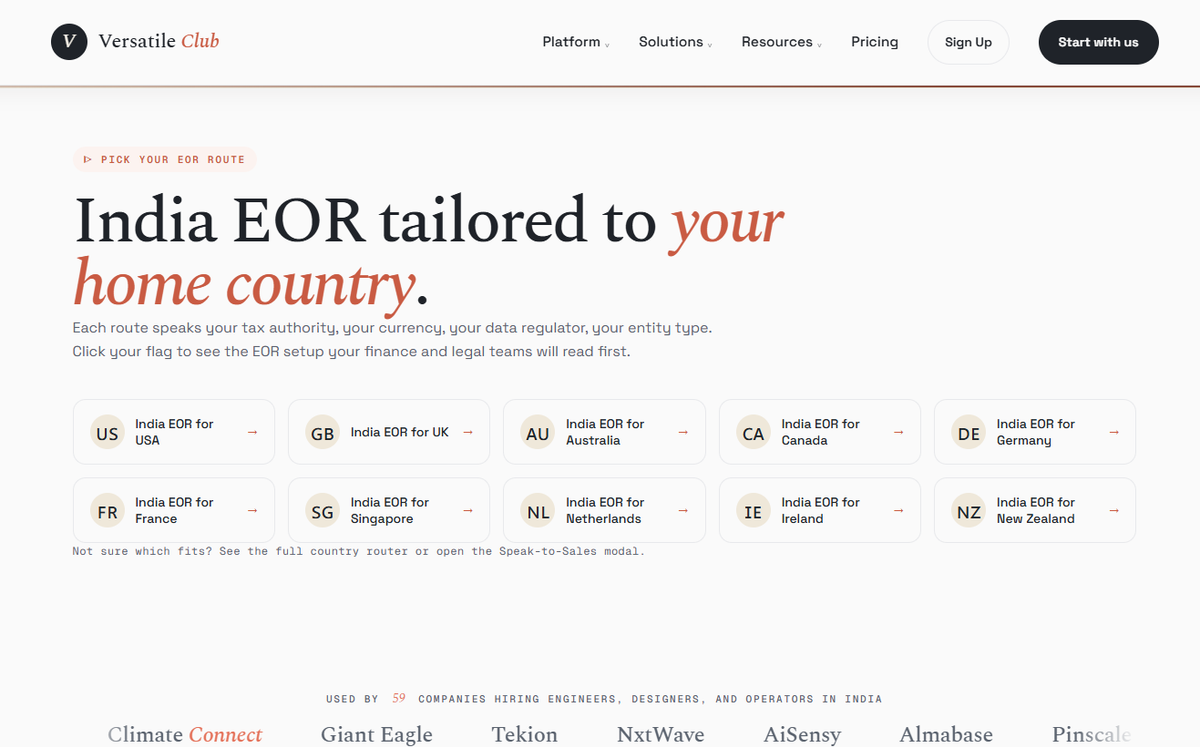
Versatile is an India-only Employer of Record and Contract-to-Hire operator. We started as a C2H business placing engineers, designers, and operations professionals across Bengaluru, Hyderabad, and Pune for US and UK companies. That work built the compliance muscle first, and the EOR product grew out of it.
We are the legal employer of record for your India hires through our own registered Indian entity. We are not a reseller, and we are not an aggregator routing you through a third party's shell. You can see the full model on our how it works page.
Core Services
India Employer of Record: we are the legal employer, you manage the person day to day.
Contract-to-Hire (C2H): culture-fit-first placement with a conversion path to full-time.
End-to-end statutory compliance: PF, ESI, TDS, professional tax, gratuity, and POSH.
USD invoicing direct from our Indian entity with no FX markup.
Retention support: 90-day Success Coach and a 6-month replacement guarantee on C2H placements.
Why Companies Consider Versatile
The buying logic is usually speed plus certainty. Founders come to us when setting up their own Indian subsidiary looks like $50,000-plus and 12 to 18 months of lead time, which is overkill for their first few hires.
They stay because the back office disappears. PF, tax, and statutory filings run under our own registrations every month, so the founder does not become a part-time India HR person. As one reviewer put it, they wanted the person "hired and paid and legal," and then wanted to forget about the back office.
Ideal Customer Profile
Company size: Seed to Series B startups, plus profitable SMBs at $5M to $50M ARR.
Geography: US and UK companies hiring into India.
Hiring need: engineering, product, design, AI, marketing, or operations roles.
India team size: first 1 to 20 hires, with no local entity.
Decision maker: founder, VP People, or CFO owning month-end close.
Commercial Model
EOR pricing starts at $149 per employee per month. There are no setup fees, no exit fees, and the first month is free. Invoicing is a single USD invoice direct from our Indian entity, so there is no 3 to 5 percent FX markup that some global platforms add. Full details sit on our pricing page.
C2H placements are charged at 20 to 30 percent of annual salary, and only after the hire completes day 90. The onboarding SLA is a contractual 5-day commitment, not an aspirational estimate.
Customer Reviews
"We used Versatile to hire our first employee in India after months of putting it off because the compliance side seemed like a mess. Replied to our form in about four hours with a draft offer letter already attached. The hire was onboarded in four days. USD invoice landed clean, no FX markup, no setup fee, no surprises."
Verified User in Information Technology and Services, Versatile G2 Verified Review
"The dashboard could be a little more self-serve. A couple of times I wanted to pull a report or a doc myself and ended up just messaging my contact instead. They always answered fast, so it wasn't a real problem, but I'd love to click around and find things on my own. Small thing."
Angad S., Versatile G2 Verified Review
I will name the trade-off myself, because that second review is fair. Our self-serve dashboard is lighter than a Rippling or a Deel. My bet is that a founder making their first India hire wants a fast human answer more than a dense portal, but if deep self-serve reporting is your priority, weigh that honestly. If it helps, you can always book a demo and see the workflow live.
1.2 Deel: Best for Companies Hiring Across Many Countries at Once
Overview
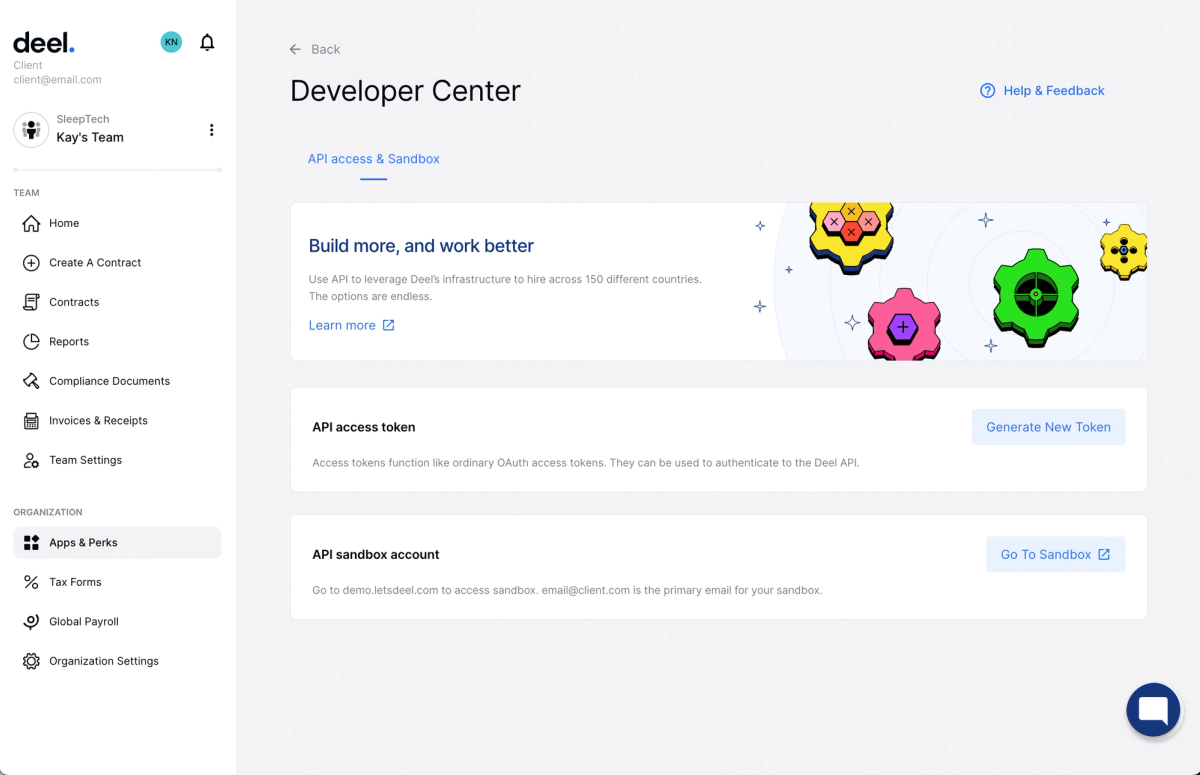
Deel is a global EOR, contractor-management, and payroll platform covering roughly 150 countries. It serves companies that want one system to hire, pay, and manage people across many markets at the same time.
In India, Deel typically operates through a local partner entity rather than treating India as a specialist market. That is a reasonable model for a truly global buyer, and a weaker one if India is your only focus. If India is your only focus, our Deel alternative for India is built for exactly that.
Core Services
Global EOR across roughly 150 countries.
Contractor onboarding and payments.
Multi-country payroll consolidation.
Immigration and visa support in select markets.
Equipment and device provisioning add-ons.
Why Companies Consider Deel
Companies pick Deel for breadth. If you are hiring in eight countries this quarter, one dashboard beats eight local vendors, and the platform itself is clean and quick to set up.
The decision logic is consolidation, not India depth. Buyers accept a shallower India-specific compliance layer in exchange for coverage everywhere else, which is a fair trade for a genuinely multi-country team. For a deeper side-by-side, our Deel vs Remote in India breakdown is worth a read.
Ideal Customer Profile
Company size: scaleups and enterprises with distributed global teams.
Geography: hiring across many countries at once, not India alone.
Hiring need: mixed contractor and full-time headcount worldwide.
India team size: India as one node in a larger global footprint.
Decision maker: People Ops or Finance leaders standardising on one global tool.
Commercial Model
Deel's EOR pricing is commonly cited around $599 per employee per month, with contractor plans priced separately. Several reviewers report transfer fees and FX costs on top of the headline number.
Confirm the all-in India figure before signing, since the effective cost can run past the sticker once currency conversion and transfer fees are included. Our guide to employer of record cost shows how these layers add up.
Customer Reviews
"We had to carefully manage our agreement and had to constantly remind them of the fees agreed so that we weren't over charged. Everything was VERY time consuming. It took three months to onboard our first 3 individuals."
Verified User in Information Technology and Services, Deel G2 Verified Review
"Often the CS doesn't seem to have answers, which leads me to emails back and forth on my case. Something I was looking for the answer to in 20 minutes becomes a 4 day process, or needs to be consulted with by multiple team members who aren't available except for at 3:00am my time."
Verified User in Computer Software, Deel G2 Verified Review
The pattern in Deel's negative reviews is not the platform, which people generally like. It is support latency and fee clarity once you are past onboarding. For a multi-country team that friction may be acceptable. For a single-country India hire who needs a same-day answer three days before payroll, it is worth weighing against a founder-direct model, which is how our EOR services are built.
1.3 Remote: Best for Teams Wanting an All-in-One Global HR Dashboard
Overview
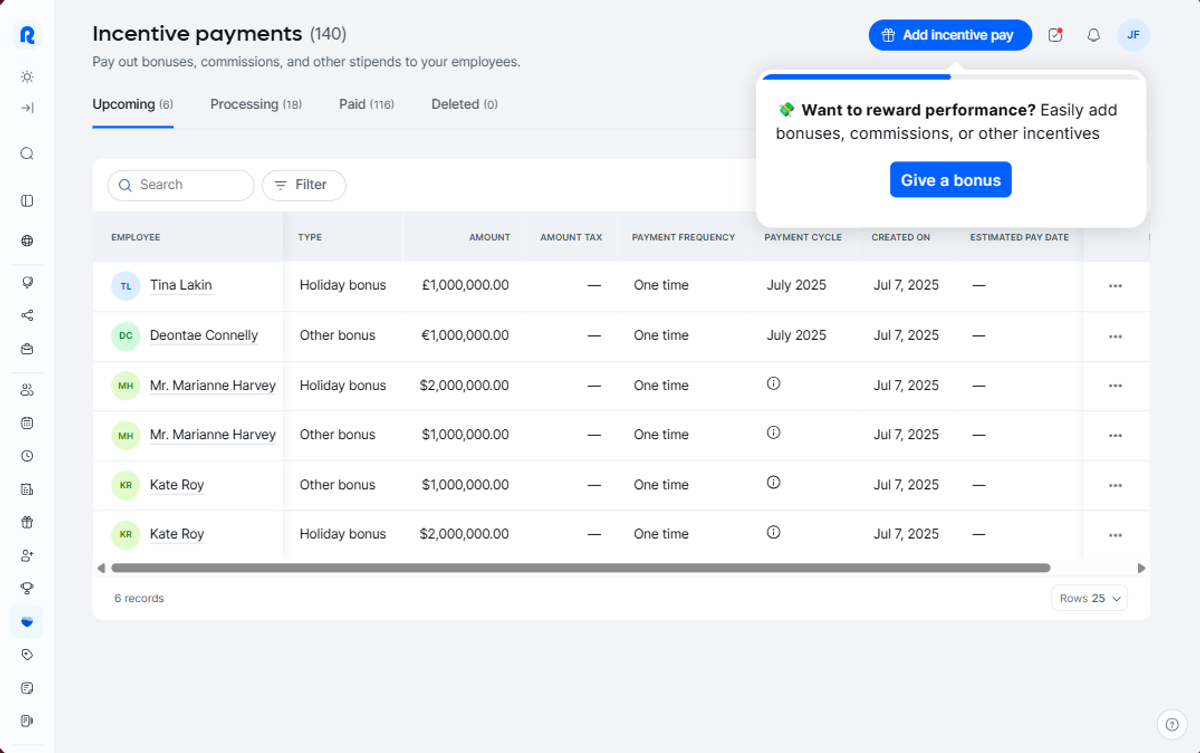
Remote is a global EOR and payroll platform that owns entities in several markets. It positions itself as one dashboard for hiring, paying, and managing people worldwide.
In India, Remote works as one country inside a broad global footprint. That suits a buyer standardising HR across many markets, less so a buyer who needs India-specific depth. If India is your one market, our Remote alternative for India is worth a look.
Core Services
Global EOR across many countries.
International contractor management and payments.
Global payroll and benefits administration.
IP and equipment provisioning add-ons.
Compliance and localised contract templates.
Why Companies Consider Remote
The pull is consolidation. Teams tired of juggling standalone tools and multiple logins like the idea of one HR system for every country.
The decision is a suite bet. You accept a generalist India layer in exchange for a single global dashboard, and that trade works if India is not your primary market.
Ideal Customer Profile
Company size: scaleups and mid-market firms with distributed teams.
Geography: hiring across many countries, not India alone.
Hiring need: mixed full-time and contractor headcount globally.
India team size: India as one node among many.
Decision maker: People Ops leaders standardising a global HR stack.
Commercial Model
Remote's EOR pricing is commonly cited around $599 per employee per month, with contractor plans priced lower. Confirm the India all-in figure and any payment-transfer timing before you sign. Our breakdown of Remote pricing unpacks the layers.
Customer Reviews
"They were dishonest about the level of support provided. We specifically explained we required phone-level support for urgent matters, but that is not available. Instead they have email support with a 3-day SLA. Separately, their payroll is still supported by manual processes, and twice we've had near catastrophic errors."
Juliette D., Remote G2 Verified Review
"Remote is terrible at drafting employment contracts. I had to send mine back multiple times for corrections, including ridiculous things like the employment start date not being a valid date. Customer support through Remote often requires multiple emails back and forth, even for straightforward issues."
Verified User, Remote G2 Verified Review
The recurring theme in Remote's harsher reviews is a 3-day email SLA and payroll errors that take too long to fix. For a distributed global team that may be survivable. For a founder who needs a same-day answer on a PF challan three days before payroll, weigh it honestly.
1.4 Multiplier: Best for Price-Sensitive Multi-Country EOR Buyers
Overview
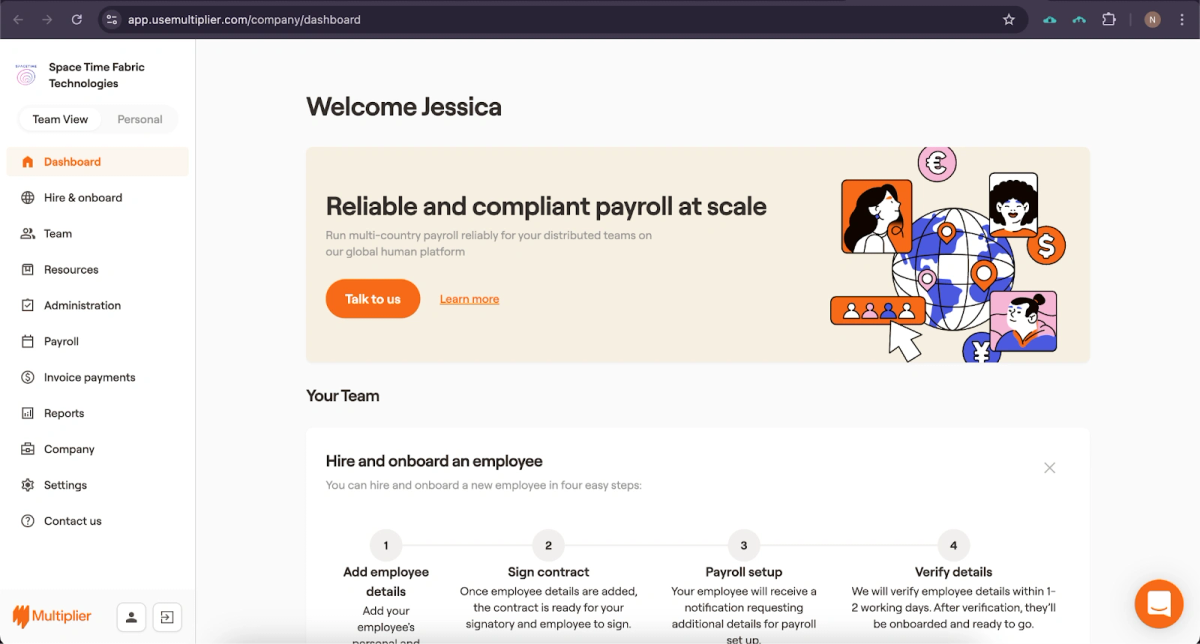
Multiplier is a global EOR with a competitive price point, popular with startups expanding across Asia-Pacific. It covers many countries through a mix of owned and partner entities.
In India, Multiplier serves the cost-conscious buyer. The headline price is attractive, and the trade-off shows up in support and fee transparency. For an India-focused comparison, see our Multiplier alternative.
Core Services
Global EOR across many countries.
Contractor onboarding and payments.
Multi-country payroll.
Benefits administration.
Compliance document handling.
Why Companies Consider Multiplier
The draw is price. Startups growing internationally on a tight budget find Multiplier's rates competitive versus the bigger generalists.
The honest caveat, which reviewers raise themselves, is "you get what you pay for." Some savings translate to thinner support and fees that were not in the original contract.
Ideal Customer Profile
Company size: early-stage startups watching every dollar.
Geography: expanding across multiple countries, including India.
Hiring need: full-time and contractor roles at low cost.
India team size: a few hires inside a wider footprint.
Decision maker: founder or ops lead prioritising price.
Commercial Model
Multiplier's EOR pricing is commonly cited around $400 per employee per month. Several reviewers report extra bank-transfer charges and deposits that were not in the original contract, so confirm the all-in number before signing. Our guide to the true cost of hiring in India helps you sanity-check any quote.
Customer Reviews
"They are very price competitive. Easy onboarding. Apart from price and onboarding, rest of the service is pathetic. They charge extra money for bank transfer with no clarity on the actual amount. They constantly delay the payment. At times there has been delay by a month."
Verified User in Computer Software, Multiplier G2 Verified Review
"Multiplier has fairly competitive EOR pricing, although it's also a bit of a you get what you pay for where some of the savings translate to less transparency and customer support on the backend. They also introduced some new deposits and fees that weren't originally in our contract."
Verified User in Information Technology and Services, Multiplier G2 Verified Review
Price-led EOR is a real strategy, and I respect a founder counting cash. My caution is that late payroll in India is not a soft cost. A delayed salary or a missed PF challan hits trust with the employee immediately, and that damage is hard to price back.
1.5 Globalization Partners (G-P): Best for Enterprises Needing Mature Global Infrastructure
Overview
Globalization Partners, now branded G-P, is one of the oldest global EOR platforms. It owns entities across many countries and targets larger, compliance-heavy organisations.
In India, G-P is one market inside an enterprise-grade global network. That maturity is its strength, and its India layer is a generalist one. If you weigh entity depth heavily, our EOR vs entity in India guide is useful context.
Core Services
Global EOR across many countries.
Owned-entity infrastructure in many markets.
Global payroll and benefits.
Compliance and legal support at scale.
Contractor management.
Why Companies Consider G-P
The pull is enterprise trust. Larger firms with procurement teams value a long track record and a broad owned-entity network.
The decision logic is risk reduction at scale, not India specialisation. If you are running EOR in fifteen countries, G-P's maturity matters more than deep multi-state India expertise. For a 100-plus India team with heavy procurement needs, our enterprise offering sets clear expectations.
Ideal Customer Profile
Company size: mid-market and enterprise organisations.
Geography: hiring across many countries at once.
Hiring need: sizeable multi-country headcount.
India team size: India as one part of a global rollout.
Decision maker: enterprise HR and procurement leaders.
Commercial Model
G-P pricing is commonly cited around 15 percent of salary for its EOR model, quoted on request. Confirm the effective India figure, since a percentage-of-salary model can run high for well-paid engineering roles.
Customer Reviews
No verified customer reviews were available in the provided source set for this provider.
1.6 Velocity Global (Pebl): Best for Distributed Teams Across Many Regions
Overview
Velocity Global, now rebranded Pebl, is a global EOR with an account-manager service model and wide geographic reach. It is often used for distributed teams across Latin America and beyond.
In India, it operates as one country in a large network. Its recent reviews suggest onboarding and portal friction worth checking.
Core Services
Global EOR across many countries.
Account-manager-led onboarding.
Global payroll and payslip access.
Benefits and immigration support.
Compliance across multiple markets.
Why Companies Consider Velocity Global
The draw is reach plus a named contact. Companies hiring across several regions value having account managers who know the local rules.
The decision is coverage over specialisation. Buyers accept a generalist India layer to get one vendor spanning many countries.
Ideal Customer Profile
Company size: mid-market firms with regional spread.
Geography: many countries, especially the Americas.
Hiring need: distributed sales, ops, or engineering teams.
India team size: India as one node.
Decision maker: People Ops leaders managing a global footprint.
Commercial Model
Pricing is not publicly disclosed and is provided on a custom-quote basis. Reviewers note fees on the higher side, so confirm the India figure directly. A clean exit matters too, which is why payroll compliance in India should be part of your evaluation.
Customer Reviews
"The PF transfer for employees after terminating their employment with Velocity was very poor. There was limited help, delayed responses and you can't get them to talk to you on phone. This is disappointing as they charged heavily per employee and the backend HR services they provide is extremely poor."
Verified User in Computer Software, Velocity Global (Pebl) G2 Verified Review
"Velocity offers great local knowledge on the countries where they operate. Account Managers are quick in responding. Processes are manual. From the request to onboard to approving quotes, everything happens via email. Cost is high for the level of automation they offer."
Verified User in Computer Software, Velocity Global (Pebl) G2 Verified Review
That first review names the exact thing I care about most in India. PF transfer at exit is where a generalist often stumbles, because it needs hands-on EPFO portal work, not a ticket queue. When we run a full-and-final settlement, the PF withdrawal or transfer is part of the closeout, not an afterthought.
1.7 Papaya Global: Best for Finance Teams Consolidating Payroll and Payments
Overview
Papaya Global is a global payroll and payments platform with EOR capabilities layered on top. Its strength is workforce-spend visibility for finance teams.
In India, Papaya works through local partners for the employment layer. It is a payments-and-reporting engine first, an India specialist second. If a single clean invoice is your priority, our managed payroll service is built around that.
Core Services
Global payroll consolidation.
Workforce-spend and cost reporting.
Payments engine across many countries.
EOR through local partners.
Contractor management.
Why Companies Consider Papaya Global
The pull is finance-grade reporting. CFOs like one platform for global payroll cost, invoices, and breakdowns.
The decision logic is payments consolidation, not India employment depth. That trade works if your priority is spend visibility across many countries.
Ideal Customer Profile
Company size: mid-market and enterprise with global payroll.
Geography: many countries at once.
Hiring need: consolidated payroll and payments.
India team size: India as one payroll node.
Decision maker: CFO or finance leader.
Commercial Model
Pricing is provided on a custom-quote basis. Some reviewers describe Papaya as significantly overpriced for a single-country hire, so confirm the India all-in figure.
Customer Reviews
"System integration is very helpful and makes the process much easier. The platform is very user-friendly, especially for accessing all our payroll inputs, outputs and workers documents. Response times can sometimes be very slow when we require clarifications. We have to remind Papaya to get monthly reports for a couple of countries every month."
Cherry H., Papaya Global G2 Verified Review
The reporting praise here is real, and finance teams should weigh it. My read is that if India is one line in a fifty-country payroll, Papaya's dashboard earns its keep. If India is your only market and you need one clean USD invoice with challan confirmations attached, a single-country model is simpler.
1.8 Skuad (Payoneer): Best for Lean Teams Inside the Payoneer Ecosystem
Overview
Skuad, now Payoneer Workforce Management, is a global EOR and contractor platform. It fits teams already using Payoneer for cross-border payments.
In India, Skuad operates as one country inside a broad platform. It suits lean teams wanting a simple interface over deep India specialisation. For an India-first view, see our Skuad alternative.
Core Services
Global EOR and contractor management.
Cross-border payments via Payoneer.
Multi-country payroll.
Benefits administration.
Compliance document handling.
Why Companies Consider Skuad
The draw is simplicity plus the Payoneer connection. Teams already inside that ecosystem get an easy path to hire abroad.
The decision is convenience over depth. You accept a generalist India layer for a clean interface and unified payments.
Ideal Customer Profile
Company size: startups and lean teams.
Geography: multiple countries, including India.
Hiring need: contractors and a few full-time hires.
India team size: a small node inside a wider footprint.
Decision maker: founder or ops lead already on Payoneer.
Commercial Model
Pricing is provided on a custom-quote basis. Confirm payroll-timing terms directly, since reviewers flag delays.
Customer Reviews
"The interface is easy to use, and that is about it. The customer support, it takes forever and most of the times doesn't actually solve anything. It was supposed to be an all-in-one HR solution but my payroll was never on time, and the help requests created to solve those issues were just closed without a reason."
Ricardo V., Skuad (Payoneer) G2 Verified Review
"Online portal is relatively easy to use. Help is available when needed. I like how we have an account manager that helps guide us. Working with Skuad has allowed us to expand our company into international grounds without having to manage some critical local HR components."
Verified User in Information Technology and Services, Skuad (Payoneer) G2 Verified Review
The two reviews here pull in opposite directions, which is fair to show. Some buyers get a helpful account manager, others get tickets closed without a reason. That variance is the risk with a generalist model, and it is why we keep the founder reachable directly rather than behind a queue.
1.9 Rippling: Best for US-Heavy Companies Wanting HR, IT, and Payroll Unified
Overview
Rippling is a US-first HR, IT, and payroll platform with global EOR added on. Its core strength is deep automation for the US employee lifecycle.
In India, EOR is a newer and less specialised layer. Rippling shines when the US core is your center of gravity. If India is the market that matters, our Rippling alternatives for India guide compares the options.
Core Services
US HR, payroll, and IT provisioning.
Global EOR across many countries.
Device and app management.
Benefits administration.
Reporting and workflow automation.
Why Companies Consider Rippling
The pull is unification. US-heavy companies love HR, IT, and payroll in one system with strong automation.
The decision logic is a US-core bet. India EOR rides along, and reviewers flag support and multi-jurisdiction tax gaps once you push beyond the US.
Ideal Customer Profile
Company size: US-headquartered startups and mid-market firms.
Geography: US-centric with some global hiring.
Hiring need: unified HR, IT, and payroll.
India team size: a small add-on to a US core.
Decision maker: US People Ops or IT leaders.
Commercial Model
Pricing is provided on a custom-quote basis, typically per employee per month with module add-ons. Confirm the India EOR cost and included support tier before signing.
Customer Reviews
"Support is the single biggest failure. There is no direct phone line. You either email or use a chatbot, and you can ask both the same question and get two different wrong answers. Escalation to someone who actually understands the product takes way too long."
Erika D., Rippling G2 Verified Review
"I find the entire integrated payroll system very easy to use, even for our most tech-phobic employees. The implementation process for Rippling Spend has been a truly terrible experience. Whenever I try to chat to get customer service, I will first be connected to someone who is just typing on their computer to find an answer."
Patrick W., Rippling G2 Verified Review
Rippling's product depth for the US is genuinely strong, and I will not pretend otherwise. My caution is narrow. India compliance is not a place you want a chatbot giving two different wrong answers, because a wrong PF or TDS call becomes a real liability you clean up later.
📌 Where This Leaves You
Across these nine, the split is clean. Global generalists win when you are hiring in five or more countries at once and want one dashboard. An India-only owned-entity model wins when India is the hire that matters and you want the statutory work done right the first time.
That is the exact gap we built Versatile for. We are the legal employer through our own Indian entity, we run PF, ESI, TDS, and multi-state professional tax under our own registrations, and the founder is reachable on WhatsApp when your engineer's challan question lands three days before payroll. If India is your focus, start at the top of this list, or book a demo to see the workflow. If you need many countries at once, one of the generalists above will serve you better, and I would rather tell you that plainly.
Q2. How Did We Score and Rank These Providers?
We scored each provider out of 100 across five criteria: India Entity Model and Compliance Depth (25%), Pricing Transparency and Commercial Model (20%), Onboarding Speed and Support Model (20%), Talent and Retention Support (20%), and Customer Validation via G2, Capterra, and Reddit (15%). Scores map to stars: 0 to 20 is 1 star, 21 to 40 is 2, 41 to 60 is 3, 61 to 80 is 4, and 81 to 100 is 5. Versatile earns 5 stars on owned-entity depth and retention guarantees.
📊 Why These Five Axes Matter
I built this rubric around the questions a founder and a CFO actually ask before signing. Not marketing claims. The things that cost you money or trust when they go wrong.
Entity model carries the heaviest weight for a reason. A partner-shell setup (where your EOR routes you through a third party's Indian entity) raises Permanent Establishment risk and muddies your audit trail, and founders consistently underweight that. Our EOR vs entity in India breakdown shows why that choice matters.
| Criteria | Weight | What We Measured |
|---|---|---|
| India Entity Model and Compliance Depth | 25% | Owned vs partner entity, PF/ESI/TDS/PT coverage, multi-state depth, DPDP and New Labour Code 2025-26 readiness |
| Pricing Transparency and Commercial Model | 20% | Monthly fee, setup and exit fees, FX markup, invoice clarity, first-month terms |
| Onboarding Speed and Support Model | 20% | Time from signed agreement to compliant start, plus founder-direct vs ticket-queue support |
| Talent and Retention Support | 20% | Culture-fit vetting, C2H, 90-day coaching, replacement guarantee |
| Customer Validation | 15% | G2, Capterra, and Reddit review scores and volume |
⭐ How Weights Became Stars
The retention weight of 20 percent is a deliberate stance. Most of the category scores a "legal hire on paper" and stops there. I care about the "good hire who stays," because a replacement six weeks in wipes out any onboarding-speed advantage. Our contract-to-hire model is built around that exact problem.
Here is how the nine landed once weights were applied.
| Provider | Score /100 | Stars |
|---|---|---|
| Versatile | 92 | ⭐⭐⭐⭐⭐ |
| Deel | 74 | ⭐⭐⭐⭐ |
| Remote | 70 | ⭐⭐⭐⭐ |
| Multiplier | 66 | ⭐⭐⭐⭐ |
| Globalization Partners (G-P) | 68 | ⭐⭐⭐⭐ |
| Velocity Global (Pebl) | 58 | ⭐⭐⭐ |
| Papaya Global | 60 | ⭐⭐⭐ |
| Skuad (Payoneer) | 55 | ⭐⭐⭐ |
| Rippling | 62 | ⭐⭐⭐⭐ |
Versatile scores highest on entity model and retention, where an owned Indian entity and a 6-month replacement guarantee outscore generalists routing India through partners. Customer validation is where the big platforms earn back points, since they carry far larger G2 review volumes. One honest flag: if you are a 100-plus India team that needs SOC 2 as a hard procurement gate, we are not your top pick, and that is by design. Our EOR services are tuned for the India-first buyer instead.
"They are very price competitive. Easy onboarding. Apart from price and onboarding, rest of the service is pathetic. They charge extra money for bank transfer with no clarity on the actual amount."
Verified User in Computer Software, Multiplier G2 Verified Review
That review is exactly why I keep pricing transparency and support inside the same scoring lens. A low headline price with mystery transfer fees is not actually cheap. We publish our weights instead of hiding them, the same way we invoice: what you see is what you pay. You can check any quote against our pricing page.
Q3. Is a PEO Even Legal in India, or Do You Actually Need an EOR?
Traditional US-style co-employment PEO does not legally exist under Indian labour law, which recognises one legal employer per employee. Without a registered Indian subsidiary, what you actually need is an Employer of Record (EOR), which becomes the full legal employer. A true PEO applies only once you own an entity. An ASO is transactional payroll outsourcing with no legal liability.
🧩 The Three Models, In Plain English
Let me define the jargon first, because the acronyms trip up almost every first-time buyer.
PEO (Professional Employer Organization): a co-employment model where you and the provider share employer duties. This needs you to already own an Indian entity.
EOR (Employer of Record): the provider becomes the full legal employer on your behalf. No entity of yours required.
ASO (Administrative Services Only): pure payroll processing. The provider runs the numbers but carries no legal employer liability.
The verdict is simple. India law expects one legal employer per worker, so the US co-employment split does not map cleanly here. Our guide on PEO in India walks through the distinction in detail.
⚠️ The Misclassification Trap
Here is the "running with scissors" version. Founders often try to skip all this by paying an India worker as a "contractor" and moving on.
Then the day-to-day reality gives it away. When your engineer pings to ask permission before stepping out for lunch, or works fixed hours on your tools, that is an employment relationship, not a contract for services. Indian authorities read the substance, not the label on the invoice. Our comparison of independent contractor vs EOR spells out where the line sits.
Get this wrong and the exposure is real: roughly $25,000 to $40,000 per head in back-dated PF, ESI, gratuity, and penalties once a misclassified "contractor" is reclassified.
✅ The Decision Rule
The choice comes down to one question. Do you own an Indian entity or not?
No Indian entity: you need an EOR. Full stop.
You own a subsidiary and want to offload HR admin: a PEO or ASO fits.
At Versatile, as an India-only EOR that owns its entity, we pivot every entity-less buyer to EOR for India hiring on day one. I will not let a founder sign a "PEO for India" pitch when they have no entity, because that phrase alone tells me the vendor is glossing over the law. Getting this right is the difference between a clean audit trail and a five-figure surprise, which is why we treat compliance as the starting point, not an add-on.
Q4. What Does It Actually Cost to Employ Someone in India Through an EOR in 2026?
Employing someone in India via EOR has two cost layers: a provider service fee (roughly $99 to $699 per employee per month) plus mandatory employer statutory costs adding about 18 to 22 percent over gross. That statutory load includes PF (12 percent of Basic), ESI (3.25 percent), and gratuity (4.81 percent of Basic plus DA, accrued from month one). The 2026 Labour Code's 50 percent Basic-plus-DA rule raises PF and gratuity liability an estimated 5 to 15 percent, a delta legacy payroll systems miscalculate.
💸 The Hidden-Cost Anxiety
The number that keeps CFOs up is not the sticker price. It is the mystery charge that surfaces on invoice three.
Two culprits show up most. First, an understated statutory load that a US buyer did not budget for. Second, an FX markup, where Deel and Remote reportedly add 3 to 5 percent on currency conversion that never appears on the quote. Our guide to the true cost of hiring in India maps every line.
A quick term check: DA is Dearness Allowance, a cost-of-living component of Indian salary. CTC is Cost to Company, the full annual package.
💰 The Real Cost Stack
Here is the itemised employer cost for a hire, on top of the base gross salary.
| Cost Component | Rate | Notes |
|---|---|---|
| Provider EOR fee | $99 to $699 / employee / month | Widest variable across providers |
| Provident Fund (PF) | 12% of Basic | Employer contribution |
| ESI | 3.25% (employer share) | Applies below the wage threshold |
| Gratuity accrual | 4.81% of Basic + DA | Accrues from month one |
| FX markup | 0% to 5% | Reportedly 3 to 5% at some generalists |
Under the New Labour Code 2025-26, Basic plus DA must be at least 50 percent of CTC. On a hire with 40 percent Basic before, shifting to 50 percent raises the base on which PF and gratuity are calculated, so your statutory bill climbs 5 to 15 percent. Legacy systems still modelling the old 40 percent split will quote you low, then true up later. Our overview of payroll compliance in India covers the rule in depth.
✅ Before You Sign
Do one thing with every provider on your shortlist. Ask them to re-model a sample CTC under the 50 percent rule and show you the gross-to-net breakdown, the challan confirmations, and the all-in monthly figure. Our salary calculator lets you sanity-check the math yourself.
The delta between vendors here is larger than the headline fee suggests. At Versatile, we invoice in USD direct from our own Indian entity, with no FX markup, no setup or exit fee, and the first month free, so the cost you see is the cost you pay. I never pitch India as a place to hire because it is cheap. The point is a predictable, audit-ready number, not a bargain that quietly grows, and you can walk through it with us when you book a demo.
Q5. Which Compliances and 2026 Regulations Must Your Provider Handle?
A compliant India EOR must handle PF and ESI filings, monthly TDS deposits by the 7th, professional tax across all 28 states, gratuity accrual, POSH compliance, and Form 16. Beyond the basics, 2026 raises the bar. The Labour Codes (operative 1 April 2026) mandate full-and-final settlement within 48 hours, and the DPDP Rules 2025 make your EOR a Data Fiduciary over employee payroll data. You must also confirm PE-risk mitigation in writing.
✅ The Non-Negotiable Statutory List
These are the filings that must run every single month, on the clock. Miss one and the penalty lands on you.
| Item | Rate or Deadline | Watch-out |
|---|---|---|
| Provident Fund (PF) | 12% of Basic, monthly | Recalculated under the 50% wage rule |
| ESI | 3.25% employer, 0.75% employee | Applies below the wage threshold |
| TDS (income tax at source) | Deposited by the 7th monthly | Late deposit triggers interest |
| Professional Tax (PT) | Varies by state | State-variation trap, see below |
| Gratuity | 4.81% of Basic plus DA | Accrues from month one |
| POSH | Internal Committee required | Mandatory once you cross 10 staff |
The state-variation trap is where generalists slip. Maharashtra needs dual registration (PTRC plus PTEC) with monthly slab filing and an annual return. Many global platforms miss that dual filing entirely. Our overview of payroll compliance in India maps every state requirement.
⚠️ What Changed for 2026
Three updates reset the bar this year, and I would confirm each in writing.
The 50 percent wage rule. Under the Code on Wages 2019, Basic plus DA (Dearness Allowance, a cost-of-living pay component) must be at least 50 percent of CTC. This forces a salary-stack restructure that legacy payroll tools still botch.
48-hour full-and-final. The Labour Codes, operative 1 April 2026, require exit settlement within two days of the last working day.
DPDP data-fiduciary duty. The DPDP Rules 2025, notified 13 November 2025, make your EOR a Data Fiduciary (the party legally accountable for personal data) over employee payroll records.
📋 Your Monday Scorecard
Do three things with any shortlisted provider before you sign.
Ask them to re-model a sample CTC to the 50 percent floor and show the delta.
Get their written DPDP data-handling statement and breach-notification SLA.
Confirm their PE-risk (Permanent Establishment) structure in writing.
Because we own the entity, every PF, ESI, TDS, and 28-state professional-tax filing runs under Versatile's own registrations. We restructure salaries to the 50 percent floor at onboarding and file as the Data Fiduciary of record, so you inherit compliance, not liability. That is the backbone of our EOR services in India, and you can see the full workflow on our compliance page. My open question for the next year is how many generalists quietly re-paper their India partner contracts once the 48-hour F&F rule starts biting. If yours cannot show you the workflow, that is your answer.
Q6. Beyond Compliance, How Do You Make a Hire That Actually Stays?
Compliance is the floor, not the ceiling. A legally clean hire who quits in three months still costs you the roadmap. The retention layer most EOR providers ignore includes culture-fit-first hiring against 50 behavioral parameters, a 90-day Success Coach, and a 6-month replacement guarantee. In a market where nearly 30 percent of IT resumes contain discrepancies, vetting depth is a real differentiator.
🎯 The Situation Every Funded Founder Hits
You just closed a round. You need an engineer in Bengaluru live in weeks, not months.
The pressure pushes you to optimise for speed and legality alone. Get someone hired, paid, and compliant, then move on. That is the standard read, and I think it gets the problem backwards. Our recruitment approach starts from the opposite end.
⚠️ The Complication Nobody Prices In
A legal hire is not the same as a good hire who stays. Those are two different problems, and generalists solve only the first.
The risk is concrete. Industry reporting suggests nearly 30 percent of IT-sector resumes in India carry some discrepancy, so thin vetting means you are gambling on the person, not just the paperwork. Our culture-fit quiz is one way we test for the human side early.
There is a culture layer too. India scores far higher on Power Distance (how much hierarchy shapes workplace behaviour) than the US, so a US manager can misread silence for agreement. A hire that fits on paper can still stall on the team.
✅ The Resolution: Building for Staying
The fix is a system, not a lucky pick. We screen for culture fit against 50 behavioral parameters, assign a 90-day Success Coach, and back it with a 6-month replacement guarantee, with C2H fees charged only after day 90. That is the core of our contract-to-hire model.
Compliance is table stakes. Staying is the product. I went to India talent not because it is cheap, but because the academic and engineering density is genuinely deep, and my job is to keep that person past the first quarter. Founders building teams this way often start on our startup offering.
"The candidates quality met our expectations. If you're looking for a reliable partner for hiring in India through AI, Versatile delivers without the usual hassle."
Verified User in Venture Capital and Private Equity, Versatile G2 Verified Review
"The team is really competent, but there were a few time zone misunderstandings that caused slight delays in the initial phase. That said, once things got going, the whole process was buttery smooth."
Setu C., Versatile G2 Verified Review
That second review is fair, and I keep it here on purpose. Time-zone friction is real early on. My bet is that a Success Coach who closes that gap in week one is worth more than a slick dashboard, but I am still testing where the line sits.
Q7. How Do You Choose the Right Provider for Your Situation?
Match the provider to your situation. Making your first 1 to 3 India hires with no entity: choose an India-only owned-entity EOR for depth and founder-direct support. Scaling 10 to 100 staff and prioritising retention: prioritise culture-fit and replacement guarantees. Rolling out across 20-plus countries or requiring SOC 2 as a procurement gate: a global generalist fits better. Never pick a "PEO" if you lack an Indian entity.
❌ The Friction You Are Trying to Escape
Enterprise coldness is the thing founders underestimate. I have watched a deal need twenty procurement signatures before a single hire could start.
Then the support model bites. A chatbot answers first, a ticket queue answers second, and a partner-shell entity sits between you and the actual filing. When payroll breaks three days out, that distance is expensive. Our how it works page shows the founder-direct alternative.
✅ Match Your Situation to a Provider Type
Three archetypes cover most buyers.
| Your Situation | What to Prioritise | Provider Type |
|---|---|---|
| First 1 to 3 India hires, no entity | India depth, founder-direct support | India-only owned-entity EOR |
| Scaling 10 to 100, retention matters | Culture-fit vetting, replacement guarantee | India specialist with a retention system |
| 20-plus countries, or SOC 2 as a procurement gate | Multi-country breadth, enterprise certs | Global generalist |
I will say the honest part out loud. If you need EOR in fifteen countries at once, a generalist genuinely serves you better, and I would tell you that on the first call. If India is the market that matters, our EOR services are built for exactly that buyer.
⚠️ Red Flags to Reject
Walk away if you see any of these.
Mystery FX markup buried in the invoice.
Statutory filings run through a partner shell, not an owned entity.
Chatbot-only or ticket-queue support with no human path.
A "PEO for India" pitch when you own no Indian entity.
"We had to constantly remind them of the fees agreed so that we weren't over charged. Everything was VERY time consuming. It took three months to onboard our first 3 individuals."
Verified User in Information Technology and Services, Deel G2 Verified Review
"Support is the single biggest failure. There is no direct phone line. You either email or use a chatbot, and you can ask both the same question and get two different wrong answers."
Erika D., Rippling G2 Verified Review
At Versatile, you get me on WhatsApp, not a CSM rotation. Here is the non-salesy admission though. Somewhere around 10 to 12 hires, some teams should open their own Indian entity, and our EOR vs entity in India guide helps you plan that move rather than lock you in. Where my head is right now: what is your actual headcount plan over the next 18 months? Tell me that, or book a demo, and I can tell you honestly whether we are your fit.
FAQs
What is the best PEO in India for US and UK startups in 2026?
For US and UK companies making their first 1 to 20 India hires with no local entity, we rank an India-only owned-entity EOR ahead of the global generalists. The nine providers we compared are Versatile, Deel, Remote, Multiplier, G-P, Velocity Global, Papaya Global, Skuad, and Rippling.
The best fit depends on your situation:
- First India hire, no entity: an India-only EOR gives you multi-state depth and founder-direct support.
- Hiring across 20-plus countries: a global generalist like Deel or G-P serves you better.
- Retention matters most: prioritise culture-fit vetting and a replacement guarantee.
We rank first for India depth because we own our Indian entity, invoice in USD direct from India with no FX markup, and commit to a contractual 5-day onboarding SLA. Generalists spread India expertise across 90 to 150 countries through local partner shells. You can compare the full model on our EOR services in India page. If you need SOC 2 as a hard procurement gate for a 100-plus team, a generalist may fit better, and we say so plainly.
Is a PEO legal in India, or do I actually need an EOR?
Traditional US-style co-employment PEO does not legally exist under Indian labour law, which recognises one legal employer per employee. Without a registered Indian subsidiary, what you actually need is an Employer of Record.
Here is the plain-English distinction:
- PEO: a co-employment model that requires you to already own an Indian entity.
- EOR: the provider becomes the full legal employer on your behalf, no entity of yours required.
- ASO: pure payroll processing with no legal employer liability.
Founders often try to skip this by paying an India worker as a contractor. The problem is that fixed hours, daily direction, and working on your tools signal an employment relationship. Indian authorities read the substance, not the invoice label, and misclassification exposure runs roughly $25,000 to $40,000 per head in back-dated PF, ESI, gratuity, and penalties.
The decision rule is simple. No Indian entity means you need an EOR. As an India-only EOR that owns its entity, we pivot every entity-less buyer to EOR on day one. Our guide on PEO in India walks through the distinction in detail.
What does it actually cost to employ someone in India through an EOR in 2026?
Employing someone in India via EOR has two cost layers, a provider service fee plus mandatory employer statutory costs.
- Provider fee: roughly $99 to $699 per employee per month, the widest variable across providers.
- Provident Fund: 12 percent of Basic.
- ESI: 3.25 percent employer share, below the wage threshold.
- Gratuity: 4.81 percent of Basic plus DA, accrued from month one.
Together, statutory costs add about 18 to 22 percent over gross. The 2026 Labour Code rule that Basic plus DA must be at least 50 percent of CTC raises PF and gratuity liability an estimated 5 to 15 percent, a delta legacy payroll systems miscalculate.
Watch for FX markup too. Some global platforms reportedly add 3 to 5 percent on currency conversion that never appears on the quote. Before signing, ask any provider to re-model a sample CTC under the 50 percent rule and show the all-in figure. We invoice in USD direct from our own Indian entity with no FX markup, no setup or exit fee, and the first month free. Our guide to employer of record cost breaks down every line.
Which Indian compliances must my EOR provider handle in 2026?
A compliant India EOR must handle the full monthly statutory stack, plus the new 2026 obligations that many generalists miss.
- PF and ESI: filed monthly under the provider's registrations.
- TDS: income tax deposited by the 7th of each month.
- Professional tax: handled across all 28 states, including Maharashtra's dual PTRC and PTEC filing.
- Gratuity, POSH, and Form 16: accrued, set up, and issued correctly.
For 2026, three updates raise the bar. The Labour Codes mandate full-and-final settlement within 48 hours. The DPDP Rules 2025 make your EOR a Data Fiduciary over employee payroll data. You should also confirm Permanent Establishment risk mitigation in writing.
The state-variation trap is where shallow providers slip, because Maharashtra, Karnataka, and Tamil Nadu each file professional tax differently. Because we own the entity, every PF, ESI, TDS, and 28-state professional-tax filing runs under our own registrations, and we restructure salaries to the 50 percent floor at onboarding. See our full payroll compliance in India guide for the state-by-state map.
How is an India-only EOR different from Deel, Remote, or G-P?
The core difference is entity model and support. Global generalists like Deel, Remote, and G-P offer breadth across 90 to 185 countries, but route India through local partner entities with ticket-queue or chatbot-first support.
An India-only owned-entity model works differently:
- Owned entity: filings run under our own PF, ESI, and Shops and Establishments registrations, not a partner shell.
- USD invoicing direct from India: no 3 to 5 percent FX markup layered on the quote.
- 5-day contractual onboarding SLA: versus 7 to 14 days at many generalists.
- Founder-on-WhatsApp support: not a CSM rotation or a ticket queue.
The trade-off is honest. If you are hiring in fifteen countries at once, a generalist genuinely serves you better. If India is the hire that matters, a specialist gets the multi-state statutory work right the first time. Reviewers of generalists repeatedly flag slow support and fee surprises past onboarding. If you are weighing a switch, our Deel alternative page lays out the India-first comparison.
How fast can an EOR onboard my first employee in India?
Onboarding speed varies widely by provider model. Global generalists commonly quote 7 to 14 days, and real reviews describe onboarding first hires stretching to three months when support lags.
The speed drivers are:
- Entity model: an owned entity avoids the back-and-forth of a partner shell.
- Contract drafting: a compliant, India-specific offer letter ready on day one.
- Statutory registration: PF, ESI, and professional-tax enrolment handled in parallel, not sequentially.
- Support responsiveness: a direct human answer versus a ticket queue.
We commit to a contractual 5-day onboarding SLA, not an aspirational estimate. When we placed our first US-client engineer in Bengaluru, the compliant contract, payroll setup, and statutory registration were completed inside that window. Speed only matters if the hire also stays, which is why culture-fit vetting sits alongside the SLA. You can see the step-by-step flow on our how it works page, and book a start with the first month free.
Does an EOR help with retention, or just legal employment in India?
Most EOR providers stop at legal employment, but a legally clean hire who quits in three months still costs you the roadmap. Compliance is the floor, not the ceiling.
The retention layer that generalists ignore includes:
- Culture-fit-first hiring: screening against 50 behavioral parameters, not just a resume.
- 90-day Success Coach: closing time-zone and management-style gaps early.
- 6-month replacement guarantee: on Contract-to-Hire placements, with fees charged only after day 90.
This matters more in India than many US managers expect. Industry reporting suggests nearly 30 percent of IT-sector resumes carry a discrepancy, so vetting depth is a real risk reducer. India also scores much higher on Power Distance than the US, so a manager can misread silence for agreement.
We built for the good-hire-that-stays problem, not just the legal-hire-on-paper problem. That is why our contract-to-hire model pairs statutory accuracy with a structured retention system. Staying, not just onboarding, is the product.
When should I set up my own India entity instead of using an EOR?
An EOR is the right call for your first hires, but there is an honest tipping point where an owned entity starts to make sense.
Weigh these signals:
- Headcount: some teams open their own Indian entity around 10 to 12 hires.
- Cost curve: setting up a subsidiary can run $50,000-plus and 12 to 18 months before the first hire, which is overkill early on.
- Control needs: heavy custom procurement or an in-house captive center favours an entity.
- Time horizon: a firm 18-month plan for a large, stable India team tilts toward owning the entity.
Below that threshold, an EOR removes the back-office burden so a founder does not become a part-time India HR person. Above it, we would rather help you plan the transition than lock you in. We are not the top pick for a 100-plus enterprise team that needs SOC 2 as a procurement gate, and that focus is deliberate. To model the crossover for your numbers, use our EOR vs entity calculator.