Table of contents (12)
- Which Law Applies
- Employee Categories & Exemptions
- Statutory Leave Types
- 240 vs 180 Days
- Accrual & Carry-Forward Math
- Leave Wages & Encashment
- Application & Approval Rules
- Holidays & Working Hours
- Private vs Government Leave
- Unlimited PTO Reality Check
- Registers & Returns
- Pan-India Policy & Provider Options
Leave Policy in Odisha: Rules, Types and Eligibility Criteria
Q1. Which leave law governs your Odisha employees, the Shops Act, the Factories Act, or the new Labour Codes?
Leave for an Odisha employee is set by where that person works, not by what their job title says. Office, shop, and back-office staff fall under the Odisha Shops and Commercial Establishments Act, 1956. Plant and manufacturing workers fall under the Factories Act, 1948 read with the Odisha Factories Rules, 1950. Central statutes, including the Maternity Benefit Act, 1961 and the four labour codes, sit on top of both. Where two rules collide, the more favourable one to the employee applies.
Three regimes, one employee
A People Ops lead at a Series A company messaged me last year with a screenshot. It was a leave table she had copied from a government circular, and she was about to paste it into an offer letter for a backend engineer in Bhubaneswar. The table was the wrong one. It governed state government servants, not her hire.
That mistake is common because India does not have one leave law. It has a state statute for shops and offices, a central statute for factories, and now a code layer over both. Anyone planning to hire employees in India has to pick the right statute before drafting a single clause.
🗂️ How to pick the right statute
Ask one question: what kind of premises employs this person?
- Office, agency, bank, hotel, or back office goes to the Odisha Shops and Commercial Establishments Act, 1956.
- Factory or manufacturing unit goes to the Factories Act, 1948 with the Odisha Factories Rules, 1950.
- Fully remote engineer with no employer premises in Odisha is normally treated under the Shops Act, because the employer's registered establishment is the anchor.
Versatile Club makes this classification call before the offer letter is issued, inside its five-day contractual onboarding SLA, because the leave clause has to match the statute the establishment is registered under. You can see the full sequence on how it works.
⚠️ The overlap trap most handbooks miss
The Odisha Act defines a "shop" to specifically exclude a shop attached to a factory where the persons employed in the shop are allowed the benefits provided for workers under the Factories Act. So one company can run both regimes at once. Your Cuttack plant floor sits under one law. The sales office two kilometres away sits under another.
The definition of "employee" pulls the other way too. It expressly includes clerical staff of a factory who fall outside the Factories Act.
Where central law overrides the state
Section 38 of the Odisha Act is the rule that resolves every conflict. Nothing in the Act affects any right or privilege an employee is entitled to under another law, contract, custom, award, or settlement, if such rights or privileges are more favourable to him than those to which he would be entitled under this Act.
Read that clause twice. It means the state Act is a floor, never a ceiling.
📜 Three central overrides that matter in Odisha
| Central law | What it overrides in Odisha | Practical effect |
| Maternity Benefit Act, 1961 | The Act's older six-week and twelve-week maternity language | 26 weeks paid for the first two children |
| Payment of Gratuity Act, 1972 | Section 21's ten-year gratuity qualification | Gratuity after five years, accrued at 4.81% of Basic plus DA |
| Occupational Safety, Health and Working Conditions Code, 2020 | The 240-day leave qualification | Paid leave trigger drops to 180 days worked |
Versatile Club runs gratuity accrual at 4.81% of Basic plus DA on its own entity's books rather than at the state Act's ten-year threshold, because the central Act is the more favourable instrument. The same logic drives every line of our payroll compliance in India workflow.
✅ What I would do on Monday
Pull your Odisha employment contracts. Check which statute the leave clause names. If it names none, or names the Factories Act for an office hire, that clause is unenforceable against you in the way you think it is.
Versatile Club employs Odisha staff on its own registered Indian entity, so the establishment registration, the contract's leave clause, and the annual return all trace to one filing entity instead of a partner shell. That is the structural difference our EOR services in India are built on.
Q2. How are employees categorised in Odisha, and who is exempt from the leave chapter?
The Odisha Act sorts people into covered employees and exempt persons. Section 3(1) exempts government and local authority offices, Reserve Bank of India offices, owner-run establishments with no employees, employers' own family members, institutions caring for the sick or destitute, persons in positions of management, persons employed in a confidential capacity, and roles whose work is inherently intermittent, such as travellers and caretakers. Everyone else is an employee under Section 2(6). For an exempt senior hire, the employment contract becomes the operative leave law.
The categories, plainly
👥 Who counts as an "employee"
An employee is a person wholly or principally employed in, and in connection with, any establishment. The definition includes an apprentice, but does not include a member of the employer's family. An apprentice is a person aged not less than twelve who is being trained, whether paid or not.
A "child" employee, between twelve and fifteen, gets a separate and more generous accrual rate, which I cover in the accrual section.
⚠️ The management and confidential-capacity exemption
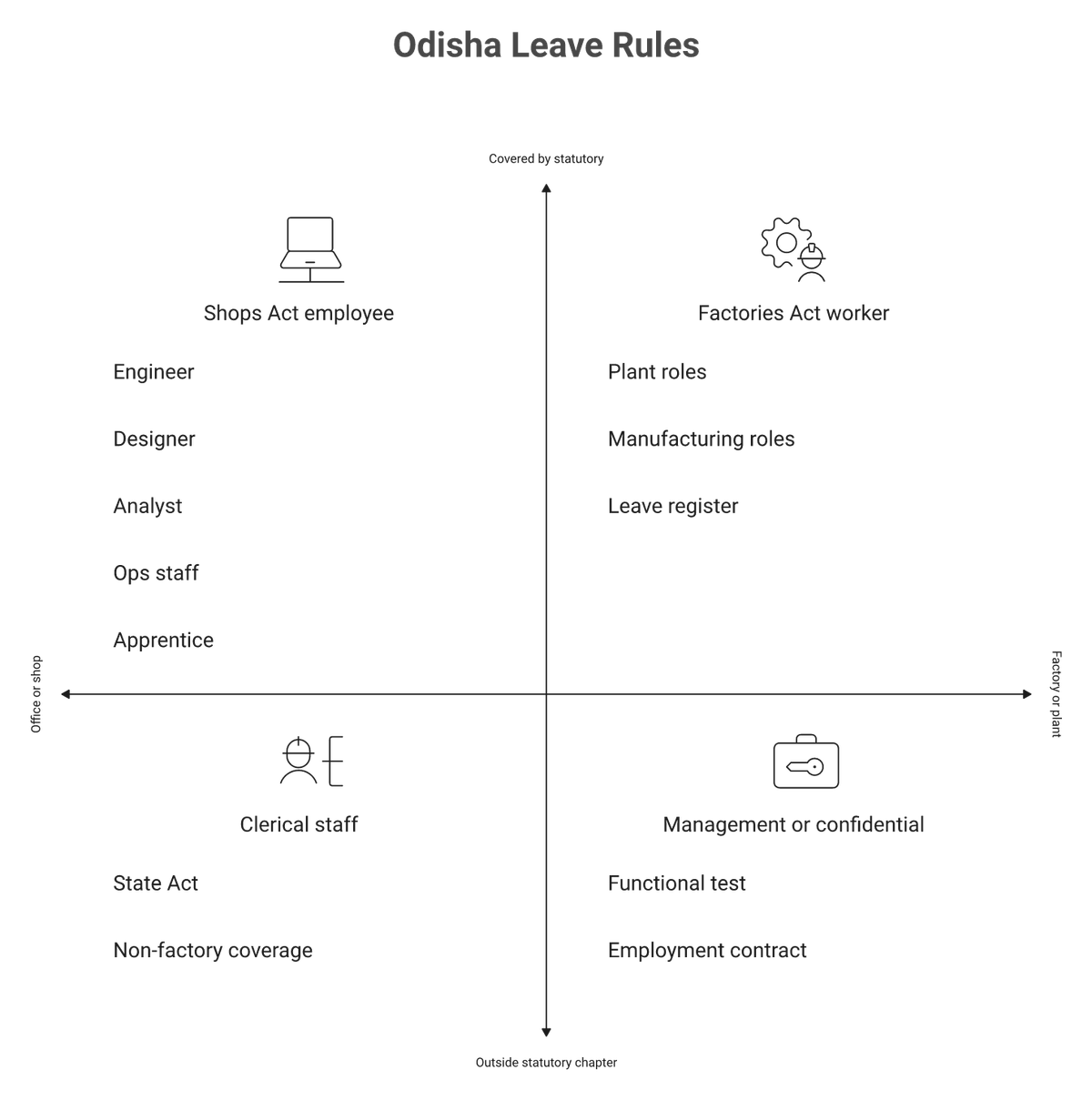
This is the clause that catches US and UK founders off guard. Persons occupying positions of management, and persons employed in a confidential capacity, are outside the Act. So are roles with inherently intermittent work.
There is no statutory job-title list. It is a functional test, decided on what the person actually does.
Versatile Club classifies every Odisha hire against Section 3(1) at contracting stage, then writes the leave clause to clear the statutory floor regardless of which side of the line the role lands on. Teams weighing an in-house entity against this route usually start with the EOR vs entity calculator.
📌 What this means for white-collar and senior hires
Here is the uncomfortable part. A VP Engineering in Bhubaneswar may well be an exempt "position of management." That does not mean you owe them nothing. It means your contract, not the statute, is what a court or an arbitrator will read.
I have seen two failure modes. One is offering exempt staff the bare statutory minimum, which loses offers to Bengaluru competitors. The other is offering nothing in writing at all.
| Category | Covered by Chapter IV leave? | What governs their leave |
| Engineer, designer, analyst, ops staff | Yes | Sections 14 and 15 of the Odisha Act |
| Apprentice | Yes | Sections 14 and 15 |
| Child employee (12 to 15) | Yes, at a higher rate | Section 14(1)(ii) |
| Position of management | No | Employment contract and company policy |
| Confidential capacity role | No | Employment contract and company policy |
| Factory shop-floor worker | No, under the Factories Act instead | Factories Act, 1948 and Odisha Factories Rules, 1950 |
The exemption route white-collar teams should actually use
There is a cleaner mechanism than arguing about who is management. Section 19 lets the State Government exempt an establishment from all or part of Chapter IV where the leave rules applicable to employees in an establishment provide benefits which in their opinion are not less favourable than the Chapter.
✅ Build one policy above the floor
That clause is how a multi-state employer runs a single harmonised leave policy legally. You write one policy that beats the state floor everywhere, then you are not reverse-engineering twenty-eight leave tables into twenty-eight handbooks.
Versatile Club holds Shops and Establishments registrations across all 28 states and 8 union territories, which is what makes a single above-floor policy defensible rather than theoretical. The registration list sits behind our compliance coverage.
🧾 A caution on classification drift
Where my head is right now is that classification drift is the real risk, not initial misclassification. A person hired as an individual contributor becomes a team lead in year two. Nobody revisits the contract. Then the leave-encashment question arrives at exit.
Versatile Club re-reviews role classification at contract renewal on its own entity's records, because the Section 3(1) test turns on current function, not the title on the original offer letter.
Q3. What leave types are actually mandatory in Odisha, and how much of each?
Odisha mandates three leave types for covered employees. Annual leave with wages accrues at one day for every twenty days worked, or one day for every fifteen days for a child employee. Sickness leave runs up to fifteen days a year, available only after one year of continuous employment. Maternity leave is now twenty-six weeks under the Maternity Benefit Act, 1961. Casual leave is not a statutory entitlement in Odisha. Earned leave carry-forward caps at thirty days for an adult and forty days for a child.
The entitlement table
| Leave type | Entitlement | Eligibility | Carry-forward | Source |
| Annual leave with wages | 1 day per 20 days worked (1 per 15 for a child) | 240 days worked in the previous year, 180 under the OSH Code | 30 days adult, 40 child; unlimited if refused | Section 14(1), 14(6) |
| Sickness leave | Up to 15 days per year | After one year of continuous employment | Nil | Section 14(3) |
| Maternity leave | 26 weeks, plus one month for pregnancy-related illness | First two children | Not applicable | Maternity Benefit Act, 1961 |
| Weekly holiday | At least one whole paid day per week | All covered employees | Leave in lieu within the same year | Section 12 |
| Casual leave | Not statutory | Employer policy | Employer policy | No provision in the Act |
🩺 Odisha's sick leave is unusually generous
Fifteen days of sickness leave is above what most state Shops Acts allow, where seven to twelve is typical. The Act grants it in addition to annual leave, with the condition that sickness leave shall be admissible only after continuous employment for a period of one year.
Rule 17 lets the employer demand a medical certificate from a registered medical practitioner, Vaidya, or Hakim, stating the cause and period of absence.
🤱 Maternity protections beyond the leave days
Sections 24 to 29 do more than grant days. No woman may be employed during the six weeks following delivery. A nursing mother gets half an hour twice a day during her working hours in addition to rest intervals. Dismissal during maternity absence is unlawful.
Versatile Club administers maternity benefit, nursing breaks, and the associated medical records under its own registrations, which keeps certificates out of a client's shared inbox and inside a DPDP-aligned record process. Clients running this alongside salary processing usually pair it with managed payroll.
What buyers say about getting this right
The gap between knowing the entitlement and running it correctly every month is where most of the complaints live.
"As a founder at a digital marketing agency, I needed to hire and manage a small India-based team without setting up a local entity. Versatile's Employer of Record India service made this seamless contracts, PF, ESI, TDS, and payroll all handled in one place. Invoicing in USD meant zero exchange rate surprises. The compliance rigour is genuinely impressive every statutory filing reviewed before submission. Five-day onboarding, zero late payslips."
Vedant T., Founder, Digital Marketing Agency Versatile Club G2 - Verified Review
"The initial documentation and paperwork felt quite detailed and time-consuming at the beginning. However, as we progressed, it became clear that this thoroughness is what ensures proper legal and compliance coverage."
Verified User in Marketing and Advertising Wisemonk - G2 Verified Review
"Remote is terrible at drafting employment contracts. I had to send mine back multiple times for corrections, including ridiculous things like the employment start date not being a valid date. Remote's benefits administration is atrocious. Wherever they can, they farm benefits out to third parties, and then do not take any accountability when those third parties fail to deliver."
Justin W., Employee Remote - G2 Verified Review
❌ What Odisha does not give you
Casual leave. There is no casual leave provision in Chapter IV at all. State compliance trackers record it as nil.
Most Indian employers grant seven to twelve casual leave days anyway, because the statutory floor alone reads as stingy to an engineer comparing two offers. Benchmarking that against total cost of hiring in India is the honest way to price an offer.
Versatile Club shows the statutory floor and the market-practice layer as separate lines in every Odisha offer, so the employee can see which days are law and which are policy.
Q4. Is the qualifying threshold still 240 days, or is it 180 now?
Versatile Club applies the 180-day paid-leave qualification to its Odisha employees, not the 240 days printed in the state statute. Section 14(1) of the Odisha Shops and Commercial Establishments Act, 1956 still requires 240 days worked in a year. The Occupational Safety, Health and Working Conditions Code, 2020 came into force on 21 November 2025 and lowered that trigger to 180 days worked in a calendar year. Because Section 38 favours the employee, the lower threshold governs. Accrual stays at one day per twenty days worked.
The two numbers, and which one wins
Every page currently ranking for Odisha leave policy prints 240. The state Act does say it. The text reads: every employee who has worked a period not less than two hundred and forty days in an establishment during a year shall be allowed leave in the subsequent year.
The Ministry of Labour and Employment commenced all four labour codes on 21 November 2025. The OSH Code cut the eligibility threshold to 180 days. Odisha has not amended Section 14 to match.
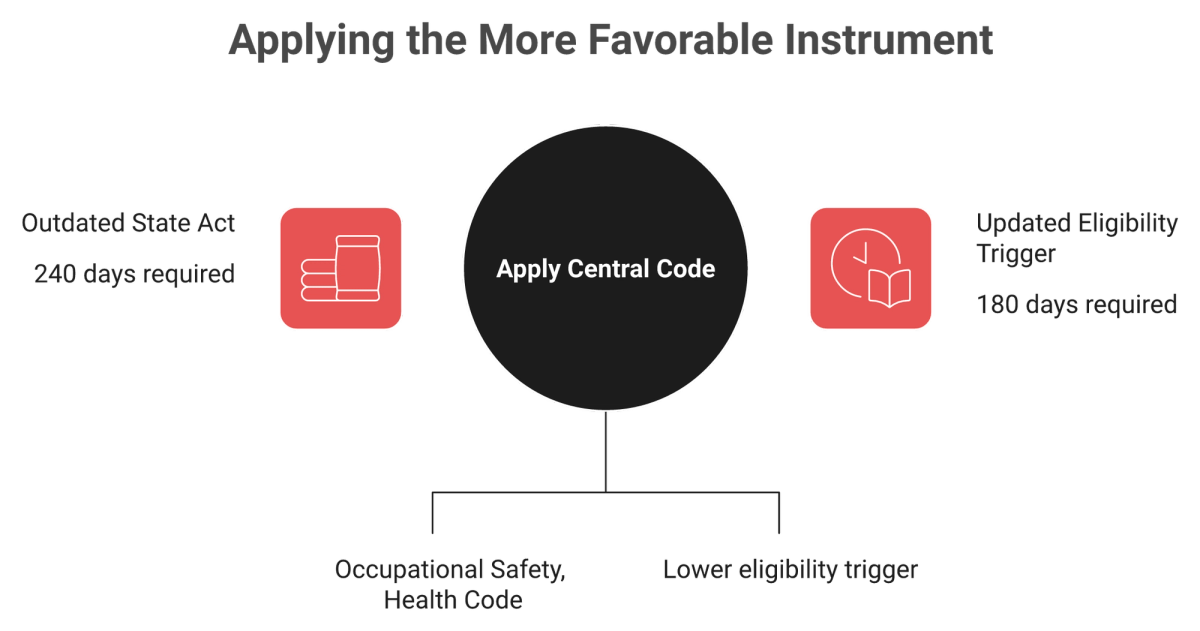
⚖️ Why the lower number applies anyway
You do not need a state amendment. Section 38 already resolves it, and so does basic labour-law practice: the instrument more favourable to the employee applies.
Versatile Club amended the eligibility clause across its Odisha contracts to the 180-day trigger rather than waiting for the Odisha legislature to catch up. Any team planning to hire in India without an entity should confirm their provider has done the same.
📅 What else the Code changed alongside the threshold
Three things move together, and most handbooks have updated none of them.
- The paid-leave trigger falls from 240 days to 180 days worked in a calendar year.
- Accrual stays at one day for every twenty days worked, unchanged.
- Carry-forward stays capped at thirty days, with encashment of the excess at year end.
The Odisha Act already handles the refusal case generously. An employee who applied for leave and was not granted it shall be entitled to carry forward the unavailed leave without any such limit.
What counts toward the qualifying period
This is where spreadsheets go wrong. Days you did not pay for still count toward the threshold.
🧮 Days that count but do not earn
Explanation 1 to Section 14(1) is explicit. Lay-off days by agreement, contract, or standing orders count. For a female employee, maternity leave for any number of days not exceeding twelve weeks counts. Leave earned in the prior year and enjoyed this year counts.
None of those days earn fresh leave. They only help the employee cross the threshold. Rule 16 of the Rules, 1958 adds that a holiday shall be treated as a day of work for computing days worked under Section 14.
⏰ The mid-year joiner rule nobody applies
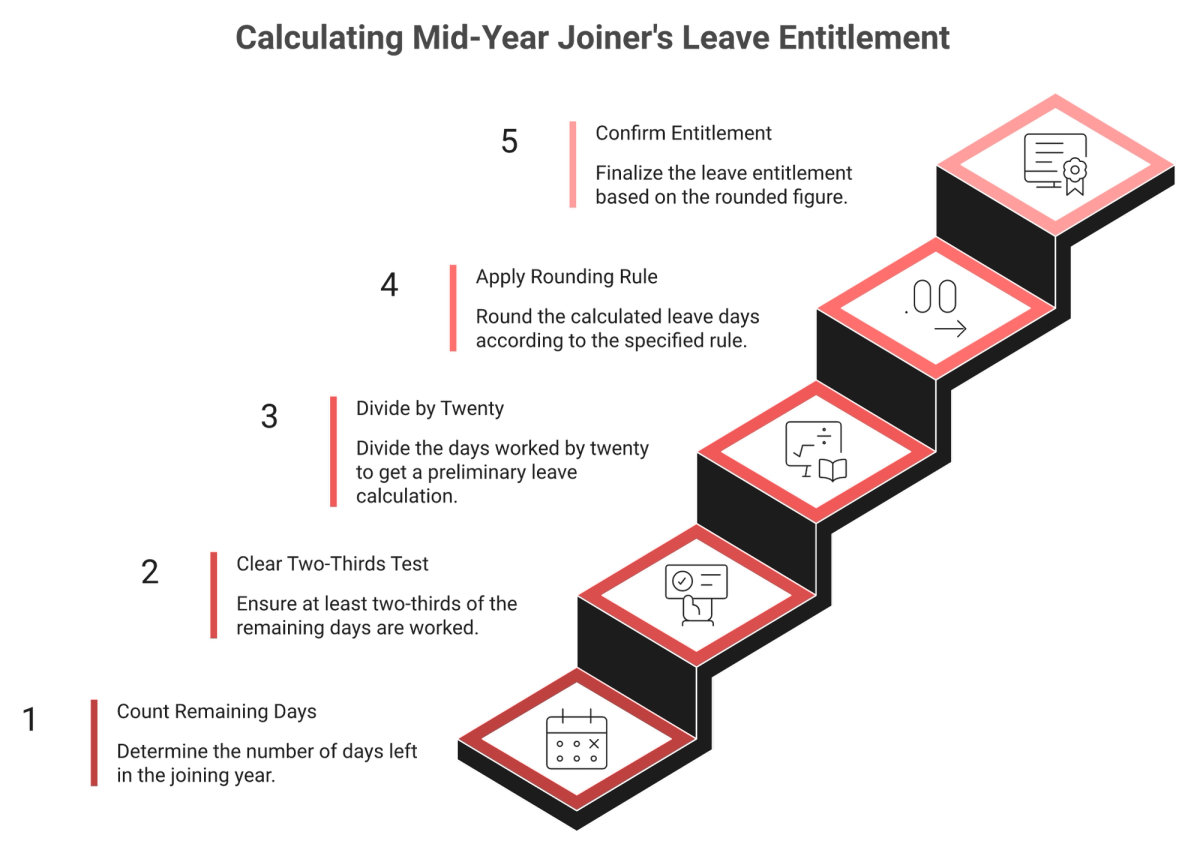
If service starts on any day other than 1 January, the employee qualifies only if they worked two-thirds of the total number of days in the remainder of the year. That is a separate test from the 240 or 180-day test.
Versatile Club runs both tests in parallel on its own payroll ledger, because a 1 June joiner passes the two-thirds test long before they could ever reach 180 days. Providers relying on partner shells often cannot show you that ledger, which is why buyers compare us as a Wisemonk alternative.
✅ Your Monday-morning audit
Open your India handbook and search for "240." If you find it, you are quoting a threshold that a central code superseded in November 2025. Replace it with 180, keep the one-in-twenty accrual, and switch on annual encashment above thirty days.
Also check which version of the Odisha Act you are reading. The current consolidated text includes the OS&CE (Amendment) Act, 2025, notified as Odisha Act 1 of 2026.
Versatile Club's read is that the standard advice gets this backwards, telling employers to wait for state amendments before changing policy. I might be leaning on that harder than the case law strictly supports, but the downside of applying the more generous threshold early is a few extra leave days, and the downside of applying the stricter one is a contested F&F settlement. If you want the clause reviewed against your current contracts, contact us and we will read it with you.
Q5. How do you calculate earned leave accrual, rounding, and carry-forward?
Earned leave in Odisha accrues at one day for every twenty days of work performed in the previous year. A child employee, aged twelve to fifteen, accrues one day for every fifteen days worked. In calculating leave, a fraction of half a day or more counts as one full day, and a fraction below half a day is ignored. Carry-forward caps at thirty days for an adult and forty days for a child. Leave refused after a valid application carries forward with no cap at all.
The formula, and the three things that bend it
🧮 Step one, count the qualifying days
Start with days actually worked in the previous calendar year. Then add the days the statute lets you count for free. Explanation 1 to Section 14(1) includes lay-off days, maternity leave up to twelve weeks, and leave earned during the year prior to that in which the leave is enjoyed.
Those days count toward the threshold. They do not earn fresh leave. The Act says so plainly: the employee shall not earn for these days.
Rule 16 of the 1958 Rules adds one more. A holiday shall be treated as a day of work for computing days worked under Section 14.
⏰ Step two, apply the mid-year joiner test
An employee whose service starts on any day other than 1 January gets accrual only if they worked two-thirds of the total number of days in the remainder of the year.
That is a separate test, not a softer version of the main one. Run both.
Versatile Club runs the threshold test and the two-thirds test in parallel on its own payroll ledger, because a June joiner can pass one and fail the other in the same year. The same ledger drives our managed payroll runs each month.
A worked example
Take an engineer in Bhubaneswar who joins on 1 June 2026. Days remaining in the year, 1 June to 31 December, come to 214.
✅ The arithmetic, line by line
- Two-thirds of 214 is 142.67, so the joiner must work at least 143 days.
- Assume she works 148 days including holidays counted under Rule 16.
- Accrual is 148 divided by 20, which gives 7.4 days.
- The fraction of 0.4 is less than half a day, so it is ignored.
- Her 2027 entitlement is 7 days of earned leave.
If she had worked 150 days, the maths gives 7.5 days. A fraction of half a day or more rounds up, so the entitlement becomes 8 days.
Versatile Club applies the Section 14(5) rounding rule inside its accrual ledger rather than letting a payroll tool truncate the decimal, which is a one-day-per-employee-per-year difference at exit. Teams modelling that cost usually start with the salary calculator.
⚠️ Holidays inside a leave period do not burn leave
Explanation 2 to Section 14(1) is short and often missed. Leave admissible under the sub-section shall be exclusive of all holidays whether occurring during or at either end of the leave period.
So a Diwali holiday falling inside a five-day leave block does not count as a leave day. In Odisha, with a heavy festival calendar, that adds up fast.
💰 Carry-forward, and the clause that removes the cap
Unused leave adds to the following year's entitlement. The cap is thirty days for an adult and forty for a child. Then comes the exception that protects the employee: anyone who applied for leave and was not granted it carries the unavailed leave forward without any such limit.
Where my head is right now is that this clause is the sleeping liability in India leave books. Deny leave for three busy quarters, and you have built an uncapped balance.
Versatile Club logs every refused leave application with a date and a reason on its own entity's records, because a refusal is the event that removes the thirty-day cap. That record sits inside the same payroll compliance in India workflow as the monthly filings.
Q6. What do you pay for a leave day, and what does encashment cost you at exit?
Versatile Club calculates Odisha leave wages under Section 15 of the Odisha Shops and Commercial Establishments Act, 1956, using the daily average of total full-time earnings for days actually worked in the month immediately preceding the leave. That average excludes overtime and bonus. It includes dearness allowance and the cash equivalent of concessional foodgrain sales. Where the employee worked no day in that month, the last month actually worked is used instead. On termination, the Section 15 amount falls due by the second working day after termination.
Your encashment liability is rising even if your policy never changed
A CFO at a $12M ARR SaaS company asked me last quarter why her India accrual line had jumped without a single new hire. The answer was not leave. It was the wage definition underneath it.
💰 The formula, stated exactly
Section 15(1) pays leave at a rate equal to the daily average of total full-time earnings for the days the employee worked in the month immediately preceding the leave, exclusive of any overtime and bonus but inclusive of dearness allowance.
Three consequences follow. Overtime-heavy months do not inflate the leave rate. A bonus month does not either. Dearness allowance does.
⚠️ Why the 50 percent wage floor changes the number
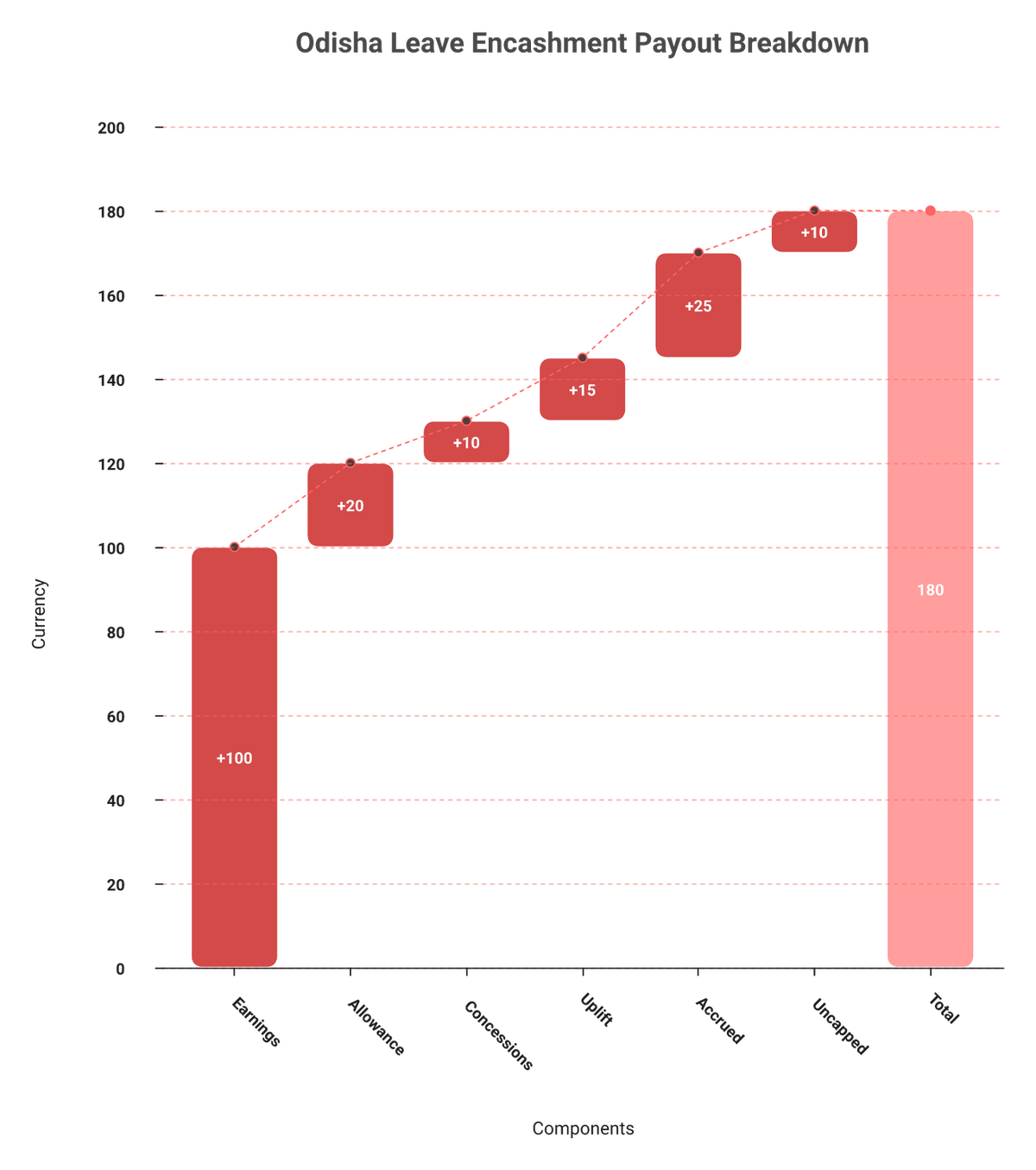
The Code on Wages requires that basic plus dearness allowance be at least half of total remuneration. Raise the basic and DA share, and the daily average under Section 15 rises with it.
So the same thirty-day balance now costs more to encash. Versatile Club re-provisions leave encashment in the same cycle as any salary restructuring, because the two calculations share one input. CFOs benchmarking this against headcount plans tend to look at the full cost of hiring in India first.
Payment timing, and the clauses that catch employers
⏰ Exit payout deadlines
Section 14(12) is specific. Where employment is terminated by the employer, the Section 15 amount is payable before the expiry of the second working day after such termination. Where the employee quits, it is payable on or before the next payday.
Two working days. Not thirty. Not "with the F&F."
There is also an advance-payment duty most handbooks skip. Section 16 requires wages for the leave period to be paid before the leave begins, where leave is four days or more for an adult.
❌ Two clauses that cut the other way
Section 14(13) says unavailed leave is not counted when computing any notice period required before discharge or dismissal. Section 14(15) allows forfeiture of up to fifteen days of unpaid wages where an employee resigns without thirty days' notice.
Unpaid Section 15 amounts are recoverable as delayed wages under the Payment of Wages Act, 1936.
Versatile Club settles leave encashment through its own payroll under its own registrations, so the two-working-day clock and the F&F run in one system rather than across a client and a partner entity. That single-entity structure is what our EOR services in India are built around.
What buyers say about payout accuracy
"Honestly I came in skeptical. Versatile was the one that actually made it simple. First payroll ran on time, no scramble, no 'wait what's this deduction.' PF, tax, the statutory filings, all the stuff I genuinely did not want to learn, they just handle it and keep it correct every month."
Angad S., Founder, Moonshot Versatile Club G2 - Verified Review, 21 June 2026
"What I dislike about Wisemonk is that some features feel a bit limited and could use more flexibility. In particular, I'd like to see better options for customization and more detailed reporting."
Vinay M., Payroll User Wisemonk - G2 Verified Review, 18 February 2026
"Their payroll is still supported by manual processes, and twice we've had near catastrophic errors. Slow and laborious initial setup. We are still waiting on answers to key questions for implementation."
Juliette D., HR Leader Remote - G2 Verified Review, 22 April 2026
Q7. How must leave be applied for, approved, or refused in Odisha?
Odisha sets procedure, not just entitlement. An employee must apply in writing to the manager not less than fifteen days before the date on which he wishes his leave to begin, and may take leave no more than three times in a year. An application that complies cannot be refused except under a written leave scheme agreed with employee representatives. Leave to cover a period of illness must be granted even when the application is late.
The procedure most India handbooks never wrote down
📝 The fifteen-day rule and the three-times rule
Both sit in Section 14(7). Fifteen days of written notice. A maximum of three leave instances in a year.
That second limit surprises people. It is not a cap on days. It is a cap on how many separate times leave may be taken.
Versatile Club writes both limits into the leave clause of its Odisha contracts, because an unwritten notice rule is unenforceable when a manager wants to decline a request. Founders making a first India hire usually see that clause drafted when they hire in India without an entity.
✅ When you cannot refuse
Section 14(11) is the employee's protection. An application that does not contravene the fifteen-day rule shall not be refused, unless refusal is in accordance with the scheme for the time being in force.
No scheme means no lawful refusal. That is the part that trips up employers who deny leave on a manager's judgement call.
The leave scheme, and why you want one
🗂️ How the scheme works
Section 14(9) lets the employer, in agreement with employee representatives chosen in the prescribed manner, formulate a written scheme regulating leave. Section 14(10) requires it to be posted in convenient places on the premises. It runs twelve months, then renews with or without modification.
This is the only lawful basis for staggering leave during a crunch. Versatile Club maintains a posted leave scheme for each client's Odisha team, so a refusal traces to a published rule rather than a Slack message. Policy drafting of this kind sits inside our HR consulting services.
🩺 Sickness leave has its own paperwork
Section 14(8) overrides the notice rule for illness. Leave due may be granted to cover a period of illness even if the application was not made in time.
Rule 17 then adds the documentation. The employer may require a medical certificate from a registered medical practitioner, Vaidya, or Hakim, stating the cause and period of absence. Every sickness leave application must be in writing, and the employer must record his orders on it and retain them till the end of the succeeding calendar year.
Versatile Club holds those written applications and recorded orders under a consent-based record process aligned to the DPDP Act, 2023, which keeps medical certificates out of a client's shared inbox. The full record architecture is documented under compliance.
⚠️ A four-step workflow you can ship tomorrow
- Employee submits a written request, dated, at least fifteen days ahead.
- Manager records an approval or a refusal, with the scheme clause cited on refusal.
- Approved leave of four days or more triggers advance wage payment before the leave starts.
- The decision and the balance update land in the Service and Leave Account.
I could be off on the relative weight here, but what surfaces in Versatile Club's client engagements is that disputes come from missing paperwork far more often than from disputed day counts.
What buyers say about approval responsiveness
"Founder is just a call away. Extremely helpful in resolving all our queries. The process is super smooth to setup India EOR."
surbhi m., Lean Founder Versatile Club G2 - Verified Review, 15 June 2026
"I've noticed that their support and query responses can occasionally take a bit longer sometimes, likely due to a relatively small team. Increasing the team size could help ensure quicker turnaround times for queries."
Verified User in Financial Services Wisemonk - G2 Verified Review, 14 June 2025
"It's impossible to speak to a human. When I get an email from support, they don't sign with names or anything. They don't follow up when they say they will and provide unreliable information."
Verified User, EOR Employee Remote - G2 Verified Review, 26 January 2026
Q8. Which holidays and working-hour limits apply alongside leave?
Every establishment in Odisha must remain closed one day a week, with the day fixed at the start of the year and notified to the Inspector. Every employee gets at least one whole day of weekly rest, and no wage deduction may be made for it. Daily hours cap at nine and weekly hours at forty-eight. Total hours including overtime cannot exceed ten in a day, and overtime cannot exceed fifty hours in any three months. Overtime is paid at double the ordinary rate of wages.
Weekly holidays are a compliance object, not a calendar habit
📅 What Section 12 actually requires
Four duties sit in one section. Fix the closure day at the beginning of the year. Notify the Inspector. Display a notice prominently on the premises. Do not alter the day more than once in three months.
Rule 14 of the 1958 Rules sets the format. The notice of weekly holidays shall be in Form 7.
Versatile Club files the weekly-holiday declaration for each Odisha establishment under its own registration, which is the document an inspector asks for before the leave register. You can see where that step falls in how it works.
⚠️ If you stay open, you owe leave in lieu
Calling an employee in on a weekly holiday is unlawful, with one exception. Where local custom requires the establishment to stay open, every employee must be given equivalent leave in lieu of such holiday or holidays within that year.
Within that year. Not carried into the next one.
No deduction may be made from wages for the weekly holiday. Daily-wage staff are paid for it too, unless their continuous employment in that week, including admissible leave, is under six days.
Hours, overtime, and rest
⏰ The caps in one place
| Limit | Odisha Shops Act position |
| Daily hours | Nine hours |
| Weekly hours | Forty-eight hours |
| Daily total with overtime | Ten hours, except on stocktaking and accounts days |
| Overtime ceiling | Fifty hours in any three months |
| Rest interval | No work period over five hours without a half-hour break |
| Spread-over | Twelve hours in any day, including rest |
| Child, twelve to fifteen | Five hours a day |
Section 8 sets overtime pay at double the ordinary rate. The ordinary rate means basic wages plus allowances, including the cash equivalent of concessional sales, but does not include a bonus.
Rule 11 requires a posted notice of each employee's daily work periods in Form 5. Rule 12 requires a Combined Register of Overtime Working and Payment.
🗓️ National and festival holidays are a separate statute
Paid holidays for 26 January, 1 May, 15 August, and 2 October come from the Orissa Industrial Establishments National and Festival Holidays Act, and are reported in the combined annual return in Form 14 alongside earned leave particulars.
Layer the state calendar on top. Odisha's notified list runs heavy from June to September with Raja Sankranti, Ratha Yatra, and Nuakhai, plus Utkal Divas on 1 April.
Versatile Club loads the notified Odisha holiday list into each client's leave calendar during onboarding, which is where US-facing coverage gaps surface before a sprint gets committed. Distributed teams handling kit and access alongside this often read our guide on how to equip remote employees in India.
✅ The practical read for a distributed team
Odisha's festival density is the planning problem, not the hour caps. A Bhubaneswar team can lose a working week across Raja and Ratha Yatra.
Versatile Club's read is that the standard advice gets this backwards, treating the holiday calendar as an HR formality rather than a delivery input. I would plan the quarter around it first, then write the leave policy. If you want that calendar mapped against your sprint plan, contact us and we will walk it through with you.
Q9. How does private-sector leave in Odisha differ from government-servant leave?
Private-sector employees in Odisha are governed by the Odisha Shops and Commercial Establishments Act, 1956, where leave accrues at one day for every twenty days worked and carry-forward caps at thirty days. State government servants are governed instead by the Odisha Leave Rules, 1966, a separate service-rule framework with a credit-based earned leave system and a much higher accumulation ceiling. The two regimes are not interchangeable. Copying a government leave table into a private employment contract creates an entitlement you did not intend to grant.
Two systems that look similar and behave differently
🗂️ Why the confusion happens on Google
Search for Odisha leave rules and you get both regimes mixed together on page one. Government circulars, service-rule PDFs, and private-sector HR blogs sit side by side.
A People Ops lead at a Series B company sent me a leave table last year that promised fifteen days of earned leave credited twice a year. That is a government service-rule pattern. Her hire was a backend engineer at a private company.
Versatile Club benchmarks Odisha offers against private-sector Shops Act entitlements and local market practice, not against state service rules, because the two produce very different annual quanta. Teams pricing an offer against that benchmark usually start with the salary calculator.
⚖️ The structural difference in one line
The private regime is accrual-based. You earn leave by working days, at a fixed ratio.
The government regime is credit-based. Leave is credited in advance at fixed points in the year, independent of days worked.
That single difference changes carry-forward, encashment, and exit settlement maths.
What actually applies to your hire
| Dimension | Private sector in Odisha | State government servants |
| Governing instrument | Odisha Shops and Commercial Establishments Act, 1956, Chapter IV | Odisha Leave Rules, 1966 |
| Basis of entitlement | Accrual, one day per twenty days worked | Advance credit at fixed intervals |
| Qualification | Days worked in the previous year | Service status and appointment terms |
| Carry-forward ceiling | Thirty days for an adult, forty for a child | Substantially higher accumulation ceiling |
| Casual leave | No statutory provision | Provided under the service rules |
| Leave wage basis | Daily average of preceding month's full-time earnings | Pay drawn before proceeding on leave |
⚠️ An honest gap in this table
The Odisha Leave Rules, 1966 text was not part of the source set I read for this article. I have described its structure, not quoted its figures, and I have not attached an official link to it. If you need exact government-side numbers, pull the rules from the Odisha Finance Department directly rather than from any HR blog, including this one.
The private-sector figures above are quoted from the Act itself, where carry-forward is capped at thirty in the case of an adult or forty in the case of a child.
✅ Which regime suits white-collar staff better
Neither, strictly. Both are floors built for a different era of work.
What suits a white-collar engineering or design team is a contractual policy that clears the Shops Act floor, then adds casual leave and a defined encashment rule. Section 19 of the Act supports exactly that route, allowing exemption where an establishment's own leave rules are not less favourable than the Chapter.
Versatile Club drafts Odisha leave clauses to sit above the private-sector floor with casual leave added, since the statutory floor alone does not include casual leave at all. Policy drafting of that kind sits inside our HR consulting services.
💰 The one number that transfers badly
Government-side accumulation ceilings run into the hundreds of days. Private-sector carry-forward stops at thirty.
If you import the higher ceiling into a private contract, you have created a balance-sheet liability with no statutory backing and no cap. Versatile Club caps contractual carry-forward at the statutory thirty days on its own entity's books, then encashes the excess annually rather than letting it compound.
Q10. Why does unlimited PTO quietly fail on an Indian team?
Unlimited paid time off fails in Odisha for two separate reasons. Culturally, in a high-context hierarchical workplace, an unspecified allowance reads as permission to take nothing, so usage falls rather than rises. Legally, the Odisha Shops and Commercial Establishments Act, 1956 still requires an employer to compute a qualifying period, accrue leave at one day per twenty days worked, and maintain a Service and Leave Account. A policy without an accrual ledger cannot survive a labour inspection or an acquisition diligence review.
The popular playbook, and where it breaks
I like the intent behind unlimited PTO. Removing a counter is supposed to signal trust. On an India team, it often signals something else.
🧠 The cultural failure
An American manager once told me her Delhi-based colleague asked her, over instant message, for permission to take his dinner break. Every single evening. His explanation was simple: because I am your subordinate.
Now give that person an unlimited leave policy with no stated norm. He does not take fifteen days. He takes three.
Versatile Club screens for this in hiring using fifty behavioural parameters, because the same deference that produces a careful engineer also produces someone who will not ask for a Friday off. You can test the same lens on your own team with the culture fit quiz.
📉 Why "use it or lose it" actually works
A capped allowance with an expiry date sounds like a restriction. In practice it creates a deadline to rest.
If nothing is allotted, nothing can be lost, and the safest behaviour is to take none at all. The threat with a motivated remote team is rarely that too little gets done. It is that too much does.
Versatile Club assigns a 90-day Success Coach to each placement, and one of the things we actually check is whether the person has taken any leave at all. That coaching layer is built into our contract to hire model.
The legal failure is the harder one
⚠️ Odisha still requires a ledger
You cannot opt out of the register. Rule 15 of the 1958 Rules requires every employer to maintain a Service and Leave Account in Form No. 8, retainable for one year after the employee's service ends.
The self-certification format in Form 15 asks directly whether prescribed hours of work, holidays, leave, and maternity benefit are being implemented. An untracked policy has no answer to that question.
❌ Where it breaks at exit
Section 14(12) requires payment for leave not taken when employment ends. If your policy never accrued a balance, you have no number to settle, and the employee's claim defaults to the statutory accrual.
So the liability exists whether or not you tracked it. You just discover it late, during an F&F dispute or a data-room review.
What to run instead
✅ A generous floor with a real ledger
Versatile Club's read is that the standard advice gets this backwards. The category treats tracking as bureaucracy and generosity as culture. In India, the ledger is what makes generosity legible.
Run accrual on the books at or above the statutory rate. Publish the number. Have leadership take visible leave. Then check usage quarterly.
I could be reading my own sample too strongly here, but across six years of India placements the teams with a stated allowance and a posted policy took more time off, not less.
"We've been using Versatile Club for our international hires, and honestly, it's been super smooth. Setting up in a new country can get messy fast, but their India EOR made onboarding feel easy. The team's responsive, clear, and great to work with."
Setu C., International Hiring Lead Versatile Club G2 - Verified Review, 10 June 2026
"Sometimes the email communication from the wisemonk team is delayed by a day or 2. But overall they seem to be the best for India."
Bulbul G., Contractor Wisemonk - G2 Verified Review, 19 February 2025
Versatile Club declines to implement untracked unlimited-leave policies for India headcount, and instead runs an accrual ledger alongside the 90-day Success Coach check on actual usage.
Q11. What registers, forms, and returns will an Odisha inspector ask for?
Every employer under the Odisha Shops and Commercial Establishments Act, 1956 must maintain a Service and Leave Account in Form No. 8, retained for one year after the employee's service ends, and a Combined Muster Roll-cum-Register of Wages retained for three years. The Combined Annual Return in Form 14 is due by 31 March for the preceding calendar year. A Self-Certification Undertaking in Form 15 is due before 31 December each year. Registers must be kept on the premises and produced on demand.
The paperwork map
🗂️ The three core registers
Rule 15 lists what every employer must keep. Two of the three matter directly to leave.
- Service and Leave Account, Form No. 8. Records leave earned, leave availed, and sickness leave availed per employee. Retainable for one year after termination of the service of the employee.
- Combined Muster Roll-cum-Register of Wages. Attendance and wages together, retainable for three years.
- Combined Register of Overtime Working and Payment, Form 12. Required under Rule 12(4).
Versatile Club maintains the Form 8 leave account for every Odisha employee under its own establishment registration, so a client audit request is answered from one entity's records. The full register set is documented under compliance.
⏰ The two annual deadlines
Rule 25 requires the combined annual return in Form 14, sent to the prescribed authority not later than the 31st March of the year following the calendar year it covers.
Rule 27 requires a separate Self-Certification Undertaking in Form 15, submitted in duplicate before 31 December for the ensuing calendar year. If facts change afterwards, a modified undertaking must be filed.
There is a sting in Rule 27. Where the information is later found incorrect, the signatories are jointly and severally liable for violation.
What the inspector actually does
⚠️ Production on demand, on the premises
Section 33 requires every employer, on demand, to produce for inspection the registers required under the Act. Section 39 adds that all such registers and records shall be kept on the premises of the establishment to which they relate.
An Inspector may enter at reasonable times, examine the premises and the registers, and take evidence on the spot.
💸 The penalty scale, and why it is not the real risk
Section 35 sets fines for contravening the leave and holiday provisions, including Sections 12, 14, and 15. First offence runs from twenty-five to two hundred and fifty rupees. Subsequent offences run from fifty to five hundred rupees.
Those numbers are tiny and have not been revised. The real exposure is elsewhere: an acquirer's diligence checklist, or an employee claim recovered as delayed wages under the Payment of Wages Act, 1936.
Versatile Club reconciles the Form 8 leave account monthly rather than at return-filing time, because the annual return is assembled from the register, not the other way round. Clients who inherited a messy register set usually read our guide on how to switch EOR provider in India.
✅ Your monthly versus annual split
Monthly: update leave earned and availed, log refused applications, file sickness certificates against Rule 17.
Annually: Form 14 by 31 March, Form 15 before 31 December, and a check that the establishment registration is current, including under the OS&CE (Amendment) Act, 2025 notified as Odisha Act 1 of 2026.
"Every payroll or PF question gets a real answer from a real person, usually same day. If you need to hire in India and want an India EOR that actually responds to emails, this is the one."
Verified User in Information Technology and Services, First-time Founder Versatile Club G2 - Verified Review, 23 June 2026
"At times when wisemonk team doesn't have information about what I asked, reaching out to the respective company and then getting the information, was a bit time consuming."
Verified User in Financial Services, EOR Employee Wisemonk - G2 Verified Review, 16 June 2025
Q12. How do you run one leave policy across Odisha and the rest of India, and who should administer it?
Versatile Club holds Shops and Establishments, PF, and ESIC registrations across all 28 Indian states and 8 union territories, which is what allows one harmonised leave policy to be filed consistently in each state. The practical method is to write a single national policy set to the most generous state floor you operate in, then attach a state annexure for the deltas. Section 19 of the Odisha Act permits exemption from Chapter IV where an establishment's own leave rules are not less favourable than the statutory provisions.
One policy, twenty-eight statutes
🗂️ Why the annexure approach wins
India has 28 states and 8 union territories, each with its own Shops Act, professional tax slabs, and filing cycles. Maharashtra needs dual PTRC and PTEC registration. Karnataka runs a monthly professional tax cycle. Tamil Nadu files biannually. West Bengal changes rules often.
Write twenty-eight handbooks and you will maintain none of them. Write one above-floor policy plus a short state annexure, and you maintain one document.
Versatile Club runs a single harmonised leave policy across client teams and holds the state-specific registrations underneath it, which is where the annexure stops being theoretical. The city-level view sits in our notes on payroll outsourcing in Bengaluru.
✅ The legal basis for harmonising
Two clauses do the work. Section 38 gives the employee whatever is more favourable, so an above-floor policy is always safe. Section 19 then allows formal exemption where your rules provide benefits not less favourable than those for which this Chapter makes provision.
What stays state-specific is never the policy. It is the paperwork: registers, returns, and holiday calendars.
The three administration routes
💰 Honest comparison
| Criterion | Versatile Club | Wisemonk | Global generalists (Deel, Remote, G-P, Multiplier) |
| India entity | ✅ Own registered Indian entity | ✅ India-native operator | ❌ India typically routed through local-partner entities |
| States covered | ✅ All 28 states plus 8 UTs | India-focused | ❌ Concentrated in Tier-1 hubs |
| Published price | $149 per employee per month | $99 to $399 | $400 to $599, or 15% of salary for G-P |
| Onboarding | 5-day contractual SLA | 24 to 72 hours claimed | ❌ Typically 7 to 14 days |
| Support model | ✅ Founder on WhatsApp | ❌ No published founder-direct model | ❌ Ticket queue or chatbot first |
| Retention cover | ✅ 90-day Success Coach, 6-month replacement guarantee | ❌ No replacement guarantee published | ❌ Not offered |
| Certifications | ❌ No SOC 2 or ISO 27001 today | ✅ SOC 2 and ISO 27001 | ✅ Enterprise certifications |
⚠️ Where each route is the wrong answer
Setting up your own Indian subsidiary makes sense above roughly thirty India employees. Below that, the $50K and twelve to eighteen months before your first hire rarely pays back. The threshold maths is worth running in the EOR vs entity calculator.
Versatile Club is the wrong choice if you need five or more countries, or if SOC 2 and ISO 27001 are procurement prerequisites for a 100-plus India team. India-only is a design decision, and I would rather name that than sell around it. Buyers running that shortlist often compare us as a Wisemonk alternative and as a Deel alternative.
"The process was straightforward, the Support team was easy to work with, and the candidates' quality met our expectations."
Verified User in Venture Capital & Private Equity, Hiring Manager Versatile Club G2 - Verified Review, 22 June 2026
"I find Deel to be absurdly expensive. They charge a high amount of fees for transferring money to my bank account. If I had a choice, I wouldn't use Deel to receive my money due to these steep fees."
Juan Camilo O., Contractor Deel - G2 Verified Review, 27 November 2025
"It's expensive, it doesn't integrate with anything that I need, it doesn't have basic US payroll functionality."
Verified User in Accounting, Finance Lead Remote - G2 Verified Review, 15 April 2026
🔭 Where this goes next
What I think shifts in the next two years is that India stops being one country on a global EOR map and becomes its own specialist category.
Versatile Club invoices in USD direct from its Indian entity with no setup fee, no exit fee, and the first month free, which is the part CFOs actually reconcile at month-end. The full rate card sits on our pricing page.
FAQs
How many leaves are employees entitled to in a year in Odisha?
Under the Odisha Shops and Commercial Establishments Act, 1956, there is no single flat number. Leave is earned, not granted upfront.
- Annual leave with wages: one day for every twenty days of work performed in the previous year. A child employee aged twelve to fifteen earns one day for every fifteen days worked.
- Sickness leave: up to fifteen days per year, admissible only after one year of continuous employment.
- Maternity leave: twenty-six weeks under the central Maternity Benefit Act, 1961, plus an additional month for pregnancy-related illness.
- Weekly holiday: at least one whole paid rest day per week, with no wage deduction.
So a full-year employee who works around 300 days earns roughly fifteen days of annual leave, on top of fifteen sickness days. That is why competing articles quote different totals: they are reporting an output of the formula, not the formula itself.
Versatile Club derives every Odisha leave figure from the Section 14 accrual formula inside its own payroll ledger rather than copying a fixed number from a compliance tracker. If you want the entitlement modelled against a real salary structure before you send an offer, we run that calculation as part of our EOR services in India.
Is casual leave mandatory for employers in Odisha?
No. Casual leave is not a statutory entitlement in Odisha. Chapter IV of the Odisha Shops and Commercial Establishments Act, 1956 provides for annual leave with wages and sickness leave, and contains no casual leave provision at all. State-wise statutory trackers record Odisha casual leave as nil.
That does not make it optional in practice.
- Most Indian employers grant seven to twelve casual leave days as a discretionary policy benefit.
- Engineers and designers comparing two offers read casual leave as a signal, not a statute.
- Section 38 of the Act protects any benefit more favourable than the statutory floor, so granting casual leave creates no legal conflict.
The practical risk runs the other way. A handbook that silently treats casual leave as statutory, then withdraws it during a cost review, creates a contractual dispute rather than a compliance one. Write it down as policy, and label it as policy.
Versatile Club shows the statutory floor and the market-practice layer as separate lines in every Odisha offer letter, so the employee can see which days are law and which are company policy. Teams building that structure for the first time usually start with our guide to hire employees in India.
Does the 240-day qualifying rule still apply in Odisha, or is it 180 days now?
Apply 180 days. The state statute and the central code now say different things, and the more favourable instrument wins.
- Odisha Shops Act, Section 14(1): still requires 240 days worked in a year before leave accrues in the following year.
- Occupational Safety, Health and Working Conditions Code, 2020: in force from 21 November 2025, lowering the paid-leave trigger to 180 days worked in a calendar year.
- Section 38 of the Odisha Act: preserves any right more favourable to the employee under any other law.
Accrual itself is unchanged at one day per twenty days worked. Carry-forward stays capped at thirty days, with encashment of the excess at year end.
There is a second, separate test people miss. An employee whose service begins on any date other than 1 January qualifies only if they work two-thirds of the remaining days in that year. Run both tests, not one.
Versatile Club amended the eligibility clause across its Odisha contracts to the 180-day trigger rather than waiting for the Odisha legislature to catch up. If your handbook still says 240, that clause needs replacing this quarter, and our compliance documentation shows how we structured the change.
How is leave encashment calculated in Odisha when an employee exits?
Section 15 of the Odisha Shops and Commercial Establishments Act, 1956 sets the rate. Leave is paid at the daily average of the employee's total full-time earnings for the days actually worked in the month immediately preceding the leave.
- Excluded from the average: overtime wages and bonus.
- Included in the average: dearness allowance and the cash equivalent of concessional sales.
- Fallback: if the employee worked no day in that month, the last calendar month actually worked is used instead.
Timing is tighter than most finance teams assume. Where the employer terminates, the Section 15 amount is payable before the expiry of the second working day after termination. Where the employee resigns, it is payable on or before the next payday. Unpaid amounts are recoverable as delayed wages under the Payment of Wages Act, 1936.
One structural change matters here. The Code on Wages requires basic plus dearness allowance to be at least half of total remuneration, which raises the Section 15 daily average and therefore the cost of the same thirty-day balance.
Versatile Club re-provisions leave encashment in the same cycle as any salary restructuring, because both calculations share one input. CFOs modelling that exposure often review it alongside the full cost of hiring in India.
What leave records must an employer maintain under Odisha law?
Odisha requires a documented leave ledger, not just a policy. Rule 15 of the Orissa Shops and Commercial Establishments Rules, 1958 sets out the registers.
- Service and Leave Account, Form No. 8: records leave earned, leave availed, and sickness leave availed per employee. Retainable for one year after the employee's service ends.
- Combined Muster Roll-cum-Register of Wages: attendance and wages together, retainable for three years.
- Combined Register of Overtime Working and Payment, Form 12: required under Rule 12(4).
- Sickness leave applications: must be in writing, with the employer's order recorded and retained until the end of the following calendar year.
Two annual filings sit on top. The Combined Annual Return in Form 14 is due by 31 March for the preceding calendar year. A Self-Certification Undertaking in Form 15 is due before 31 December, and signatories are jointly and severally liable if the information is later found incorrect.
Registers must be kept on the establishment premises and produced on demand to an Inspector.
Versatile Club reconciles the Form 8 leave account monthly rather than at return-filing time, because the annual return is assembled from the register. Clients inheriting an incomplete register set usually read our guidance on how to switch EOR provider in India.