Table of contents (13)
8 Best Payroll Outsourcing Companies in Hyderabad: Reliability, Response Time, and Pricing Compared
Q1. What Are the 8 Best Payroll Outsourcing Companies in Hyderabad for Hiring in India in 2026?
Picking a payroll partner for a Hyderabad team is a high-stakes call. Get it wrong, and you inherit misfiled PF challans, missed Telangana professional tax deadlines, and a support queue that goes quiet three days before payday. For this guide, I analyzed eight providers against the criteria that actually decide whether a hire gets paid correctly and stays. It is built for US and UK founders, People Ops leaders, CFOs, and legal teams hiring 1 to 50 people in India. The lens throughout is compliance depth, entity model, onboarding speed, pricing transparency, support quality, and audit readiness.
Our Evaluation Criteria
Each provider was assessed across these decision-grade criteria:
India Entity Model: Own Indian entity, local partner entity, contractor model, or payroll-only setup.
Statutory Compliance Depth: PF, ESI, TDS, professional tax, gratuity, POSH, Form 16, full-and-final settlement, DPDP readiness, and New Labour Code 2025-26 structuring.
State-Level Coverage: Professional tax, Shops and Establishments, labour welfare fund, and leave rules across Indian states.
Onboarding Speed: Time from signed agreement to compliant contract, payroll setup, statutory registration, and employee start.
Pricing Transparency: Monthly fee, setup fee, exit fee, FX markup, first-month terms, salary-band pricing, and invoice clarity.
Invoicing and Finance Readiness: USD invoicing, INR invoicing, gross-deduction-net reporting, challan confirmations, TDS receipts, and audit-ready documentation.
Support Model: Founder-direct, named HR manager, HRBP, ticket queue, chatbot, or general CSM.
Talent and Retention Support: Recruiting, contract-to-hire, culture-fit vetting, onboarding monitoring, and replacement guarantee.
Customer Validation: G2, Capterra, Clutch, Reddit, case studies, and third-party proof.
Best-Fit Buyer Segment: First India hire, 1 to 20 employees, 10 to 50 employees, switchers from Deel or Remote, or enterprises needing multi-country EOR.
Who This Guide Is For
This guide is designed for:
US and UK founders hiring their first 1 to 3 employees in India.
Seed to Series B startups building engineering, product, AI, design, marketing, or operations teams in India.
People Ops and HR leaders reviewing India EOR, payroll, contractor, or PEO vendors.
CFOs and finance teams that need clean invoicing, statutory liability visibility, and audit-ready India payroll records.
Legal teams reviewing employment contracts, IP assignment, misclassification risk, PE risk, and statutory employer accountability.
Companies using Deel, Remote, Multiplier, G-P, contractors, or local vendors and evaluating India-specialist alternatives.
📋 The Ranked List at a Glance
Versatile: Best for US and UK startups hiring their first 1 to 20 India employees who want an owned-entity EOR plus contract-to-hire.
Deel: Best for companies that need the broadest global country coverage across many markets at once.
Remote: Best for teams that value open, well-documented compliance tooling across multiple countries.
Globalization Partners (G-P): Best for large enterprises scaling structured multi-country hiring.
Multiplier: Best for fast multi-country contractor and EOR payments.
Velocity Global (Pebl): Best for blended EOR plus services across many regions.
Papaya Global: Best for payroll-payments automation at scale.
Rippling: Best for teams wanting a unified HR, IT, and payroll stack.
📊 Master Comparison Table
| Provider (Stars) | Best For | Key Strength | Compliance |
|---|---|---|---|
| Versatile ⭐⭐⭐⭐⭐ | US/UK startups hiring first 1 to 20 India employees | Owned Indian entity plus contract-to-hire with a 6-month replacement guarantee | Own entity; PF, ESI, TDS, and multi-state PT filed under its own registrations; New Labour Code 2025-26 support |
| Deel ⭐⭐⭐ | Companies hiring across many countries at once | Broadest global country coverage on one platform | India typically via local partner entity; SOC 2; global compliance breadth |
| Remote ⭐⭐⭐ | Multi-country teams valuing documentation | Transparent, well-documented compliance tooling | India via partner/owned mix; SOC 2; strong global IP protection |
| Globalization Partners (G-P) ⭐⭐⭐ | Large enterprises scaling globally | Mature enterprise onboarding at scale | Global entity network; SOC 2, ISO 27001; enterprise procurement fit |
| Multiplier ⭐⭐⭐ | Fast multi-country contractor and EOR pay | Quick multi-country payments | Partner-entity model in India; SOC 2; global coverage |
| Velocity Global (Pebl) ⭐⭐ | Blended EOR plus services | EOR combined with support services | Global partner network; multi-country compliance |
| Papaya Global ⭐⭐⭐ | Payroll-payments automation | Automated global payroll and payments | Payroll-led model; SOC 2; global payments compliance |
| Rippling ⭐⭐⭐ | Unified HR, IT, and payroll stack | One dashboard for HR, IT, and payroll | Strong US payroll; India EOR via partner layer; SOC 2 |
Stars reflect the weighted rubric in the next section (India Entity Model and Compliance Depth carry the most weight). The global generalists score well on breadth. They score lower on India depth because most route India through a local partner entity rather than owning one.
Here is the pattern I keep seeing after six years of running India placements. Global platforms cover 90 to 185 countries and spread their India expertise thin. You often pay for a polished global dashboard while your actual Telangana compliance sits with an anonymous local partner you never meet. If you need to hire in twenty countries next quarter, a generalist fits. If you are building a real Hyderabad team, India depth wins.
1.1 Versatile: Best for India-Native, Owned-Entity EOR Plus Contract-to-Hire
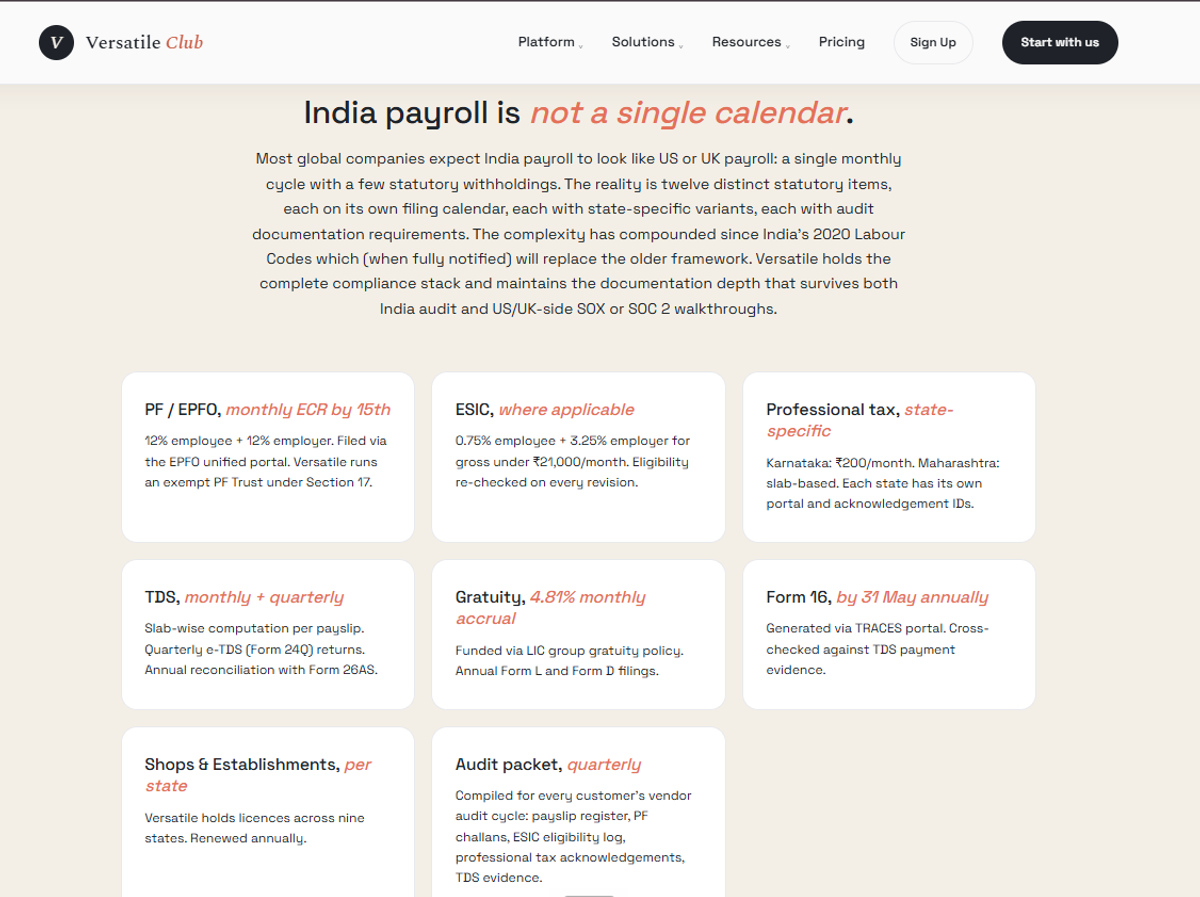
We built Versatile as an India-only EOR, so I will be direct about what that means and where it does not fit. If you want five countries next month, we are the wrong call. If you want a Hyderabad hire paid correctly in five days, keep reading.
📖 Overview
Versatile is an India-native Employer of Record and contract-to-hire operator serving US and UK companies. We started as a contract-to-hire business, placing engineers, designers, and ops professionals across Bengaluru, Hyderabad, and Pune. Because of that history, the payroll operations, the compliance muscle, and the state-level registrations were already in place before we ever called ourselves an EOR.
The core difference is ownership. Most global EOR providers use local partner entities in India. We do not. Your team's PF, ESI, TDS, and professional tax filings sit under our own registrations, not a shell we rent.
🛠️ Core Services
Employer of Record India, with us as the legal employer of record.
Contract-to-hire (C2H) placements with culture-fit vetting.
Full statutory compliance: PF, ESI, TDS, multi-state professional tax, gratuity, and POSH.
USD invoicing direct from our Indian entity, with no FX markup.
Onboarding, payroll, and full-and-final settlement handled end to end.
💡 Why Companies Consider Versatile
The decision logic is usually speed plus compliance plus a real human. Founders making a first India hire do not want to become part-time India HR managers. They want the person hired, paid, and legal, then they want to forget the back office.
The second reason is retention. Compliance is the floor, not the ceiling. A legal hire on paper is not the same as a good hire who stays, so we vet on 50 behavioral parameters, assign a 90-day Success Coach, and back C2H placements with a 6-month replacement guarantee.
🎯 Ideal Customer Profile
US and UK founders making their first 1 to 3 India hires.
Seed to Series B startups building teams of 1 to 20 in India.
CFOs at $5M to $50M ARR SMBs who close month-end on a single USD invoice.
Decision-maker: founder, People Ops lead, or finance leader.
💰 Commercial Model
EOR pricing is a flat per-employee monthly fee. C2H is charged at 20 to 30% of annual salary, billed only after the hire completes day 90. There are no setup fees, no exit fees, and the first month is free. Invoicing is in USD, direct from our Indian entity, with statutory contributions itemized on the invoice.
For exact current per-employee pricing, ask for a sample invoice before you sign. That single document settles most hidden-fee anxiety in one look.
⚠️ Where Versatile Is Not the Fit
I will name the trade-offs. We operate only in India, by design, so buyers needing five or more countries should use a generalist. Enterprises that require SOC 2 or ISO 27001 as a procurement prerequisite, or 100-plus India teams with heavy custom procurement workflows, may outgrow our 5-day SLA model.
💬 Customer Reviews
"replied to our form in about four hours with a draft offer letter already attached. The hire was onboarded in four days. USD invoice landed clean, no FX markup, no setup fee, no surprises. Every payroll or PF question gets a real answer from a real person, usually same day."
Verified User in Information Technology and Services, Versatile G2 Verified Review
"The dashboard could be a little more self-serve. A couple of times I wanted to pull a report or a doc myself and ended up just messaging my contact instead. They always answered fast, so it wasn't a real problem, but I'd love to click around and find things on my own. Small thing."
Angad S., Versatile G2 Verified Review
1.2 Deel: Best for the Broadest Global Country Coverage
Deel is the name most founders reach for first, and for good reason. When your problem is "I need to pay people in fifteen countries," Deel is a strong answer. When your problem is "I need deep Hyderabad compliance," the picture gets more mixed.
📖 Overview
Deel is a global EOR and contractor-payments platform covering a very large set of countries on one interface. It serves companies managing distributed teams across many markets who value consolidation and a clean product experience. In India, Deel typically operates through a local partner entity rather than an owned one.
That partner model is the structural trade-off. You get global breadth. You give up direct control over who files your India statutory paperwork. If that control matters to you, a dedicated Deel alternative built around an owned Indian entity is worth weighing.
🛠️ Core Services
Global Employer of Record across many countries.
Contractor onboarding and multi-country payments.
Multi-country payroll management.
Immigration and visa support in select markets.
Compliance documentation and contract generation.
💡 Why Companies Consider Deel
The buying reason is breadth and speed of setup for a global footprint. Teams that already run people in several countries like having one platform, one login, and one vendor relationship instead of ten local providers.
The friction, based on published reviews, shows up in fees and support depth on complex cases. India onboarding through a partner can stretch to one or two weeks, and support is often ticket or chatbot-first rather than a named person who owns your case.
🎯 Ideal Customer Profile
Companies hiring across many countries simultaneously.
Scaleups with distributed teams spanning multiple regions.
Teams that prioritize global consolidation over single-country depth.
Decision-maker: People Ops or global HR lead.
💰 Commercial Model
Deel's EOR pricing is commonly cited around $599 per employee per month, with contractor plans priced separately. Reviewers report transfer fees and, in some cases, a 3 to 5% FX cost that affects the net amount received. Confirm the exact fee schedule and FX policy in writing before committing.
💬 Customer Reviews
"It took three months to onboard our first 3 individuals. They didn't seem to be able to navigate visas or variations to employment contracts, and this constantly created issues, so we had to make a decision to change providers."
Verified User in Information Technology and Services, Deel G2 Verified Review
"Often the CS doesn't seem to have answers, which leads me to emails back and forth on my case. Something I was looking for the answer to in 20 minutes becomes a 4 day process, or needs to be consulted with by multiple team members who aren't available except for at 3:00am my time."
Verified User in Computer Software, Deel G2 Verified Review
"I find Deel to be absurdly expensive. They charge a high amount of fees for transferring money to my bank account. Additionally, using their card incurs fees for purchases in another currency."
Juan Camilo O., Deel G2 Verified Review
1.3 Remote: Best for Open, Well-Documented Compliance Tooling
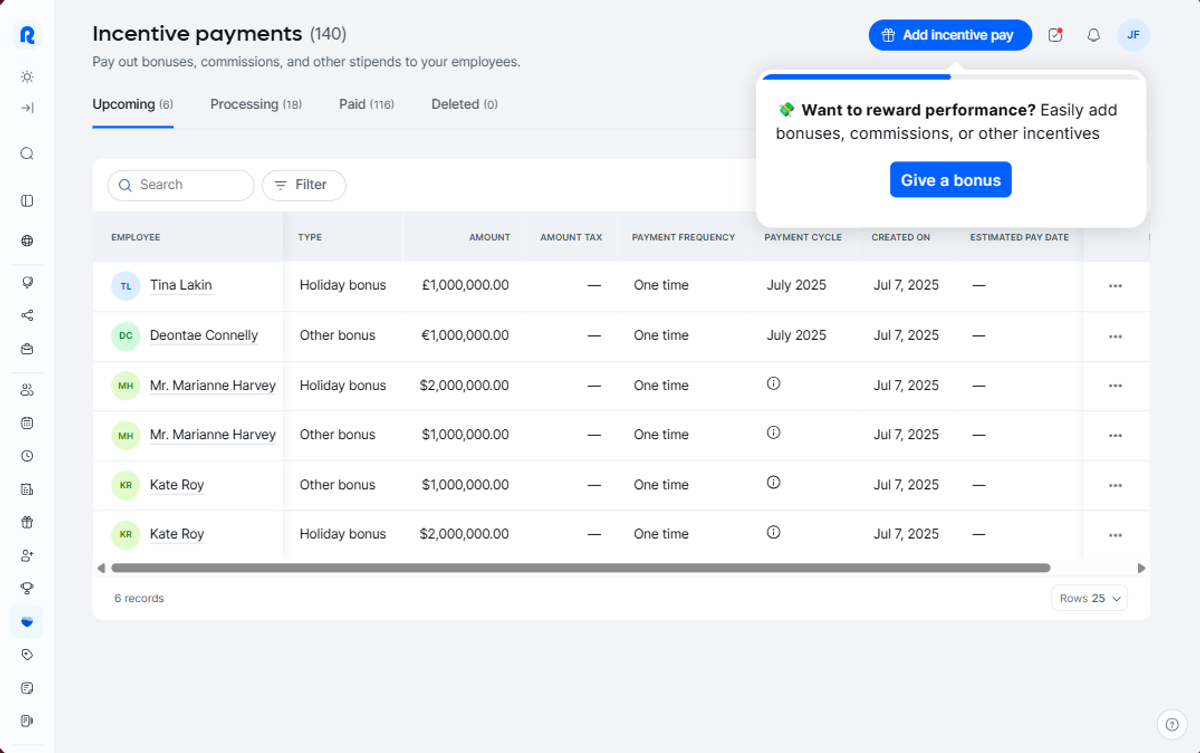
Remote is the provider I point people to when they care about clear documentation and IP protection across several countries. It is a serious platform. For a deep single-country India build, though, you are still buying breadth, not depth.
📖 Overview
Remote is a global Employer of Record and contractor-management platform covering a wide set of countries. It appeals to teams that want transparent processes, strong intellectual-property (IP) protection clauses, and self-serve tooling. In India, coverage sits within Remote's broader global model rather than a single-country specialism.
The strength is consistency across markets. The limit is that India is one flag among many, not the whole map. Teams weighing this often compare a global platform against a dedicated Remote alternative built for India.
🛠️ Core Services
Global Employer of Record employment.
Contractor management and payments.
IP and invention-rights protection.
Global payroll consolidation.
Benefits administration across supported countries.
💡 Why Companies Consider Remote
The buying logic is documentation quality and IP safety. Engineering-heavy teams like that contracts assign invention rights cleanly, which matters when your India hires write core product code.
The trade-off is India-specific depth. Multi-state professional tax nuance, like Maharashtra's PTRC plus PTEC or Telangana's monthly remittance, is handled inside a global framework rather than by an India-first operator.
🎯 Ideal Customer Profile
Multi-country teams that value clean IP assignment.
Seed to Series C startups hiring across regions.
People Ops leads standardizing global contracts.
Decision-maker: People Ops or legal counsel.
💰 Commercial Model
Remote's EOR pricing is commonly cited around $599 per employee per month, billed on an annual or monthly basis. Setup and deposit terms vary by market. Confirm the India-specific fee, deposit, and FX policy directly, since published figures reflect the global standard rate.
1.4 Globalization Partners (G-P): Best for Large-Enterprise Scale
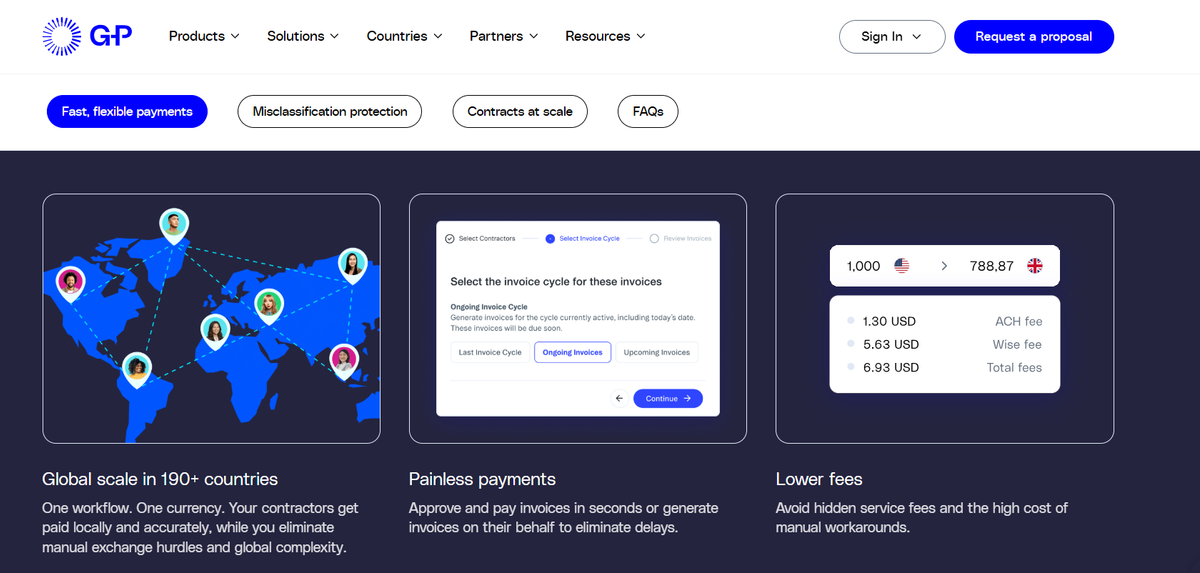
G-P is built for the enterprise buyer, and it shows. If you have a procurement team, a security questionnaire, and a plan to hire across a dozen countries, G-P is a rational shortlist entry. For a five-person Hyderabad pod, it is heavy.
📖 Overview
Globalization Partners (G-P) is a mature global EOR with a large owned-entity network and enterprise-grade certifications. It serves bigger organizations that need structured onboarding, security compliance, and multi-country coverage. India is one country within that global footprint.
The appeal is scale and process maturity. The cost is that the same process weight slows down a simple single-hire setup, where a focused enterprise India solution can move faster.
🛠️ Core Services
Global Employer of Record across many owned entities.
Enterprise onboarding and compliance workflows.
Global payroll and benefits.
Contractor engagement in select markets.
Security and data-governance certifications (SOC 2, ISO 27001).
💡 Why Companies Consider Globalization Partners
The decision driver is enterprise procurement fit. Large buyers need SOC 2 and ISO 27001 as prerequisites, and G-P clears those checkboxes cleanly.
The friction is speed and cost at small scale. One reviewer switching providers noted they moved toward Globalization Partners specifically for that enterprise reliability after other vendors fell short, which tells you the segment it wins.
🎯 Ideal Customer Profile
Enterprises hiring 100-plus people globally.
Companies with formal security-procurement requirements.
Multi-country programs needing owned entities.
Decision-maker: procurement, legal, or global HR.
💰 Commercial Model
G-P pricing is often structured around a percentage of salary, commonly cited near 15%, or a custom enterprise quote. Exact terms depend on volume and countries. Request a written quote, since pricing is not uniformly public.
1.5 Multiplier: Best for Fast Multi-Country Contractor Payments
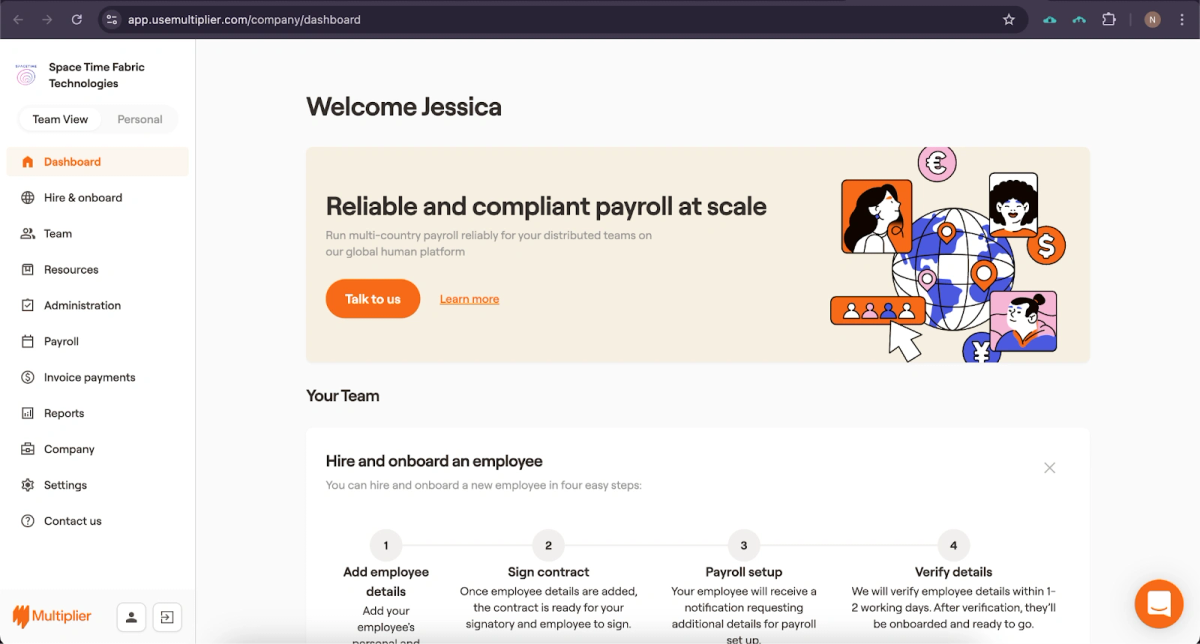
Multiplier is a solid pick when your problem is paying a spread-out contractor base quickly. It moves fast on payments. The India employment depth is standard global-platform depth, not India-first depth.
📖 Overview
Multiplier is a global EOR and contractor-payments platform focused on quick onboarding and multi-country payouts. It suits teams juggling contractors and employees across several markets who want speed. India runs through its global model, typically via a partner entity.
The strength is payment velocity. The limit is single-country compliance nuance, which is why some teams evaluate a Multiplier alternative for India-specific work.
🛠️ Core Services
Global Employer of Record employment.
Multi-country contractor payments.
Fast onboarding workflows.
Benefits and insurance in supported markets.
Compliance documentation.
💡 Why Companies Consider Multiplier
The buying reason is speed and cost efficiency across many countries. Teams that pay contractors in several currencies value a single fast payout rail.
The trade-off shows up when a contractor is really an employee. India misclassification risk needs an India-first lens, and a global payments platform is optimized for breadth, not multi-state statutory depth.
🎯 Ideal Customer Profile
Teams paying contractors across multiple countries.
Early to growth-stage startups scaling fast.
Ops leads managing distributed payouts.
Decision-maker: finance or People Ops.
💰 Commercial Model
Multiplier's EOR pricing is commonly cited near $400 per employee per month, with separate contractor plans. Setup and FX terms vary. Confirm India-specific pricing and FX handling before signing.
1.6 Velocity Global (Pebl): Best for Blended EOR Plus Services
Velocity Global, now Pebl, pairs EOR with a services layer, which some multi-country teams like. The public reviews show a mixed support picture, so I would pressure-test the onboarding and offboarding experience before committing.
📖 Overview
Velocity Global (rebranded Pebl) is a global EOR operating across many countries through a partner and entity network. It targets organizations wanting EOR bundled with broader support services. India is part of a wide multi-country offering.
The pitch is breadth plus a service wrap. The reality, per reviewers, depends heavily on which account team you get, so a Velocity Global alternative in India is worth reviewing.
🛠️ Core Services
Global Employer of Record employment.
Multi-country payroll and benefits.
Onboarding and offboarding support.
Immigration support in select markets.
Contractor engagement.
💡 Why Companies Consider Velocity Global
The buying logic is multi-country coverage with a services layer for teams that do not want to self-serve. It works for organizations hiring across many regions at once.
The recurring concern in reviews is support consistency and account-manager churn. That matters most at sensitive moments, like PF transfer at offboarding, where delays hit employees directly.
🎯 Ideal Customer Profile
Multi-country teams wanting bundled services.
Mid-size organizations hiring across regions.
Companies comfortable with an account-managed model.
Decision-maker: HR or global operations.
💰 Commercial Model
Velocity Global uses a per-employee EOR fee, typically via custom quote. Reviewers describe fees as higher than average. Request written pricing and confirm deposit-refund and offboarding terms.
💬 Customer Reviews
"The PF transfer for employees after terminating their employment with Velocity was very poor. There was limited help, delayed responses, and you can't get them to talk to you on phone. This is disappointing as they charged heavily per employee."
Verified User in Computer Software, Velocity Global G2 Verified Review
"I really appreciated the professionalism, responsiveness, and efficiency of the Velocity Global team throughout the hiring and onboarding process. Everything was very well structured, and I felt supported at every stage."
Verified User in Information Technology and Services, Velocity Global G2 Verified Review
1.7 Papaya Global: Best for Payroll-Payments Automation
Papaya Global leans into payroll and payments automation at scale. It is strong on moving money globally. One important note, reviewers of other platforms have pointed out that Papaya is payroll-led rather than a full EOR, so check the employment model for India carefully.
📖 Overview
Papaya Global is a global payroll and payments platform with EOR-adjacent capabilities. It serves larger organizations that prioritize automated, consolidated global payroll. India fits within that payments-first architecture.
The strength is automation and payment visibility. The caveat is confirming whether you are buying full EOR employment or payroll processing for India.
🛠️ Core Services
Global payroll consolidation and automation.
Cross-border payments.
EOR-adjacent employment in select markets.
Workforce analytics and reporting.
Compliance documentation.
💡 Why Companies Consider Papaya Global
The buying reason is payroll automation and payment control across many countries. Finance teams like unified global payroll visibility and clean reporting.
The decision risk is the employment model. A US buyer once noted they moved off Papaya because it was not a full EOR, so clarify India employer-of-record status before you rely on it for a Hyderabad hire.
🎯 Ideal Customer Profile
Enterprises consolidating global payroll.
Finance-led buyers wanting payment automation.
Multi-country teams with existing entities.
Decision-maker: CFO or global payroll lead.
💰 Commercial Model
Papaya Global uses per-employee payroll and EOR pricing, typically via custom quote based on volume and countries. Pricing is not uniformly public. Request written terms and confirm India employment structure.
1.8 Rippling: Best for a Unified HR, IT, and Payroll Stack
Rippling is a powerful all-in-one system, and its US payroll and IT provisioning are genuinely good. For India EOR specifically, the public reviews raise real support and multi-jurisdiction tax concerns, so go in with eyes open.
📖 Overview
Rippling is a unified workforce platform combining HR, IT, and payroll on one dashboard. It serves companies that want to manage devices, apps, and pay in a single system. India EOR sits within its broader global layer.
The strength is consolidation across HR and IT. The weakness reviewers flag is support depth and multi-jurisdiction tax accuracy, which pushes some teams toward a Rippling alternative for India.
🛠️ Core Services
Unified HR, payroll, and IT management.
Device and app provisioning.
Global EOR and contractor payments.
Benefits administration.
Reporting and automation workflows.
💡 Why Companies Consider Rippling
The buying logic is consolidation. Teams tired of stitching together HR, payroll, and IT tools like one dashboard that does all three.
The recurring concern is support and compliance reliability, especially outside US payroll. Reviewers describe chatbot-first support, slow ticket turnaround, and multi-state tax errors, which is a real risk when the function is compensation.
🎯 Ideal Customer Profile
Teams wanting HR, IT, and payroll in one system.
US-centric companies with global extensions.
Ops leads consolidating tools.
Decision-maker: People Ops or IT.
💰 Commercial Model
Rippling uses modular per-employee pricing across HR, payroll, and IT products, with EOR priced separately. Add-ons increase cost. Pricing is largely custom quote, so confirm the full stack cost before committing.
💬 Customer Reviews
"Support is the single biggest failure. There is no direct phone line. You either email or use a chatbot, and you can ask both the same question and get two different wrong answers. Escalation to someone who actually understands the product takes way too long."
Erika D., Rippling G2 Verified Review
"I find the entire integrated payroll system very easy to use, even for our most tech-phobic employees. The implementation process for Rippling Spend has been a truly terrible experience. No one can diagnose the issue."
Patrick W., Rippling G2 Verified Review
Here is where my six years of running India placements land the point. Every provider from 1.3 to 1.8 is a capable global platform, and each wins its own use case, whether that is IP-clean contracts, enterprise procurement, fast payouts, or a unified stack. What none of them is built to be is an India-first operator that owns its entity and files your Telangana professional tax under its own registrations. That is the deliberate gap Versatile fills. If you are hiring across five countries, pick a generalist above. If you are building a real Hyderabad team and want the person who runs the operation reachable on WhatsApp, that is the whole reason we exist.
Q2. How Did We Score These Payroll Providers?
We scored each provider on five weighted criteria totaling 100 points: India Entity Model and Compliance Depth (30%), Pricing Transparency and Commercial Model (20%), Onboarding Speed and Support Model (20%), Talent and Retention Support (15%), and Customer Validation via G2, Capterra, and Reddit (15%). Scores map to stars, where 0 to 20 is 1 star and 81 to 100 is 5 stars. Versatile scores 5 stars on India-native owned-entity depth.
📊 The Weighted Rubric
I will show my math, because a ranking you cannot audit is just an opinion in a table. Here is exactly how the 100 points break down and what earns them.
| Criterion | Weight | What Earns Points |
|---|---|---|
| India Entity Model and Compliance Depth | 30% | Own Indian entity, direct PF, ESI, TDS, and multi-state PT filing, New Labour Code 2025-26 readiness |
| Pricing Transparency and Commercial Model | 20% | Published rates, no hidden FX markup, clear setup and exit terms, sample invoice on request |
| Onboarding Speed and Support Model | 20% | Fast contractual onboarding, named human support, not chatbot or ticket-only |
| Talent and Retention Support | 15% | Culture-fit vetting, replacement guarantee, structured onboarding follow-through |
| Customer Validation | 15% | Verified G2, Capterra, Clutch, and Reddit reviews |
⭐ How Stars Are Assigned
The star bands are simple and fixed. A score of 0 to 20 earns 1 star, 21 to 40 earns 2 stars, 41 to 60 earns 3 stars, 61 to 80 earns 4 stars, and 81 to 100 earns 5 stars.
I want to be honest about the weighting bias. The rubric leans hardest on entity ownership and retention, because those are the two areas most global platforms structurally cannot win in India. A generalist covering 150 countries rarely owns an Indian entity, and almost none offer a real replacement guarantee.
That weighting is not an accident, and it is worth naming. Compliance is the floor, not the ceiling. Most providers solve the "legal hire on paper" problem but not the "good hire who stays" problem, and no competitor is genuinely owning that retention territory.
At Versatile, this is exactly where we score maximum: our own Indian entity, a 5-day contractual onboarding SLA, and a 6-month replacement guarantee on contract-to-hire placements. If you weight the criteria differently, the ranking shifts, and I would rather you see the dial than trust the needle.
Q5. How Much Does Payroll Outsourcing in Hyderabad Cost in 2026?
Managed payroll in Hyderabad typically costs roughly ₹30 to ₹200 per employee per month if you have your own entity. For entity-less US and UK companies, EOR pricing starts near $99 per employee per month, while global generalists like Deel run to $599 per month, often with a reported 3 to 5% FX markup. Always demand a Hyderabad-native sample invoice that itemizes the FX rate and every statutory contribution before signing.
💰 The Real Pricing Benchmarks
Here is the problem with most pricing pages. The headline number rarely matches the wire that leaves your account. FX (foreign exchange) markup, setup fees, and exit fees quietly stack on top.
| Model | Typical Rate | FX / Hidden-Fee Flag |
|---|---|---|
| Managed payroll (your own entity) | ₹30 to ₹200 per employee per month | Low fee, but you carry entity setup and compliance overhead |
| India-native EOR | From ~$99 per employee per month | Screen for setup and exit fees |
| Global generalist (Deel) | ~$599 per employee per month | Reported 3 to 5% FX markup on payouts |
| Multiplier | ~$400 per employee per month | Confirm FX and deposit terms |
💸 The Hidden-Fee Trap
The pain shows up in the reviews, not the sales deck. Deel users repeatedly flag transfer costs that eat into the amount that actually lands.
"I find Deel to be absurdly expensive. They charge a high amount of fees for transferring money to my bank account. Additionally, using their card incurs fees for purchases in another currency."
Juan Camilo O., Deel G2 Verified Review
"I dislike how expensive Deel's transaction fees are, especially when moving money from the Deel account to my bank. It's not one of the cheapest services available."
Maria M., Deel G2 Verified Review
⏰ One Tactical Screen Before You Sign
Do one thing before committing to any provider. Ask for a Hyderabad-native sample invoice that breaks down the FX conversion rate and every statutory line, meaning PF, ESI, TDS, and professional tax.
If a vendor cannot produce that in a day, that is your answer. A clean invoice is the cheapest due diligence you will ever run.
The math still favors India hard. A senior engineer in Hyderabad near $58K compares to roughly $220K in San Francisco, so even a $599 monthly fee is noise against that gap. The fee is not the risk; the opacity is.
At Versatile, we invoice in USD, direct from our own Indian entity, with no FX markup, no setup fee, no exit fee, and the first month free. We show you the sample invoice before you commit, because I would rather lose a deal on a clear number than win one on a hidden one. If you are making a first hire, that transparency matters more than a $50 rate difference; if you are scaling, it compounds every month. You can pressure-test the gap yourself with our EOR vs entity calculator.
Q6. What Reliability, Response Time, and Retention Should You Expect From a Payroll Partner?
Reliability means a contractual onboarding SLA (service-level agreement, a written delivery promise) and error-free filings. Response time means talking to a decision-maker, not a chatbot or a rotating CSM. Compliance is the floor, not the ceiling, because most providers solve the "legal hire on paper" problem, not the "good hire that stays" problem. Versatile commits to 5-day onboarding, puts founder Sagar Chainani on WhatsApp, screens 50 behavioral parameters, and backs placements with a 6-month replacement guarantee.
⚠️ The Enterprise-Coldness Villain
Here is where big platforms quietly fail you. When something breaks three days before payroll, you do not want a ticket number. You want a human who can fix it.
The public reviews of the generalists tell this story plainly.
"Support is the single biggest failure. There is no direct phone line. You either email or use a chatbot, and you can ask both the same question and get two different wrong answers."
Erika D., Rippling G2 Verified Review
"Often the CS doesn't seem to have answers. Something I was looking for the answer to in 20 minutes becomes a 4 day process, or needs to be consulted with by multiple team members who aren't available except at 3:00am my time."
Verified User in Computer Software, Deel G2 Verified Review
A US founder once messaged me on WhatsApp at 11pm her time, three days before payroll, asking why her Bengaluru engineer's PF challan had not landed. I answered in minutes. That is the antidote to the ticket queue, and it is why our 5-day SLA has a name and a phone behind it.
🌟 Compliance Is the Floor, Not the Ceiling
Here is the part the category avoids saying. A legal hire on paper is not the same as a hire who stays. The standard read gets this backwards, treating compliance as the finish line.
Retention is where the real money sits, and it is uncontested territory. Account-manager churn wrecks it, as one long-term customer found.
"We've had no fewer than six account managers in less than two years. More than once, we've learned of changes to our team by receiving an out-of-office auto-reply when someone had left."
Verified User in Translation and Localization, Velocity Global G2 Verified Review
✅ How We Build For The Hire That Stays
Resume fraud makes vetting non-optional in India, where a meaningful share of IT-sector resumes carry discrepancies. So background verification is table stakes, not a nice-to-have.
At Versatile, we screen 50 behavioral parameters, assign a 90-day Success Coach, and back contract-to-hire placements with a 6-month replacement guarantee. I could be off on the exact conversion rate, but across six years, culture-fit vetting is what separates a placement that lasts from one that churns at month four. If reliable delivery is your priority, that is exactly what our onboarding process is built around.
Q7. What Compliance, Misclassification, and Data Risks Should US/UK Buyers Watch For?
Paying Hyderabad staff as "contractors" when they behave as employees risks $25,000 to $40,000 in back-pay per head, plus Permanent Establishment (PE) exposure, a tax status that can make your company taxable in India. An EOR (Employer of Record, the legal employer) carries employment to neutralize both. Also screen your provider's DPDP Act 2023 data-protection posture, since payroll handles sensitive employee data, and confirm FEMA and FC-GPR-compliant cross-border remittance.
⚠️ The Misclassification Trap
Most founders think the risk is cost. The real trap is misclassification. If you control how, when, and where someone works, they are an employee under Indian law, whatever the contract says.
I call it the dinner-break test. The moment a "contractor" asks your permission to step away for dinner, you have an employment relationship. That subordination signal is what tax authorities look for, and it carries real back-pay and penalty exposure per head. A compliant contractor-of-record structure closes that gap.
💸 Why PE Risk Should Scare a CFO
Permanent Establishment risk is the quiet one. If your India activity looks like a fixed place of business, India can tax your company's profits directly. That is a cap-table problem, not a payroll footnote.
An owned-entity EOR neutralizes this cleanly. Because the provider is the legal employer through its own registered entity, the employment relationship, and its PE exposure, sits with a compliant structure, not with you.
✅ Your Data and Remittance Checklist
Payroll runs on sensitive personal data, so the DPDP Act 2023 (India's data-protection law) matters. Screen every provider on three points before you sign.
Consent architecture: Does the provider capture and store employee consent for data processing under DPDP?
Data handling: Where does employee PII (personally identifiable information) sit, and who can access it?
Cross-border remittance: Are salary inflows filed compliantly under FEMA and FC-GPR (the RBI's foreign-investment reporting route)?
At Versatile, we are the legal employer through our own Indian entity, so PE and misclassification risk sit inside a compliant structure rather than on your books. We file under our own PF, ESI, and TDS registrations, not an anonymous partner's, which is what makes the risk insulation real rather than contractual fiction.
Where my head is right now is this. Over the next two years, I think misclassification enforcement in India tightens, and the founders who treated "contractor" as a shortcut get a surprise back-pay bill. If you are weighing that risk against a cheaper contractor invoice, message me. I would rather talk it through than watch you learn it the expensive way.
FAQs
How much does payroll outsourcing in Hyderabad cost in 2026?
Pricing depends entirely on whether you already own an Indian entity.
- Managed payroll (own entity): roughly 30 to 200 rupees per employee per month.
- India-native EOR (no entity): from around 99 dollars per employee per month.
- Global generalists: Deel and Remote run near 599 dollars, and Multiplier near 400 dollars per month.
The headline number rarely matches the wire that leaves your account. Foreign exchange markup, setup fees, and exit fees stack on top quietly, and some platforms report a 3 to 5 percent FX markup on payouts.
Our advice is simple. Ask any provider for a Hyderabad-native sample invoice that itemizes the FX rate, PF, ESI, TDS, and professional tax before you commit. A clean invoice is the cheapest due diligence you will ever run.
We invoice in USD directly from our own Indian entity with no FX markup, no setup fee, and no exit fee, and we share the sample invoice before you sign. You can pressure-test the numbers yourself using our transparent pricing and see how the cost compares against building your own entity.
Should I choose managed payroll, an EOR, or set up my own entity in Hyderabad?
The right model depends on whether you have an Indian entity and how fast you need to hire.
- Managed payroll: processes salaries and statutory filings under your own registered Indian entity. It fits companies that already have a legal presence.
- Employer of Record (EOR): the provider becomes the legal employer, so you hire in Hyderabad with no entity at all. This fits US and UK companies making a first hire.
- Own entity: full control, but it typically costs tens of thousands of dollars and 12 to 18 months before your first hire is live.
For most founders making their first 1 to 20 India hires, the EOR route is the fastest and lowest-risk path. You skip incorporation, statutory registration, and the ongoing filing burden.
We built our India EOR service around an owned entity, so your team's PF, ESI, TDS, and professional tax sit under our registrations, not a rented shell. If you later cross into entity territory, we help you plan that transition rather than lock you in.
Why do global providers like Deel handle India compliance differently from India-native EORs?
The difference is structural, not cosmetic. Global generalists cover 90 to 185 countries and treat India as one flag among many.
- They typically route India employment through a local-partner entity you never meet.
- Support often runs through a ticket queue or chatbot rather than a named person.
- Multi-state nuance, like Maharashtra PTRC plus PTEC or Telangana monthly remittance, sits inside a global framework.
An India-native EOR owns its entity and files your statutory paperwork under its own registrations. That means direct accountability for PF challans, ESI splits, and state professional tax, not a handoff to an anonymous partner.
Neither model is universally better. If you are hiring across five countries next quarter, a generalist fits. If you are building a real Hyderabad team, single-country depth wins.
We operate only in India by design, which is why founders compare us as a Deel alternative when India compliance depth matters more than global breadth. The trade-off is honest, and we name it upfront.
What reliability and response times should I expect from a Hyderabad payroll partner?
Reliability means two concrete things. First, a contractual onboarding SLA, which is a written delivery promise. Second, error-free statutory filings every cycle.
Response time is separate and often overlooked. It means reaching a decision-maker when something breaks three days before payday, not a chatbot or a rotating account manager.
- Global platforms frequently offer ticket-first or chatbot-first support.
- Account-manager churn is a recurring complaint in public reviews.
- Slow escalation hurts most at sensitive moments, like a PF transfer at offboarding.
Compliance is the floor, not the ceiling. Most providers solve the legal-hire-on-paper problem, but not the good-hire-that-stays problem, and retention is where the real cost sits.
We commit to a 5-day contractual onboarding SLA, and our founder is reachable directly on WhatsApp rather than behind a ticket queue. We also screen 50 behavioral parameters and back contract-to-hire placements with a 6-month replacement guarantee. You can see exactly how that delivery works in our onboarding process.
What are the misclassification and Permanent Establishment risks of paying Hyderabad staff as contractors?
This is the trap most founders underestimate. If you control how, when, and where someone works, they are an employee under Indian law, whatever the contract says.
- Misclassification back-pay: exposure of roughly 25,000 to 40,000 dollars per head in unpaid statutory dues.
- Permanent Establishment (PE): if your India activity looks like a fixed place of business, India can tax your company's profits directly.
The simplest test is the subordination signal. The moment a contractor asks permission to step away for dinner, you likely have an employment relationship, not a vendor engagement.
An EOR neutralizes both risks because it carries legal employment through its own entity. The PE and misclassification exposure then sits inside a compliant structure rather than on your cap table.
We employ your team through our own registered Indian entity, so this risk insulation is real rather than contractual fiction. If contractors are your current shortcut, our compliance approach shows how we convert that exposure into clean, legal employment.
How do I screen a payroll provider's data protection and cross-border remittance compliance?
Payroll runs on sensitive personal data, so data protection is not optional. India's DPDP Act 2023 governs how employee information is captured, stored, and processed.
Screen every provider on three points before signing:
- Consent architecture: Does the provider capture and store employee consent for data processing under DPDP?
- Data handling: Where does employee personally identifiable information sit, and who can access it?
- Cross-border remittance: Are salary inflows filed compliantly under FEMA and FC-GPR, the RBI's foreign-investment reporting route?
These questions matter because a weak posture on any one of them exposes both you and your employees. Cross-border salary funding in particular must follow the correct FEMA channel, or remittances can be flagged.
We handle DPDP consent, data governance, and FEMA or FC-GPR-compliant remittance as standard, filing under our own registrations. If you want the full statutory picture before you commit, our India payroll compliance guide walks through each obligation in a live payroll cycle.
Which is the best payroll outsourcing company in Hyderabad for a first India hire?
The best fit depends on your priority, so we scored eight providers on a weighted rubric.
- Entity model and compliance depth carried 30 percent.
- Pricing transparency carried 20 percent.
- Onboarding speed and support carried 20 percent.
- Talent and retention support carried 15 percent.
- Customer validation carried 15 percent.
For a first India hire, the deciding factors are usually speed, statutory accuracy, and a real human to call. Global platforms like Deel, Remote, and G-P win on breadth if you hire across many countries. India-native specialists win on single-country depth.
For US and UK founders making their first 1 to 20 hires who want an owned-entity EOR plus contract-to-hire, we score highest on the rubric because of our owned entity, 5-day SLA, and 6-month replacement guarantee. That said, if you need five or more countries, a generalist is the honest pick.
Our startup hiring service is built specifically for that first-hire moment in India.
What is contract-to-hire and how does it improve retention for a Hyderabad team?
Contract-to-hire (C2H) is a model where a candidate joins on a contract basis first and converts to full-time after a defined period, usually around 90 days.
It solves a problem pure payroll cannot. Compliance keeps a hire legal on paper, but it does not guarantee the hire actually stays and performs.
- Culture-fit vetting: we screen 50 behavioral parameters before placement.
- Structured follow-through: a 90-day Success Coach monitors the ramp.
- Downside protection: a 6-month replacement guarantee covers a mis-hire.
This matters in India where a meaningful share of IT-sector resumes carry discrepancies, so background verification is table stakes, not a bonus. C2H also protects cash, since we charge 20 to 30 percent of annual salary only after the hire completes day 90.
Across placements we have converted to full-time over six years, culture-fit vetting is the clearest predictor of a hire who lasts versus one who churns at month four. Our contract-to-hire service is built to solve the good-hire-that-stays problem directly.