Table of contents (15)
Top 8 Payroll Outsourcing Services in India for Startups & Global Teams
Q1: What Are the 8 Best Payroll Outsourcing Services in India for Startups and Global Teams in 2026?
The eight best payroll outsourcing services in India for 2026 are Deel, Remote, Versatile Club, Multiplier, Papaya Global, ADP India, Paysquare, and Keka. Each operates on a different delivery model: global platforms reach India through local partner entities, India-native operators employ on their own registered Indian entity, and payroll software automates filings while leaving statutory liability with you. Versatile Club employs on its own Indian entity, Foo Falcon Technologies Private Limited (CIN U72900KA2022PTC163007, Bengaluru), and operates in India only.
Last March, a US founder messaged me on WhatsApp at 11pm her time. Her Bengaluru engineer had asked for his PF challan, the monthly receipt proving provident fund was actually deposited. Her global EOR platform in India had sent her a dashboard screenshot instead. Three days before payroll, she was trying to work out whether the money had reached the Employees' Provident Fund Organisation at all. That gap, between a dashboard and a challan, is the whole subject of this guide.
Editorial Introduction
Choosing an India payroll or EOR provider is a decision with a long tail. The vendor you sign holds your employees' PF numbers, files their tax, and owns the paper trail your auditor reads two years later. Eight providers were evaluated for this guide across ten decision-grade criteria: India entity model, statutory compliance depth, state-level coverage, onboarding speed, pricing transparency, invoicing and finance readiness, support model, talent and retention support, customer validation, and best-fit buyer segment. It is written for US and UK founders, People Ops leaders, CFOs, and legal teams hiring one to fifty employees in India right now.
Our Evaluation Criteria
India Entity Model: Whether the provider uses its own Indian entity, a local partner entity, a contractor model, or a payroll-only setup.
Statutory Compliance Depth: PF, ESI, TDS, professional tax, gratuity, POSH, Form 16, full-and-final settlement, DPDP readiness, and New Labour Code 2025-26 structuring.
State-Level Coverage: Professional tax, Shops and Establishments, labour welfare fund, and leave rules across Indian states.
Onboarding Speed: Time from signed agreement to compliant contract, payroll setup, statutory registration, and employee start.
Pricing Transparency: Monthly fee, setup fee, exit fee, FX markup, first-month terms, salary-band pricing, and invoice clarity.
Invoicing and Finance Readiness: USD invoicing, INR invoicing, gross-deduction-net reporting, challan confirmations, TDS receipts, and audit-ready documentation.
Support Model: Founder-direct, named HR manager, HRBP, ticket queue, chatbot, or general CSM.
Talent and Retention Support: Recruiting, contract-to-hire, culture-fit vetting, onboarding monitoring, replacement guarantee, and employee experience.
Customer Validation: G2, Capterra, Clutch, Reddit, case studies, and named testimonials.
Best-Fit Buyer Segment: First India hire, 1 to 20 employees, 10 to 50 employees, switchers from Deel or Remote, companies with an existing India entity, or enterprises needing multi-country EOR.
Who This Guide Is For
US and UK founders hiring their first 1 to 3 employees in India.
Seed to Series B startups building engineering, product, AI, design, marketing, or operations teams in India, often through India hiring built for startups.
People Ops and HR leaders reviewing India EOR, payroll, contractor, or PEO vendors.
CFOs and finance teams needing clean invoicing, statutory liability visibility, and audit-ready India payroll records.
Legal teams reviewing employment contracts, IP assignment, misclassification risk, permanent establishment risk, and statutory employer accountability.
Companies currently using Deel, Remote, Multiplier, G-P, contractors, agencies, or local payroll vendors and evaluating India-specialist alternatives.
📋 How the list is ordered
This list runs from broadest global coverage to narrowest India specialisation. That ordering is deliberate, and it is not a quality ranking. If you hire in nine countries, the top of the list serves you. If India is where your team actually sits, the depth increases as you scroll.
Deel: Best for companies consolidating payroll across many countries on one platform.
Remote: Best for global teams wanting owned-entity coverage in core markets.
Versatile Club: Best for US and UK companies hiring their first 1 to 20 employees in India only.
Multiplier: Best for fast multi-country contractor-to-employee conversion.
Papaya Global: Best for enterprises needing global payroll data consolidation and treasury controls.
ADP India: Best for large India entities wanting an established managed-payroll bureau.
Paysquare: Best for mid-market India entities outsourcing payroll processing and filings.
Keka: Best for India companies that want payroll software plus HR inside one system.
The 8 Best Payroll Outsourcing Services in India At-a-Glance
| Provider | Best For | Key Strength | Compliance |
| Deel ⭐⭐⭐⭐ |
Companies running payroll across 100+ countries | Single platform for contractors, EOR, and global payroll | Local partner entity in India; SOC 2 and ISO 27001 |
| Remote ⭐⭐⭐⭐ |
Global teams wanting owned entities in core markets | Owned-entity network across major markets | Owned entities in core markets; SOC 2 and ISO 27001 |
| Versatile Club ⭐⭐⭐⭐⭐ |
US and UK startups hiring their first 1 to 20 India employees | Own Indian entity with USD invoicing direct from India | Own entity holding PF, ESI, PT, and TDS registrations; all-India coverage |
| Multiplier ⭐⭐⭐ |
Converting global contractors to employees quickly | Fast multi-country onboarding | Mixed owned and partner entities across markets |
| Papaya Global ⭐⭐⭐ |
Enterprises consolidating global payroll data | Payments and workforce analytics layer | Partner-entity model in India; enterprise security certifications |
| ADP India ⭐⭐⭐⭐ |
Large India entities needing an established bureau | Long-running India payroll operations at scale | Managed payroll under your own entity; all-India statutory filing |
| Paysquare ⭐⭐⭐ |
Mid-market India entities outsourcing processing | Dedicated India payroll processing team | Managed payroll under your own entity; multi-state filing |
| Keka ⭐⭐⭐ |
India companies wanting payroll plus HR software | Combined HRMS and payroll in one system | Payroll software; statutory liability stays with you |
1. Deel: Best for Companies Consolidating Payroll Across Many Countries
🌍 Overview
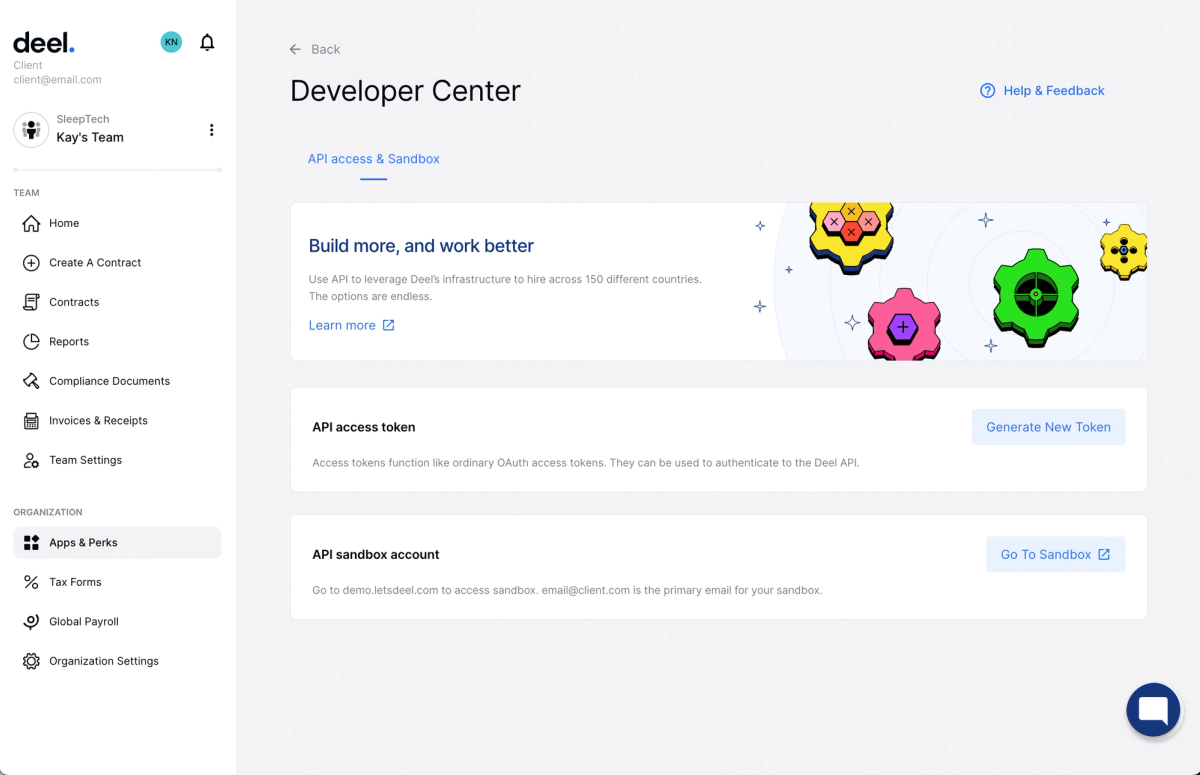
Deel is a global employment platform covering contractors, EOR employment, and payroll across more than 100 countries. In India, employment is arranged through a local partner entity rather than an entity Deel owns and files under directly. That structure is what makes the country count possible, and it is also what puts a second company between you and the EPFO filing.
For a company hiring in India, Germany, and Brazil in the same quarter, that trade is often worth making. One contract, one dashboard, one vendor security review. Buyers weighing the India-only route usually compare it against a Deel alternative built for India.
🧩 Core Services
EOR employment across 100+ countries, including India through a partner entity.
Global contractor management and compliant contractor payments.
Multi-country payroll consolidation and reporting.
Immigration and visa support for relocating employees.
Equipment provisioning and global benefits administration.
💡 Why Companies Consider Deel
The buying logic is consolidation. A People Ops lead with employees in seven countries does not want seven vendors, seven invoices, and seven security questionnaires. Deel collapses that into one relationship, and procurement teams approve it faster because SOC 2 and ISO 27001 are already on file.
The second reason is speed of contract, not speed of onboarding. Signing Deel takes an afternoon. Getting an India employee live still takes roughly one to two weeks once statutory registration and document collection run their course.
👥 Ideal Customer Profile
Series B and later companies employing across 5 or more countries.
50 to 5,000 global headcount with India as one of several markets.
People Ops or Global HR leader as the decision maker.
Procurement functions that require SOC 2 or ISO 27001 before signature.
Teams that value vendor consolidation over country-level depth.
💰 Commercial Model
Deel EOR pricing starts around $599 per employee per month, with contractor management priced separately at a lower monthly rate. The line item buyers underestimate is currency conversion. Reviewers describe transfer and card fees repeatedly, and those costs land on the employee as often as on the employer. A full breakdown of what each model costs sits in our guide to employer of record cost in India.
⭐ Customer Reviews
"I find Deel to be absurdly expensive. They charge a high amount of fees for transferring money to my bank account. Additionally, using their card incurs fees for purchases in another currency, which impacts me personally."
Juan Camilo O., 1/5 Deel G2 Verified Review
"I dislike how expensive Deel's transaction fees are, especially when moving money from the Deel account to my bank or wherever else it needs to go. Although I find the platform easy to use, the high cost of instant transfers is off-putting."
Maria M., 3/5 Deel G2 Verified Review
"Customer support and issue ownership need serious improvement. In my experience, contacting support did not lead to effective problem solving. I was redirected multiple times, asked to repeat the same information to different representatives."
Güneş A., 1.5/5 Deel G2 Verified Review
🔍 What I Watch For Here
Versatile Club's read is that the standard advice gets the Deel comparison backwards. The usual framing is price against price, $599 against a lower number. The number that actually moves is the conversion spread on salary, because it scales with payroll rather than with headcount fees.
Versatile Club issues one USD invoice raised directly from its own Indian entity, so there is no currency leg in the payment path to mark up. Deel is the better buy when India is one country of many; the arithmetic changes when India is most of your team, and our published pricing shows exactly what the flat rate covers.
2. Remote: Best for Global Teams Wanting Owned-Entity Coverage
🏢 Overview
Remote is a global employment platform that owns entities in a meaningful share of the markets it serves, which is a genuine structural difference from a pure partner-network model. It covers EOR, contractor management, global payroll, and benefits across a wide country list.
For buyers who have learned to ask "do you own the entity," Remote answers yes more often than most global platforms. Whether it owns the specific entity your employee sits under is a question worth asking market by market, in writing, and it is the same question we answer on our India compliance page.
🧩 Core Services
EOR employment across a wide country network, with owned entities in core markets.
Contractor management and compliant international payments.
Global payroll processing and consolidated reporting.
Benefits administration and localised employment contracts.
IP and invention assignment handling across jurisdictions.
💡 Why Companies Consider Remote
The decision logic is risk posture. A legal counsel reviewing misclassification and permanent establishment exposure prefers a chain with fewer links. Owned entities shorten that chain, and Remote's positioning speaks directly to that reader.
The counterweight is support responsiveness. Several reviewers describe an email-only support model with a multi-day service level, which becomes a real problem in the 48 hours before a payroll cut-off. Teams weighing a switch often start with a Remote alternative for India hiring.
👥 Ideal Customer Profile
Series B to Series D companies hiring across multiple continents.
100 to 2,000 global headcount, India as one of several markets.
Head of People or in-house legal counsel as decision maker.
Companies with a documented preference for owned-entity employment.
Teams comfortable with asynchronous, email-based vendor support.
💰 Commercial Model
Remote EOR pricing starts around $599 per employee per month, with contractor management billed separately. Setup terms and deposit requirements vary by market, so ask for the India-specific quote rather than the headline number.
⭐ Customer Reviews
"They were dishonest about the level of support provided. We specifically explained we required phone-level support for urgent matters, but that is not available. Instead they have email support with a 3-day SLA. Responses are unacceptably slow. Separately, their payroll is still supported by manual processes, and twice we've had near catastrophic errors."
Juliette D., 0.5/5 Remote G2 Verified Review
"The initial setup was not easy at all; it was a very long process with no help and too many requests."
Alice T., 0/5 Remote G2 Verified Review
⚠️ The Question Behind the Entity Claim
Owning entities in core markets is not the same as owning the Indian one. It is a fair question to put in an RFP, and a good vendor answers it with a CIN number rather than a marketing page.
Versatile Club employs on Foo Falcon Technologies Private Limited, CIN U72900KA2022PTC163007, registered in Bengaluru, and the PF, ESI, professional tax, and TDS registrations sit under that same company name. When a client asks for a challan, we send the challan, because there is no partner in the middle to ask first. The mechanics of that India payroll compliance workflow are documented in full.
"Sagar replied to our form in about four hours with a draft offer letter already attached. The hire was onboarded in four days. First USD invoice landed clean: no FX markup, no setup fee, no surprises."
Verified User in Information Technology and Services, 5/5 Versatile Club G2 Verified Review
Versatile Club is the wrong choice if you need employment in five or more countries under one contract, and Remote is a serious option in exactly that situation.
3. Versatile Club: Best for US and UK Companies Hiring Their First 1 to 20 India Employees
🇮🇳 Overview
Versatile Club is an India-only Employer of Record, meaning it becomes the legal employer of your India team so you do not need an Indian company. Employment sits on its own registered entity, Foo Falcon Technologies Private Limited, CIN U72900KA2022PTC163007, Bengaluru.
The PF, ESI, professional tax, and TDS registrations are held under that same company name. There is no partner entity in the middle, which is why a challan request gets answered the same day rather than forwarded. The full scope of our EOR services in India runs on that single entity.
🧩 Core Services
India EOR employment on an owned Indian entity, with compliant contracts and IP assignment.
Monthly payroll with PF, ESI, professional tax, TDS, and gratuity accrual handled end to end, through managed payroll in India.
Contract-to-hire recruiting across engineering, design, marketing, and operations roles.
USD invoicing issued directly from the Indian entity, with challan and TDS receipts attached.
Onboarding, benefits, equipment coordination, and full-and-final settlement on exit.
💡 Why Companies Consider Versatile Club
The buying logic is depth over breadth. Versatile Club runs payroll in one country, so state-level rules are the daily job rather than an edge case. Maharashtra needs dual PTRC and PTEC registration. Karnataka files professional tax monthly with enrollment inside 30 days. Tamil Nadu files twice a year.
The second reason is the invoice. A CFO closing month-end wants one USD number, the gross-to-net breakdown behind it, and the statutory receipts that prove the money reached the government.
⏰ The 5-Day SLA, and What It Actually Covers
Versatile Club commits to a five-business-day onboarding SLA in the contract, measured from signed agreement to the employee's compliant start. That window covers contract drafting, document collection, payroll setup, and statutory registration. The step-by-step sequence is documented in how our onboarding works.
I will not pretend that number holds for every case. Enterprise procurement with custom security reviews takes longer, and I would rather say that here than have you discover it in week three.
👥 Ideal Customer Profile
Seed to Series B companies in the US or UK making their first 1 to 3 India hires.
Profitable SMBs at $5M to $50M ARR with 5 to 30 India employees.
People Ops leaders switching off a global generalist after payroll accuracy or support failures, often following a structured EOR provider switch in India.
Founders, Heads of People, or CFOs as the decision maker, usually deciding directly.
Companies where India is the only country needing an employer of record.
💰 Commercial Model
Versatile Club charges $149 per employee per month, flat, with no salary-band slabs. There is no setup fee, no exit fee, and the first month is free. Contract-to-hire recruiting is priced at 20 to 30 percent of annual salary, and that fee is charged only after the hire completes day 90.
Currency policy is structural rather than promised. The invoice is raised in USD from the Indian entity, so no conversion leg exists to mark up.
❌ Where Versatile Club Is Not the Answer
Versatile Club operates only in India, by design. If you need one contract covering five or more countries, a global platform is the correct buy, and I will say so on the first call.
Two other cases: enterprise procurement that requires SOC 2 or ISO 27001 as a gate, which we do not hold today, and B2C consumer hiring at volume. Those are honest gaps, not positioning.
⭐ Customer Reviews
"Versatile's Employer of Record India service made this seamless contracts, PF, ESI, TDS, and payroll all handled in one place. Invoicing in USD meant zero exchange rate surprises. The compliance rigour is genuinely impressive every statutory filing reviewed before submission. Five-day onboarding, zero late payslips."
Vedant T., Founder Versatile Club G2 Verified Review
"The dashboard could be a little more self-serve. A couple of times I wanted to pull a report or a doc myself and ended up just messaging my contact instead. They always answered fast, so it wasn't a real problem, but I'd love to click around and find things on my own."
Angad S., Founder Versatile Club G2 Verified Review
"The team is really competent, but there were a few time zone misunderstandings that caused slight delays in the initial phase. That said, once things got going, the whole process was buttery smooth."
Setu C. Versatile Club G2 Verified Review
4. Multiplier: Best for Converting Global Contractors to Employees Quickly
🌐 Overview
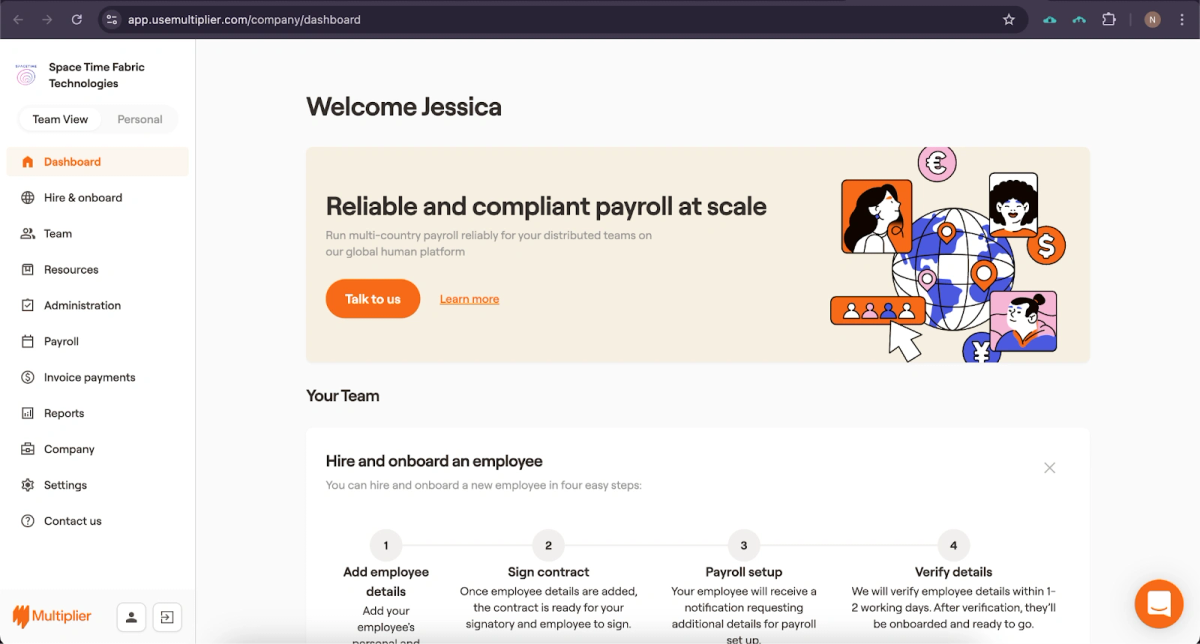
Multiplier is a global employment platform covering EOR, contractor management, and payroll across a wide country list. It is often shortlisted by startups that priced Deel and Remote and wanted a lower monthly number for similar coverage.
In India, employment runs through the platform's local arrangements rather than an entity a buyer can inspect directly. Ask for the entity name in writing before signing, which is the same test applied in our review of Multiplier alternatives for India.
🧩 Core Services
EOR employment across a broad global country network.
Contractor onboarding, compliance, and international payments.
Global payroll processing with consolidated reporting.
Benefits and insurance administration by country.
Expense management and employee self-service tools.
💡 Why Companies Consider Multiplier
Price is the honest answer. Multiplier's EOR pricing sits meaningfully below the $599 anchor set by the larger platforms, which matters to a Seed or Series A team hiring in three countries at once.
The trade shows up after signing. Reviewers repeatedly describe deposits and fees that were not in the original contract, plus account manager turnover that costs context.
👥 Ideal Customer Profile
Seed to Series B startups hiring across 3 or more countries.
20 to 300 global headcount, with India as one market among several.
Founder or Head of Operations as the decision maker.
Buyers optimising primarily on monthly platform cost.
💰 Commercial Model
Multiplier EOR pricing is commonly quoted around $400 per employee per month, with contractor management priced lower. Deposits and country-specific fees vary, so get the full fee schedule attached to the master service agreement rather than quoted verbally.
⭐ Customer Reviews
"They also introduced some new deposits and fees that weren't originally in our contract and ultimately ended up increasing our EOR costs."
Verified User in Information Technology and Services, 0/5 Multiplier G2 Verified Review
"I appreciate that Multiplier offered competitive pricing for its employer of record services, which played a significant role in my decision to use it. Additionally, the setup process with Multiplier was fairly straightforward."
Micah P., 1/5 Multiplier G2 Verified Review
💸 The Fee Schedule Question
Versatile Club publishes the full commercial model on the pricing page, $149 flat with $0 setup and $0 exit, because a fee that appears in month four is a trust problem rather than a pricing one. I could be reading the review pattern too strongly here, though it repeats often enough to be worth a direct question in your evaluation call.
5. Papaya Global: Best for Enterprises Consolidating Global Payroll Data
📊 Overview
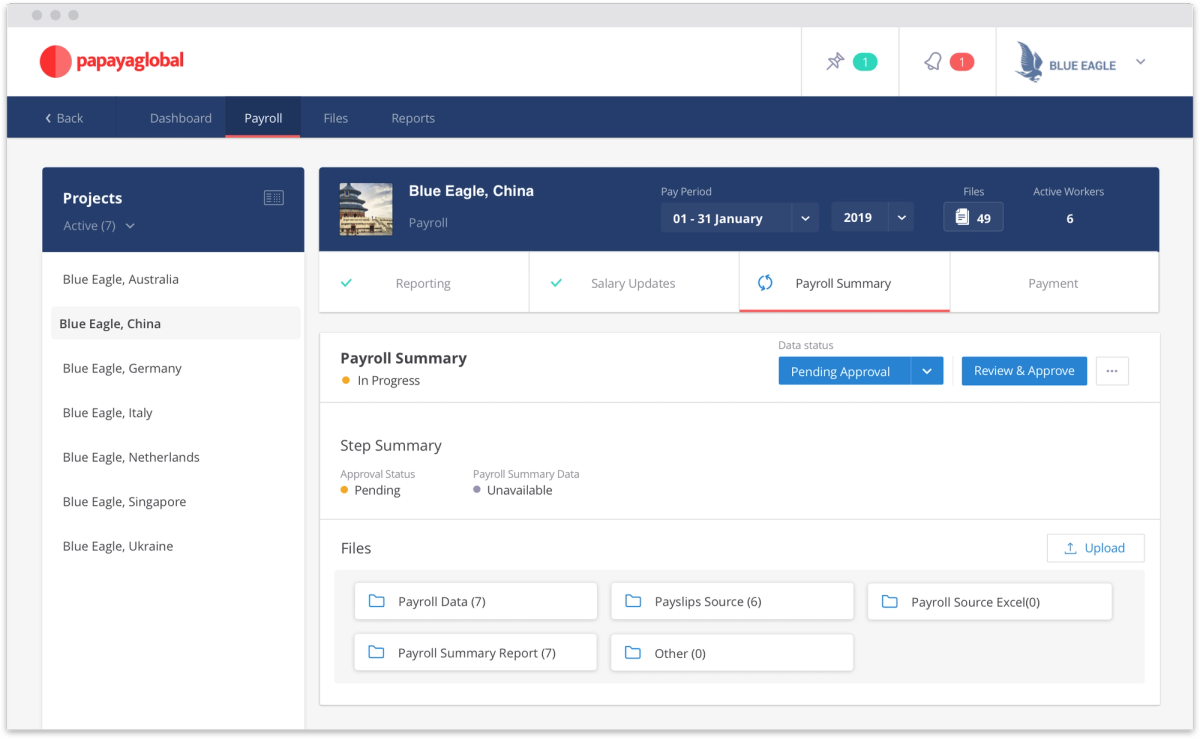
Papaya Global is a global payroll and payments platform serving enterprise finance teams. Its strength sits in data consolidation and treasury controls rather than country-level employment depth.
Buyers often reach it through the finance function rather than HR, which shapes how the product feels day to day. Teams needing India depth alongside that consolidation usually evaluate Papaya Global alternatives in India.
🧩 Core Services
Global payroll consolidation across many countries in one dashboard.
Payments infrastructure with cost breakdowns and invoice access.
Workforce spend analytics and reporting for finance teams.
EOR employment through in-country partner arrangements.
Contractor payments and compliance documentation.
💡 Why Companies Consider Papaya Global
A controller managing payroll in twelve countries wants one dataset, not twelve spreadsheets. Papaya's platform is built for exactly that reader, and reviewers consistently praise the invoice and cost-breakdown access.
Support responsiveness is the recurring complaint. When payroll questions need answers inside 48 hours, a multi-day reply cycle becomes an operational problem.
👥 Ideal Customer Profile
Mid-market and enterprise companies with 300+ global employees.
Finance-led buying, with a CFO, VP Finance, or global payroll manager deciding.
Companies operating payroll across 10 or more countries.
Teams that already own local entities and need consolidation, not employment.
Organisations with dedicated payroll operations staff, often served through India programmes for enterprises.
💰 Commercial Model
Papaya Global pricing is quoted per employee per month and varies by product line and country mix. Pricing is not publicly disclosed at a single flat rate, so treat any headline figure as a starting point for a custom quote.
⭐ Customer Reviews
"Papaya platform is very user-friendly, especially for accessing all our payroll inputs, outputs and workers' documents. It's also incredibly helpful for obtaining our monthly invoices and detailed cost breakdowns directly through the platform."
Cherry H., Payroll Manager, 3.5/5 Papaya Global G2 Verified Review
"We've noticed that response times can sometimes be very slow when we require clarifications on employee questions or payroll operations. Prompt responses are crucial for us to address queries efficiently."
Cherry H., Payroll Manager, 3.5/5 Papaya Global G2 Verified Review
6. ADP India: Best for Large India Entities Needing an Established Bureau
🏛️ Overview
ADP India provides managed payroll services to companies that already hold an Indian entity. This is payroll outsourcing in the classic sense: you remain the legal employer, and the bureau runs processing and statutory filing under your registrations.
It is a different product from EOR, and confusing the two costs buyers real time during evaluation. The distinction is set out in full in our comparison of EOR versus your own entity in India.
🧩 Core Services
Managed payroll processing for India-registered entities.
Statutory computation and filing for PF, ESI, professional tax, and TDS.
Payslip generation, employee self-service, and query handling.
Annual tax documentation, including Form 16 issuance.
Full-and-final settlement processing on employee exit.
💡 Why Companies Consider ADP India
Scale and continuity. A company with 500 India employees needs a vendor whose payroll operation will still exist in five years, and ADP clears that bar comfortably.
The trade is responsiveness at small headcount. Bureau models are built for volume, so a 12-person India team rarely gets the attention a founder expects.
👥 Ideal Customer Profile
Companies with an existing Indian subsidiary or LLP.
India headcount above roughly 100 employees.
Finance controller or India HR head as the decision maker.
Multinationals standardising payroll vendors across regions.
Organisations with in-house India compliance oversight.
💰 Commercial Model
Pricing is not publicly disclosed and is quoted per employee per month based on headcount, scope, and service level. Expect an annual contract and a defined implementation period before the first live payroll run.
7. Paysquare: Best for Mid-Market India Entities Outsourcing Processing
🧾 Overview
Paysquare is an India payroll outsourcing provider serving companies that hold their own Indian entity. It runs monthly processing, statutory computation, and filing on the client's registrations.
The company has operated in India payroll for many years, which shows in process discipline rather than product polish.
🧩 Core Services
End-to-end India payroll processing for registered entities.
PF, ESI, professional tax, and TDS computation and filing.
Payslip distribution and employee query resolution.
Statutory reporting and audit support documentation, aligned to India payroll compliance requirements.
Leave and attendance data integration with payroll.
💡 Why Companies Consider Paysquare
Mid-market India entities want a dedicated processing team without enterprise bureau pricing. Paysquare occupies that middle ground, and buyers usually reach it through referral rather than search.
The limitation is scope. Paysquare processes payroll, so employment liability, permanent establishment exposure, and entity obligations stay entirely with you.
👥 Ideal Customer Profile
Companies with an existing Indian Pvt Ltd or LLP.
India headcount roughly between 50 and 500 employees.
India finance head or HR manager as the decision maker.
Businesses moving off spreadsheet or in-house payroll.
Teams needing multi-state filing under their own registrations.
💰 Commercial Model
Pricing is not publicly disclosed and is quoted per employee per month against agreed scope. Ask specifically whether state-level professional tax filing across all your hiring locations is inside the base fee or billed separately.
8. Keka: Best for India Companies Wanting Payroll Plus HR Software
💻 Overview
Keka is an India HR and payroll software platform. It automates payroll computation, statutory calculations, and employee self-service inside one system.
Software is not outsourcing. With Keka, your team still runs the payroll cycle, and your entity still carries every statutory liability.
🧩 Core Services
Payroll processing software with India statutory computation built in.
HRMS covering attendance, leave, and performance management.
Employee self-service portal for payslips and tax declarations.
Statutory report generation for PF, ESI, professional tax, and TDS.
Expense and reimbursement management inside the payroll cycle.
💡 Why Companies Consider Keka
Control and cost. An India-headquartered company with an internal HR team often prefers owning the process, and software is far cheaper per employee than a managed service.
The catch is the one buyers underestimate. Software computes; it does not file, and it does not take responsibility when a filing is late.
👥 Ideal Customer Profile
India-headquartered companies with their own entity and HR team.
Headcount roughly between 50 and 1,000 employees.
HR head or founder as the decision maker.
Companies wanting HRMS and payroll in a single system.
Teams with internal capacity to own the compliance calendar.
💰 Commercial Model
Keka sells per-employee monthly software plans in INR across tiered packages. The source set for this guide does not verify a current figure, so confirm the tier and any implementation fee directly before comparing it against a managed-service quote.
Where This Leaves You
🧭 Match the model to your entity status first
If you already hold an Indian entity, your real shortlist is ADP India, Paysquare, or Keka. If you do not, only the EOR providers can legally employ your team, and the entity question becomes the first thing to verify. A side-by-side of the routes sits in our guide to India expansion options.
The four labour codes came into force on 21 November 2025, which reset the wage base every one of these providers computes against. Any vendor who has not mentioned that to you yet is worth a second look.
⚖️ Then match the vendor to your country count
Versatile Club sits on its own Indian entity, holds the PF, ESI, professional tax, and TDS registrations under that entity, and charges $149 per employee per month flat with no setup fee, no exit fee, and the first month free. India is the only country we operate in. For teams hiring in five or more countries, that is a limitation, and one of the global platforms above is the better buy. If you want the arithmetic for your own headcount, run it through the EOR versus entity calculator.
Q2: How Were These Eight Providers Scored and Ranked?
Five weighted criteria were used: India entity model and compliance depth at 25%, pricing transparency and commercial model at 20%, onboarding speed and support model at 20%, talent and retention support at 20%, and third-party customer validation at 15%. Scores of 0 to 20 earn one star, 21 to 40 earn two, rising to five. The weights are published here so you can re-score the same eight providers against your own priorities.
🧮 The Rubric, and Why Entity Depth Leads
Entity depth carries the heaviest weight for one reason. When a provider reaches India through a local partner, meaning a separate Indian company it contracts with, your employee's provident fund is filed by a business you never signed with. The ownership question is the first thing we document on our India compliance page.
That chain is invisible until something breaks. Then you are asking your vendor to ask their partner for a challan, which is the government receipt proving the money was deposited.
⚖️ How the 100 points split
| Criterion | Weight | What it measures |
| India entity model and compliance depth | 25% | Owned entity or partner shell, state-level PT and S&E coverage, labour code readiness |
| Pricing transparency and commercial model | 20% | Published rates, setup and exit fees, FX policy, invoice clarity |
| Onboarding speed and support model | 20% | Contracted SLA, escalation path, human versus ticket queue |
| Talent and retention support | 20% | Vetting, replacement terms, post-hire monitoring |
| Third-party customer validation | 15% | G2, Capterra, and public review depth |
🤝 Why Retention Gets a Full 20%
Most payroll comparisons stop at compliance. Compliance is the floor, not the ceiling, because a perfectly filed payroll for someone who quits in month four still costs you a quarter.
Versatile Club scores retention using three published commitments: culture-fit screening across 50 behavioural parameters, a 90-day Success Coach, and a 6-month replacement guarantee on contract-to-hire placements. I weight it at 20% because I have watched more India hires fail on fit than on filings.
⭐ The scores, and the conflict I am disclosing
| Provider | Stars | Where it earns them | Where it loses them |
| Deel | ⭐⭐⭐⭐ | Country breadth, certifications | Partner entity in India, transfer fees |
| Remote | ⭐⭐⭐⭐ | Owned entities in core markets | Email-only support SLA |
| Versatile Club | ⭐⭐⭐⭐⭐ | Own entity, flat pricing, retention terms | Scale, review volume, no SOC 2 |
| Multiplier | ⭐⭐⭐ | Competitive monthly rate | Fees added post-contract |
| Papaya Global | ⭐⭐⭐ | Payroll data consolidation | Response times |
| ADP India | ⭐⭐⭐⭐ | Bureau scale and continuity | Small-team responsiveness |
| Paysquare | ⭐⭐⭐ | India processing discipline | Payroll scope only |
| Keka | ⭐⭐⭐ | Software plus HR in one system | Liability stays with you |
I rank my own company inside this list, and that is a conflict worth stating plainly. Re-weight country coverage to 40% and Deel wins the rubric. I would rather you reach that conclusion here than four months after signing, which is also why we publish a full comparison of the best EOR options in India.
💬 What buyers say about the criteria that matter
"Customer support and issue ownership need serious improvement. In my experience, contacting support did not lead to effective problem solving. I was redirected multiple times, asked to repeat the same information to different representatives."
Güneş A., 1.5/5 Deel G2 Verified Review
"Founder is just a call away. Extremely helpful in resolving all our queries. The process is super smooth to setup India EOR."
surbhi m. Versatile Club G2 Verified Review
Versatile Club publishes its full commercial model, $149 per employee per month flat, $0 setup, $0 exit, and first month free, which is what earns the pricing-transparency points above. The scale and review-volume deductions are real, and they are the honest trade of choosing a smaller India-only operator. The full rate card sits on our pricing page.
Q3: Do You Need Payroll Software, Managed Payroll, or a Full EOR?
A payroll outsourcing provider processes salaries and files statutory returns under your own Indian entity. An EOR, or Employer of Record, becomes the legal employer, so no entity is required, which is why it usually fits foreign companies below roughly 15 to 30 India employees. Payroll software automates the calculations but leaves every liability with you. Versatile Club operates the EOR model on its own Indian entity, so PF, ESI, professional tax, and TDS registrations sit under one company name.
🔀 The Fork, in Ninety Seconds
Ask one question first. Do you have an Indian company registered with the Ministry of Corporate Affairs?
If yes, you need managed payroll or software. If no, only an EOR can legally employ your team. Almost every wasted vendor call I sit through comes from skipping that question.
❌ The "PEO India" myth
Half the founders who message me on WhatsApp ask for a PEO. They read a US comparison page, where PEO means co-employment, two companies sharing employer duties.
Indian labour law has no co-employment framework of that kind without your own local subsidiary. So a vendor selling you "PEO in India" is selling you either an EOR or a payroll bureau, under a borrowed American label, a distinction we unpack in EOR versus PEO.
⚠️ The Permanent Establishment Question
Permanent establishment, or PE, is when a foreign company's activity in India is treated as a taxable business presence. A payroll bureau does not shield you from it, because you remain the employer directing the work.
An EOR changes the employment relationship itself. That is the structural difference legal counsel actually cares about, and it rarely appears in a pricing comparison. Companies with no local company usually start with hiring in India without an entity.
💰 When your own entity becomes cheaper
The crossover usually lands between 10 and 15 India employees. Below that, an entity rarely pays for itself once you price incorporation, a resident director, statutory audit, annual ROC filings, and a finance hire to run it. Run your own numbers through the EOR versus entity calculator.
One client hit 12 hires and opened their own entity. We migrated all 12 across, and that felt like the right outcome rather than a lost account.
✅ Which model you need
| You need this | If this is true |
| EOR | No Indian entity, hiring 1 to 30 people, want employment liability moved off your books |
| Managed payroll | You hold a Pvt Ltd or LLP, need statutory execution and filing, keep employment liability |
| Payroll software | You hold an entity, have an internal HR team, want control and lower per-head cost |
🧾 What Migration Actually Involves
Moving employees to your own entity is not a spreadsheet exercise. Continuity of service under the Payment of Gratuity Act, provident fund UAN portability, and professional tax re-registration all have to transfer cleanly. The sequence is mapped in our guide to EOR versus entity in India.
Versatile Club charges no exit fee, so when a client crosses fifteen India employees, we hand over UANs, gratuity accruals, and service continuity rather than making the migration expensive. Ask any vendor how their exit works before you sign, not after.
Q4: What Does Payroll Outsourcing in India Actually Cost Per Employee?
Payroll outsourcing in India costs about Rs 90 to Rs 350 per employee per month for full-service processing with PF, ESI, professional tax, and TDS filings. Managed payroll with HR support runs Rs 800 to Rs 2,500. Full EOR coverage starts near USD 99 per employee per month and reaches USD 599 at the global platforms. Versatile Club charges USD 149 per employee per month, flat, with no setup fee and no exit fee.
💸 The Number That Actually Moves
The monthly fee is the number buyers negotiate. The currency spread is the number that costs them.
Global platforms convert your dollars into rupees to pay salaries, and the margin taken on that conversion typically runs 2 to 10 percent. It scales with payroll, not with headcount fees. The line-by-line build-up is set out in our breakdown of the cost of hiring in India.
🧮 Ten engineers, one worked example
Take ten India engineers at USD 60,000 each. That is USD 600,000 of salary moving through the payment path every year.
A 3 percent conversion spread costs USD 18,000 annually. Ten employees on a USD 149 flat fee cost USD 17,880 for the year, so the invisible line item can exceed the visible one entirely.
⚠️ The Line Items Nobody Quotes
Ask for the full fee schedule attached to the contract, not quoted on a call. Reviewers describe deposits and charges appearing after signature often enough that it belongs in your evaluation.
"I find Deel to be absurdly expensive. They charge a high amount of fees for transferring money to my bank account. Additionally, using their card incurs fees for purchases in another currency, which impacts me personally."
Juan Camilo O., 1/5 Deel G2 Verified Review
"I dislike how expensive Deel's transaction fees are, especially when moving money from the Deel account to my bank or wherever else it needs to go."
Maria M., 3/5 Deel G2 Verified Review
"They also introduced some new deposits and fees that weren't originally in our contract and ultimately ended up increasing our EOR costs."
Verified User in Information Technology and Services, 0/5 Multiplier G2 Verified Review
💰 Total cost of ownership, side by side
| Provider | Monthly per employee | Setup and exit | Currency policy |
| Deel | ~$599 | Varies by market | Conversion and transfer fees reported |
| Remote | ~$599 | Deposits vary | Conversion applied |
| Versatile Club | $149 flat | $0 and $0, first month free | USD invoice from own Indian entity |
| Multiplier | ~$400 | Deposits reported | Conversion applied |
| Papaya Global | Custom quote | Custom | Payments layer, quoted per country |
| ADP India, Paysquare | Custom quote | Implementation fee | INR billing under your entity |
| Keka | INR software tiers | Implementation varies | Not applicable |
🧾 Why the Payment Path Matters More Than the Rate Card
Versatile Club raises its invoice in USD directly from its own Indian entity, so the money never routes through a foreign holding company and never converts from rupees on the way to you. There is no currency leg for us to mark up, which is a fact about the structure rather than a pricing promise. The mechanics of paying an India team this way are covered in how to pay employees in India.
"Sagar replied to our form in about four hours with a draft offer letter already attached. The hire was onboarded in four days. First USD invoice landed clean: no FX markup, no setup fee, no surprises."
Verified User in Information Technology and Services Versatile Club G2 Verified Review
Q5: Which Statutory Filings, Deadlines and Data Obligations Must Your Provider Own?
Your provider owes EPF and ECR filing, ESIC contributions, state professional tax under PTRC and PTEC, Labour Welfare Fund, monthly TDS deposited by the 7th, quarterly TDS returns, gratuity provisioning, and annual Form 130 issuance. Since 21 November 2025, Basic plus DA must be at least 50% of remuneration, which raises the PF and gratuity base. Versatile Club holds these registrations in its own entity name and sends the challan receipts with each monthly invoice.
📅 The Rate Stack and the Calendar
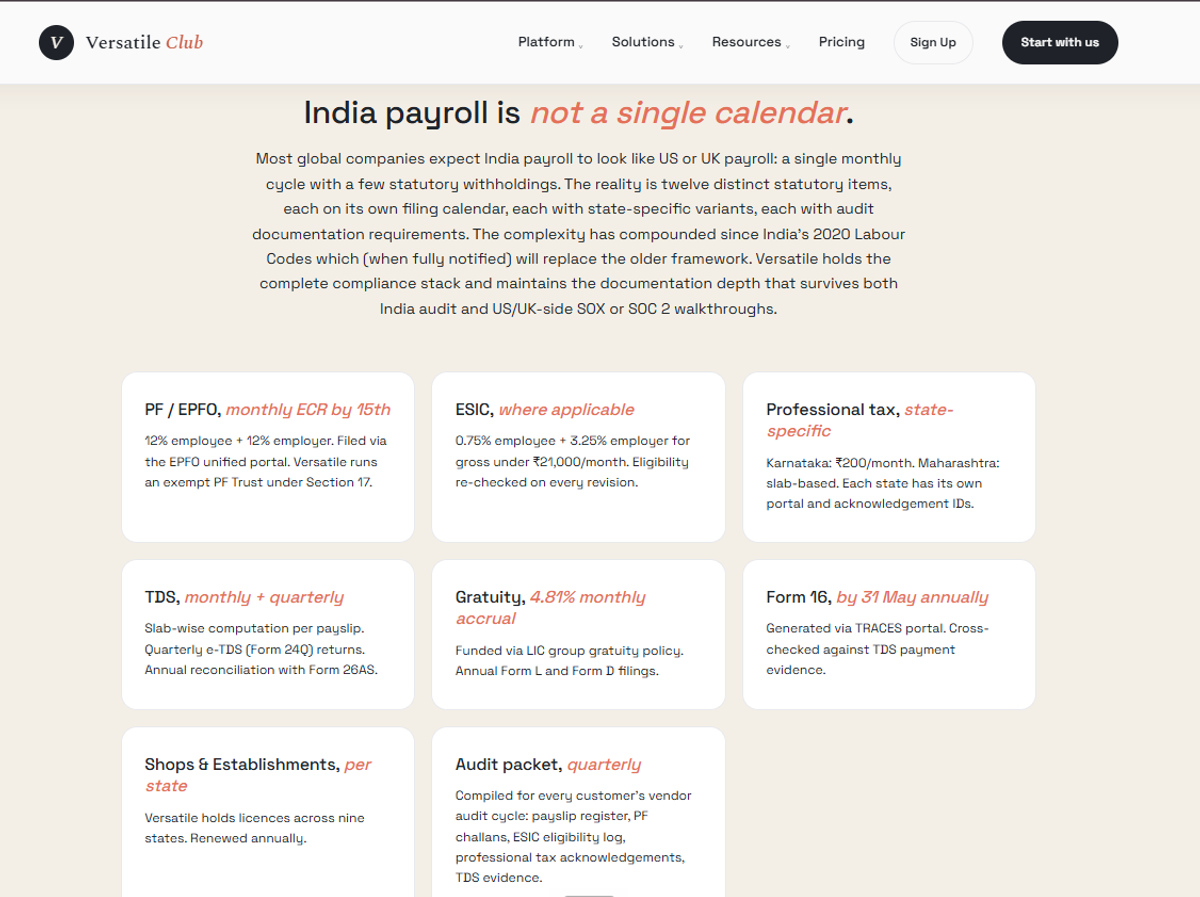
Four numbers drive most of India's employer cost. Provident fund, the retirement contribution, runs at 12% of Basic plus DA. ESI, the state health insurance scheme, splits 3.25% employer and 0.75% employee for eligible staff.
Gratuity accrues at 4.81% of Basic plus DA from month one, not from year five. TDS, the tax deducted from salary, must reach the government by the 7th of the following month. The full monthly cycle is mapped in our guide to payroll compliance in India.
| Obligation | Rate or scope | Deadline | Evidence to demand |
| EPF and ECR filing | 12% of Basic plus DA | Monthly | EPFO challan receipt |
| ESIC contribution | 3.25% employer, 0.75% employee | Monthly | ESIC challan |
| Professional tax | State slabs, up to Rs 2,500 a year | Monthly or biannual | PT payment proof |
| Labour Welfare Fund | State-specific | Half-yearly or annual | LWF receipt |
| TDS deposit | Per income tax slab | 7th monthly | Challan and quarterly return |
| Gratuity | 4.81% of Basic plus DA | Accrued monthly | Provision schedule |
| Form 130 | Replaces Form 16 from 1 April 2026 | Annual | Issued certificate |
🗺️ Why "all-India coverage" breaks in tier-2 cities
Professional tax is a state subject, so covering Bengaluru does not mean covering Coimbatore. Maharashtra requires dual registration, PTRC for the employer and PTEC for the entity, with monthly slab filing. City-level detail sits in our breakdown of payroll outsourcing in Bengaluru.
Karnataka files monthly and expects enrollment within 30 days of joining. Tamil Nadu files twice a year and adds Labour Welfare Fund. Delhi has no professional tax at all, but strict Shops and Establishments compliance. Versatile Club learned the Maharashtra dual registration the expensive way, once, which is why we list states by name instead of counting requirements.
⚠️ The 50% Wage Rule, in Rupees
The four labour codes came into force on 21 November 2025. The new wage definition pulls excluded allowances back into "wages" whenever they exceed half of total pay.
Take one engineer at Rs 20 lakh CTC. If Basic sat at Rs 6 lakh, it now has to reach roughly Rs 10 lakh, so PF and gratuity compute on a base that is 66% larger. Your vendor fee did not change. Your per-head cost did, and the revised arithmetic is set out in our cost of hiring in India breakdown.
🔐 What DPDP puts in your contract
The Digital Personal Data Protection Rules were notified on 13 November 2025 and phase in through 2026 and 2027. Your payroll vendor holds Aadhaar, PAN, bank, and salary data on your behalf, which makes their handling your exposure too.
Three clauses to demand: purpose-limited processing, a breach notification timeline in hours, and deletion on exit. Versatile Club is not SOC 2 or ISO 27001 certified today, and I say that before buyers ask, because a certification gap discovered in procurement is worse than one disclosed upfront. Our current controls are listed on the compliance page.
✅ The evidence rule
A dashboard screenshot is not proof of filing. A challan is.
Versatile Club attaches EPFO and PT receipts to the monthly invoice, and reissued every client's employer-cost schedule in writing when the 50% wage rule took effect. Ask any shortlisted vendor for last month's challan set before you sign, not after your first audit. The same discipline runs through our managed payroll service.
Q6: Should You Choose a Global Generalist or an India Specialist?
A global generalist wins when you employ across several countries and need one invoice, one dashboard, and enterprise certifications. An India specialist wins when India holds most of your team and state-level statutory depth, USD invoicing without a conversion spread, and a named human matter more than country count. Versatile Club operates in India only and commits to a five-business-day onboarding SLA in the contract. Many companies deliberately split vendors between the two.
⚖️ The Trade-Off, Side by Side
| Factor | Global generalist | India specialist |
| India entity | Usually a local partner company | Owned Indian entity |
| State PT coverage | Tier-1 hubs, gaps in tier-2 | State-by-state, named registrations |
| Currency policy | Conversion applied, 2 to 10% reported | Versatile Club invoices USD from its own Indian entity |
| Support model | Ticket queue, multi-day SLA | Named human, founder-direct at small scale |
| Certifications | SOC 2 and ISO 27001 common | Often absent, including at Versatile Club today |
| Country count | 90 to 185 | One |
⏰ What onboarding speed really means
Treat any onboarding claim under five business days as marketing unless it appears in the contract with a remedy. Document collection, UAN linkage, bank verification, and state registration each have real minimum durations. The step-by-step version is documented in how it works.
The reported reality at the global platforms runs one to two weeks in the good cases, and considerably longer in the bad ones. Versatile Club puts five business days in writing, and I will still tell you that enterprise procurement reviews push past it.
"They were dishonest about the level of support provided. We specifically explained we required phone-level support for urgent matters, but that is not available. Instead they have email support with a 3-day SLA. Responses are unacceptably slow. Separately, their payroll is still supported by manual processes, and twice we've had near catastrophic errors."
Juliette D., 0.5/5 Remote G2 Verified Review
🧍 The Layer Nobody Scores
Compliance is the floor. Nobody renews a vendor because the provident fund was filed correctly for someone who quit in month four.
Versatile Club screens candidates on 50 behavioural parameters, assigns a 90-day Success Coach after joining, and backs recruitment placements with a six-month replacement guarantee. I am also personally on WhatsApp with clients today. That is a stage rather than a feature, and at some point it has to change.
"We've noticed that response times can sometimes be very slow when we require clarifications on employee questions or payroll operations. Prompt responses are crucial for us to address queries efficiently."
Cherry H., Payroll Manager, 3.5/5 Papaya Global G2 Verified Review
❌ When a generalist is simply the better buy
Three cases, stated plainly. You employ in five or more countries and want one contract. Your procurement team gates on SOC 2 or ISO 27001. Your India team is a small slice of a much larger global headcount.
In those situations, I recommend the split-vendor route or a generalist outright, even though it makes us the smaller line item or no line item at all. Buyers comparing both routes usually read our review of Deel alternatives in India first.
"Versatile's Employer of Record India service made this seamless contracts, PF, ESI, TDS, and payroll all handled in one place. Invoicing in USD meant zero exchange rate surprises. Five-day onboarding, zero late payslips."
Vedant T., Founder Versatile Club G2 Verified Review
Versatile Club is India-only by design, which is a limitation for a five-country buyer and the entire point for a company whose team sits in Bengaluru, Hyderabad, and Pune.
Q7: How Do You Test a Provider and Switch Without Breaking a Salary Cycle?
Ask three questions before signing: do you own the Indian entity, list every state where you hold a live professional tax registration today, and show me a sample invoice with the matching challan set. Then switch between the 1st and the 20th, so the 7th TDS deposit and the salary run never collide. Versatile Club runs the first payroll cycle in parallel with your outgoing provider at no charge.
🔎 The Three-Question Vendor Test
Question one is about ownership. A good answer names the Indian company and its CIN. A bad answer says "we have local infrastructure in India," which usually means a partner you will never meet. The ownership model behind our India EOR services is published in full.
Question two is about states. A good answer lists them, with filing frequencies attached. A bad answer says "pan-India coverage," which is a marketing phrase rather than a registration.
🧾 Question three, and why it settles the call
Ask for last month's invoice with the EPFO challan and PT receipt attached. Vendors who file under their own registrations produce these in minutes.
Versatile Club sends challan receipts with the monthly invoice as standard, so this request is not an unusual one. If a vendor needs three days to answer it, you have learned what their escalation path looks like before you depend on it.
"There majority of their support team is helpful, but are often constrained by internal limitations. We had to carefully manage our agreement and had to constantly remind them of the fees agreed so that we weren't over charged. It took three months to onboard our first 3 individuals."
Verified User in Information Technology and Services, 0/5 Deel G2 Verified Review
📆 The Switching Playbook
Migration is a sequence, not a signature. Run it in this order. The full version lives in our guide to switching EOR provider in India.
Take custody of UANs, ESI numbers, PT registration details, and twelve months of challans before signing anything new.
Confirm gratuity accrual balances and continuity of service in writing for every employee.
Set the cutover date between the 1st and the 20th, away from the 7th TDS deposit.
Run one parallel cycle, where both providers compute the same payroll and you compare outputs.
Send a written recap after every migration call, listing owners and dates.
⚠️ The mistake that costs nine days
The worst switch I have watched delayed twelve salaries by over a week. Nobody had asked who held the professional tax registration in Karnataka, so the new vendor could not remit on time.
Never ask a closed progress question during a migration. "Are we on schedule" gets you a yes. "Where are we on the schedule, and what is left" gets you the truth.
"The dashboard could be a little more self-serve. A couple of times I wanted to pull a report or a doc myself and ended up just messaging my contact instead. They always answered fast, so it wasn't a real problem."
Angad S., Founder Versatile Club G2 Verified Review
🧭 Where My Head Is
What I think shifts over the next two years is that India stops being one country on a global EOR map. Owned-entity operators working in a single country take the India revenue, because state-level filing is not a feature you can abstract from a global playbook. That thesis runs through our India EOR playbook.
I could be reading our own experience too strongly here. Versatile Club uses the first free month to fund a parallel payroll run, because a migration that drops one salary costs more trust than a free month ever buys back. If you are mid-evaluation, message me directly and I will tell you honestly whether we are the right fit.
FAQs
How much does payroll outsourcing cost per employee in India?
Pricing splits by delivery model, and the model you need depends entirely on whether you already hold an Indian entity.
- Managed payroll processing: roughly Rs 90 to Rs 350 per employee per month, covering PF, ESI, professional tax, and TDS filing under your own registrations.
- Managed payroll with HR support: roughly Rs 800 to Rs 2,500 per employee per month.
- Full Employer of Record: from about USD 99 up to USD 599 per employee per month at the global platforms.
The number most buyers miss is currency conversion. Global platforms convert your dollars into rupees to pay salaries, and reported spreads run between 2 and 10 percent. On ten engineers at USD 60,000 each, a 3 percent spread costs USD 18,000 a year, which can exceed the entire platform fee.
Versatile Club charges USD 149 per employee per month, flat, with no salary-band slabs, no setup fee, no exit fee, and the first month free. Because the invoice is raised in USD directly from our own Indian entity, there is no conversion leg in the payment path to mark up. We publish the whole rate card on our pricing page so you can compare it line by line against a custom quote.
What is the difference between payroll outsourcing and an EOR in India?
The distinction turns on who legally employs the person, and it decides which half of any vendor shortlist actually applies to you.
- Payroll outsourcing: the provider processes salaries and files statutory returns under your own Indian entity. You remain the legal employer and carry every liability.
- Employer of Record: the provider becomes the legal employer, holding the PF, ESI, professional tax, and TDS registrations, so no Indian entity is required from you.
- Payroll software: it computes deductions and generates reports, but it does not file anything and takes no responsibility for a late deposit.
US-style co-employment PEO does not exist under Indian labour law without your own local subsidiary, so any vendor selling "PEO in India" is really selling one of the three models above under a borrowed American label.
Versatile Club operates the EOR model on its own registered Indian entity rather than a partner shell, which is why challan receipts arrive with the monthly invoice instead of being requested from a third party. If you are still deciding which route fits, our comparison of EOR versus setting up your own entity in India walks through the three-year cost math.
Which statutory filings should an India payroll provider handle every month?
A full-scope India payroll provider owns a fixed monthly and annual calendar, and each obligation produces a document you should be able to request on demand.
- EPF and ECR filing: 12 percent of Basic plus DA, monthly, evidenced by an EPFO challan receipt.
- ESIC contributions: 3.25 percent employer and 0.75 percent employee for eligible staff, monthly.
- Professional tax: state-specific slabs up to Rs 2,500 a year, filed monthly or biannually depending on the state.
- Labour Welfare Fund: state-specific, half-yearly or annual.
- TDS: deposited by the 7th of the following month, with quarterly returns.
- Gratuity: accrued at 4.81 percent of Basic plus DA from month one.
- Form 130: replaces Form 16 annually from 1 April 2026.
Since the four labour codes took effect on 21 November 2025, Basic plus DA must be at least 50 percent of remuneration, which raises the PF and gratuity base without changing your vendor fee.
Versatile Club files these under its own registrations and attaches the challan receipts to each monthly invoice, and the full calendar is documented in our guide to payroll compliance in India.
Can a foreign company outsource payroll in India without setting up an entity?
Yes, but only through an Employer of Record. A payroll bureau processes salaries under an existing Indian entity, so if you do not have one, that route is closed to you.
Three things change when you use an EOR instead of paying contractors or running an informal arrangement:
- Legal employment: your team gets compliant Indian employment contracts, statutory benefits, and payslips, which removes misclassification exposure.
- Permanent establishment posture: directing work through a payroll bureau leaves you as the employer, whereas an EOR changes the employment relationship itself. This is the point in-house counsel usually cares about most.
- Timeline: an EOR employee can start in days, while incorporation, a resident director, statutory audit, and annual ROC filings take months and rarely pay for themselves below 10 to 15 India employees.
Versatile Club employs your India team on its own registered Indian entity and commits to a five-business-day onboarding SLA in the contract, measured from signed agreement to compliant start. The mechanics, including contracts, IP assignment, and first payroll, are set out in our guide to hiring in India without an entity.
How do you switch India payroll providers without missing a salary cycle?
Migration is a sequence, not a signature. The failures we see almost always come from cutting over without taking custody of the statutory records first.
Run it in this order:
- Collect UANs, ESI numbers, professional tax registration details, and twelve months of challans from the outgoing provider before signing anything new.
- Confirm gratuity accrual balances and continuity of service in writing for every employee.
- Set the cutover date between the 1st and the 20th, so the 7th TDS deposit and the salary run never collide.
- Run one parallel cycle, where both providers compute the same payroll and you compare the outputs.
- Send a written recap after every migration call, listing owners and dates.
The worst switch I have watched delayed twelve salaries by over a week, because nobody asked who held the professional tax registration in Karnataka. Never ask a closed progress question during a migration; ask where you are on the schedule and what remains.
Versatile Club runs that first payroll cycle in parallel with your outgoing provider at no charge, and the detailed timeline sits in our playbook on switching EOR provider in India.