Table of contents (10)
Remote India Pricing: EOR Fee, Billing Term, Deposit, Contractors
Q1. What does Remote charge for India, and should you sign annual or monthly?
Remote's India EOR rate renders at $699 per employee per month on its en-IN pricing page, with $599 per employee per month available on an annual commitment, a difference of $1,200 per employee per year. Global Payroll costs $29 per employee per month if you already own an Indian entity. Contractor card payments carry a 3.5% service fee, and invoices run on 14-day or 30-day terms.
The two numbers, and which page shows which
⭐ Why founders quote $599 and get billed $699
A Seed-stage founder in Austin messaged me at 1am last quarter with a screenshot. Her board deck said $599. Her draft order form said $699.
Both were right. Remote cut its EOR list price from $699 to $599 in late 2024, and $699 survived as the month-to-month rate.
The en-IN page renders only $699 in server-fetched HTML. The $599 figure sits behind an annual commitment on Remote's EOR product page. Our teardown of Remote's full pricing structure tracks both rates with dated verification.
💰 What the flat fee actually bundles
The $699 card is a true flat rate with no "from" qualifier, and it includes HR Essentials as standard.
Listed inclusions: hiring across 90 countries without a local entity, a dedicated onboarding specialist, local payroll disbursement, compliance safeguards, and localised benefits.
| Product (Remote, en-IN) | Price | Unit | Qualifier |
| Employer of Record | $699 | per employee/month | flat, monthly billing |
| Employer of Record | $599 | per employee/month | annual commitment |
| Global Payroll | $29 | per employee/month | flat, entity required |
| Contractor Management | $29 | per contractor/month | active contractors only |
| Equity | from $39 | per company/month | starting price |
Annual or monthly: the break-even
⏰ The math at 1, 5, and 20 hires
One employee on annual billing saves $1,200 a year. Five save $6,000. Twenty save $24,000.
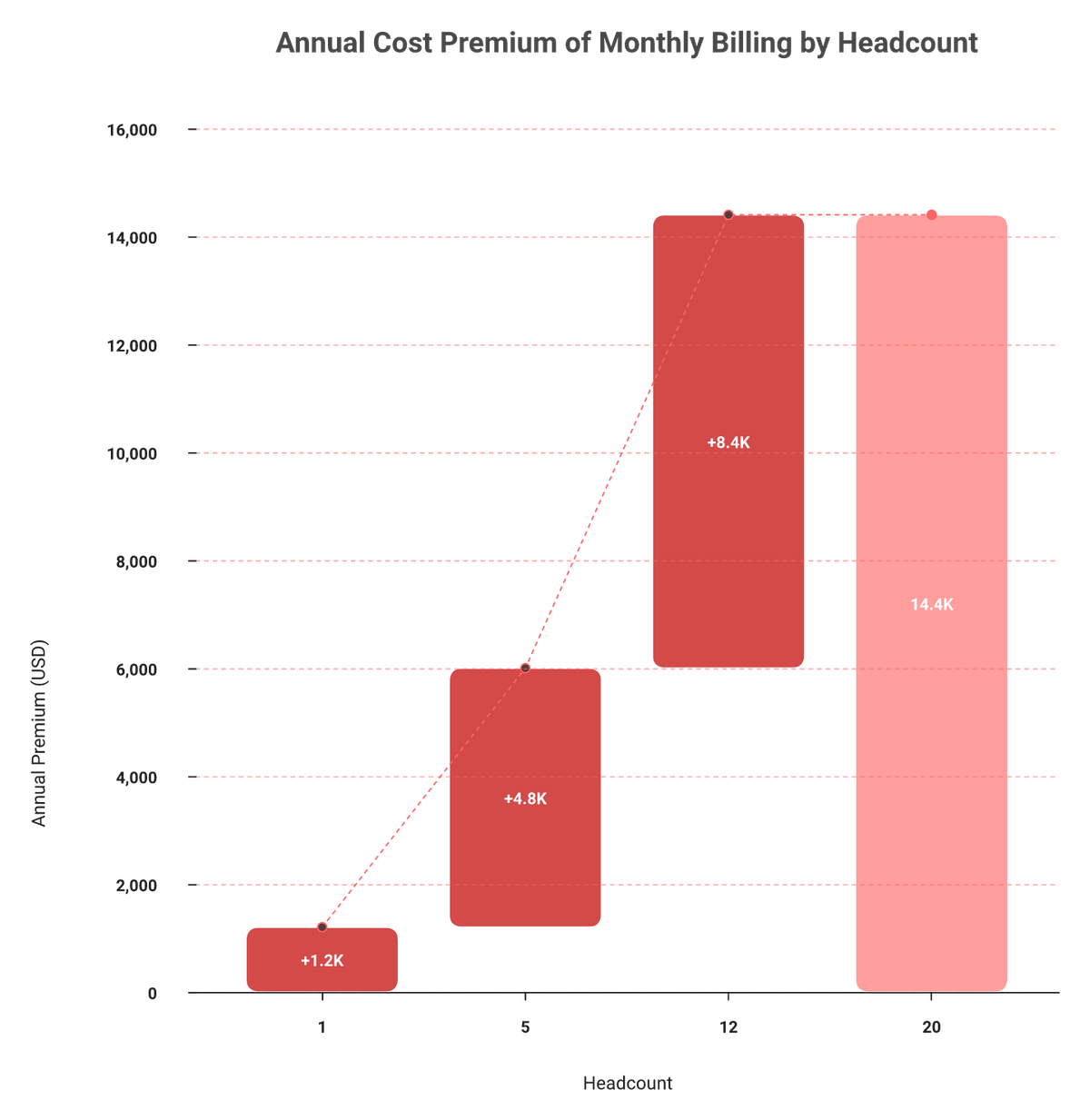
Six years of contract-to-hire work taught me something uncomfortable about that discount. The first India hire carries the highest churn risk a founder will ever take.
Locking twelve months to save $1,200 is a bet on a role you have not yet proven. Versatile Club bills monthly with the first month free, so flexibility and price are not opposing choices, and the full fee structure sits on our India EOR pricing page.
⚠️ Three costs the headline rate hides
Card payments for contractors add a 3.5% service fee.
Invoice terms of 14 or 30 days matter, because moving to 30-day terms is a documented trigger for a reserve payment.
Statutory employer burden of roughly 10% to 35% of gross salary sits outside every platform fee, on every platform, including ours. The line-by-line build-up is set out in our guide to employer of record India cost.
💬 What buyers say about surprise line items
"We're a small team at Moonshot and we needed to bring someone on in India, and every option I looked at first was either 'set up your own entity' (no thanks, not for one hire) or some platform that quotes you a great price and then you find out about all the add-ons later."
— Angad S., Founder Versatile Club G2 - Verified Review
"I dislike how expensive Deel's transaction fees are, especially when moving money from the Deel account to my bank or wherever else it needs to go."
— Maria M., 3/5 Deel Hire - G2 Verified Review
Before board approval, screenshot the rate with the billing toggle in the position you intend to sign. Prices on this page changed in 2024 and again in display currency logic, so a dated screenshot is your only defence at renewal.
Versatile Club charges one flat monthly fee per employee with $0 setup, no exit fee, and the first month free, so the number on your first quote is the number on your twelfth invoice.
Q2. Does Remote require a security deposit for India hires?
Remote does not charge a routine deposit. Its pricing FAQ states that reserve payments are collected "only in uncommon, high-risk situations," as a safeguard allowing Remote to pay employees if a customer cannot meet payments. Reserves apply to EOR employees and Contractor-of-Record contractors, and are credited or refunded once the contract ends and termination costs settle.
Who the reserve touches, and who it never touches
✅ The products with no reserve exposure
Reserves do not apply to Global Payroll for your own direct employees.
They also do not apply to standard Contractor Management, Contractor Management Plus, or HR Management.
That distinction is worth reading twice. If your India plan starts with contractors on the $29 or $99 tier, deposit risk is not part of the conversation.
⚠️ The five documented triggers
Remote's own support documentation lists what pushes an account into reserve territory.
Financial exposure associated with the client account
The countries where employees are being hired
Moving from 14-day to 30-day invoice payment terms
Non-standard contract terms, including extended notice, guaranteed severance, seniority recognition, or non-compete clauses
A pattern of consistent late payments
Reserves may be requested before you invite the worker onto the platform. A failed onboarding is fully credited or refunded, unless an overdue balance exists.
What a held month actually costs you
💸 Price it as carry, not as a fee
A deposit is not a fee. It is your cash sitting on someone else's balance sheet until an employee resigns.
On a ₹30 lakh salary, one month of gross pay is roughly $2,800 at current rates. Hold that across five hires and you have parked around $14,000 that your own runway could have used.
Your CFO will not call that a deposit at month-end close. She will call it working capital, and she will be right. Versatile Club holds no security deposit, so that cash never leaves your account in the first place, and the mechanics are documented in how our India EOR works.
⏰ Get the determination in writing before onboarding
Remote reviews new and current customers on an ongoing basis, which means a reserve can appear after you have already signed.
Ask three questions in email, not on a call. Will a reserve be required for this account, at what amount, and what would change that determination later?
Then ask Versatile Club for the same answers in writing, and compare the two replies side by side. Mine will say zero, and it will say it in the contract. Buyers weighing the switch usually start with our Remote alternative for India breakdown.
💬 What buyers report on process friction
"They were dishonest about the level of support provided. We specifically explained we required phone-level support for urgent matters, but that is not available. Instead they have email support with a 3-day SLA."
— Juliette D., 0.5/5 Remote - G2 Verified Review
"First USD invoice landed clean: no FX markup, no setup fee, no surprises."
— Verified User in Information Technology and Services Versatile Club G2 - Verified Review
A 3-day email SLA is survivable for a benefits question. It is not survivable when a reserve request lands three days before payroll.
Versatile Club charges no setup fee and no exit fee alongside the zero-deposit position, so your India hiring budget stays in your account instead of ours.
Q3. What does Remote charge for Indian contractors, and when does contractor status stop being safe?
Remote prices Indian contractors in three tiers: Contractor Management at $29 per active contractor per month, Contractor Management Plus at $99 with indemnity up to $100,000 per contractor, and Contractor of Record from $325, where Remote becomes the legal engager with uncapped indemnity, misclassification tooling, and IP Guard. Reserve payments can apply to Contractor of Record only. Card payments add 3.5%.
The three tiers, priced against who carries the risk
💰 Who is the legal engager in each tier
| Tier | Price | Legal engager | Indemnity | Reserve possible |
| Contractor Management | $29/contractor/month | You | Not stated | No |
| Contractor Management Plus | $99/contractor/month | You | Up to $100,000 | No |
| Contractor of Record | from $325/contractor/month | Remote | Uncapped | Yes |
| Versatile Club C2H, then EOR | flat monthly fee per employee | Versatile Club (own Indian entity) | Employment risk held in-entity | No deposit |
At $29 and $99, you remain the engager. That means the misclassification exposure stays with you, whatever the platform bundles.
Only Contractor of Record moves the legal relationship off your books, and that tier starts at eleven times the base price. If you want that structure inside India, compare it against our contractor of record service.
⚠️ The India test that actually gets applied
India does not decide worker status by the label on your contract. Assessors look at control, tools, exclusivity, and fixed hours.
Full-time hours for a single client, managed daily, using your laptop and your calendar, reads as employment in substance. The invoice format does not save you.
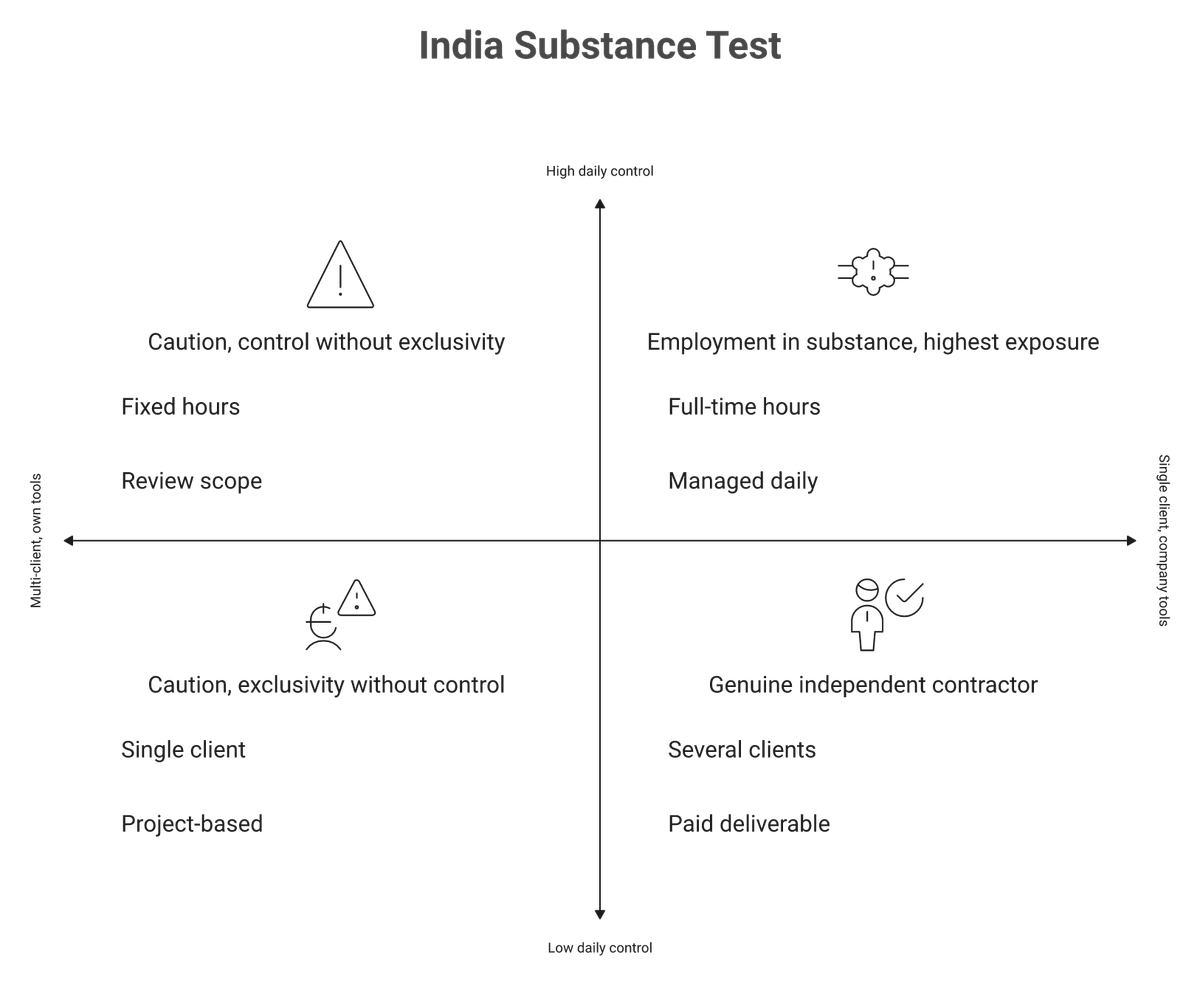
Every contractor-to-employee conversion I have run in Bengaluru started with a founder saying "he's basically full-time already." That sentence is the audit trail, and the sequencing is mapped in our guide on how to convert a contractor to an employee in India.
Converting before the risk crystallises
⏰ Convert on your calendar, not on a notice
The honest version of contractor-first hiring is what one operator called running with scissors. It works, right up until it does not.
Versatile Club runs contract-to-hire and EOR under one owned Indian entity, so a contractor who becomes an employee changes payroll status without changing vendor, contract paper, or IP chain.
Convert before the financial year turns on 1 April, so PF registration, TDS deduction, and Form 16 issuance start clean rather than mid-cycle.
💸 Card fees and FX inside contractor flows
Paying contractors by credit card adds a 3.5% service fee on top of the tier price.
Remote's page offers 12 display currencies, but converted amounts are set by Remote rather than live market rates.
On a $4,000 monthly contractor payout, those two lines together can quietly exceed the $99 tier fee itself. Ask for the applied rate and the mid-market rate on the same invoice.
💬 What contractors and buyers actually report
"Customer support and issue ownership need serious improvement. In my experience, contacting support did not lead to effective problem solving. I was redirected multiple times, asked to repeat the same information to different representatives."
— Güneş A., 1.5/5 Deel Hire - G2 Verified Review
"Invoicing in USD meant zero exchange rate surprises. The compliance rigour is genuinely impressive every statutory filing reviewed before submission. Five-day onboarding, zero late payslips."
— Vedant T., Founder Versatile Club G2 - Verified Review
Versatile Club holds the employment relationship in its own Indian entity from day one of conversion, so the IP assignment and the PF record belong to the same legal employer.
Q4. Which Indian statutory costs sit outside the fee, and what changed in 2025-26?
Platform fees exclude statutory employer burden of roughly 10% to 35% of gross salary. In India that means Provident Fund at 12% of Basic plus DA, ESI at 3.25% employer share below the wage threshold, gratuity accruing at about 4.81% of Basic plus DA from month one, state professional tax up to ₹2,500 a year, and TDS deposited by the 7th of each month.
The line items no platform fee covers
💰 Rates and filing dates in one place
| Statutory item | Employer cost | Deadline |
| Provident Fund | 12% of Basic plus DA | monthly ECR, by the 15th |
| ESI | 3.25% employer, 0.75% employee | monthly, by the 15th |
| TDS on salary | per employee slab | deposited by the 7th |
| Professional tax | state slabs, max ₹2,500 a year | Karnataka monthly, Tamil Nadu biannual |
| Gratuity | about 4.81% of Basic plus DA | accrued from month one |
Versatile Club files all five under its own PF, ESIC, and Shops and Establishments registrations across all 28 states, which is why I can give you the filing date rather than only the percentage. The registration inventory is listed on our India compliance page.
⚠️ The 50% wage rule changes the base, not the fee
The four Labour Codes came into force on 21 November 2025.
The Code on Wages defines wages so that Basic plus DA plus retaining allowance must be at least 50% of total remuneration, with excess allowances added back.
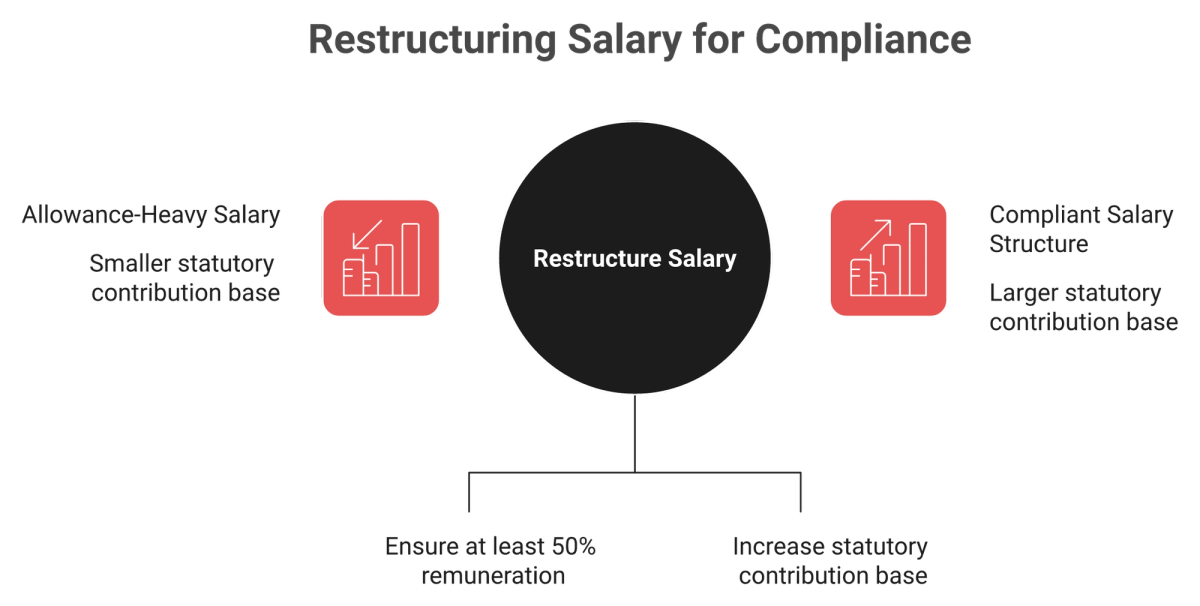
Read that against a fixed $599 platform fee. The fee does not move, but the base for PF and gratuity does, so your passthrough rises while the vendor's invoice line stays flat. Our note on payroll compliance in India works through the restructuring maths.
What shifted at EPFO and in the Income-tax Act
⏰ The EPF ceiling and the voluntary question
A Ministry of Labour and Employment notification dated 29 May 2026 fixed ₹15,000 a month as the EPF wage ceiling under section 2(89) of the Code on Social Security, 2020.
The EPF Scheme, 2026, notified on 29 June 2026, made contributions above the ₹1,800 ceiling amount voluntary.
Delayed employer dues attract interest at 12% a year. Ask your EOR one question in writing: does it contribute on the ceiling or on full wages, and who elects the voluntary top-up?
✅ Form 16 is now Form 130
Under the Income-tax Act, 2025, TDS certificates move to Forms 130, 131, 132, and 133, replacing Forms 16, 16A, 16B, and 16C.
Your India employee still needs that certificate to file a return, and under an EOR the deductor is the EOR, not you.
Versatile Club issues the salary TDS certificate directly from its own TAN, so the deductor on the form matches the employer on the contract, which is one reason clients hand us managed payroll alongside employment.
💸 State depth is where the abstraction breaks
Maharashtra needs dual PTRC and PTEC registration with monthly slab filing. Karnataka runs monthly professional tax plus Shops and Establishments renewal, with enrollment inside 30 days of joining.
Tamil Nadu files professional tax biannually in June and December, plus labour welfare fund. West Bengal changes rules often enough that last year's calendar is not this year's.
I could be reading the trend too strongly, but Versatile Club's filing history across these four states is the reason I distrust any single global compliance playbook applied to India. Founders comparing structures usually read our EOR services in India overview next.
Versatile Club files PF, ESI, TDS, professional tax, and gratuity under its own registrations across all 28 states, so every statutory line on your invoice traces to our compliance record rather than a partner's.
Q5. What does the fee not cover on your invoice, from FX to billing rails?
Remote's pricing page offers 12 display currencies, but converted amounts are set by Remote rather than live market rates, with the spread estimated at roughly 0.5% against interbank. Versatile Club invoices in USD directly from its own Indian entity at mid-market rates, so one conversion sits in the chain instead of two. Ask which rate was applied on last month's payroll.
How the conversion actually happens
💸 Twelve currencies, one rate-setter
Selecting a non-USD currency re-renders every price on the page. The converted amounts are set by Remote, not by live FX.
PEO is the exception. It bills in USD only and requires a US bank account, whatever the selector says. Buyers who assumed otherwise usually end up reading our note on PEO in India.
That means your invoice currency is a display choice, while the rate behind it is a vendor decision.
⚠️ Where the spread compounds
A spread applies twice in most global setups: once on the salary sent to India, and once on the fee charged to you.
Independent estimates for India flows land between 0.6% and 2%, and some platforms are reported in the 2% to 10% range.
On a ₹30 lakh salary, 1% is about ₹25,000 a year that never appears as a line item. Versatile Club publishes a mid-market FX policy with no hidden markup, which is the only reason I can quote that comparison honestly, and the same policy governs how we pay employees in India.
The full list of what a platform fee excludes
❌ Five costs that arrive separately
| Cost line | Typical treatment | Where it shows |
| Statutory employer burden | excluded from all platform fees | 10% to 35% of gross |
| FX conversion spread | not itemised | inside the exchange rate |
| Card payment fee | 3.5% on contractor payments | payment step |
| Reserve payment | high-risk accounts only | before onboarding |
| Benefits and insurance | quoted per plan | separate invoice line |
✅ The two-line test for any invoice
Ask for the applied rate and the mid-market rate for the same value date, printed on the same invoice.
A vendor who cannot produce both lines is not hiding a policy. It usually means the policy lives with a partner further down the chain.
Versatile Club sends one consolidated USD invoice from India, not routed through a foreign holding company, so there is a single conversion to disclose, which is the same discipline we apply to payroll outsourcing in India.
💬 What buyers report about invoice clarity
"The initial setup was not easy at all; it was a very long process with no help and too many requests."
— Alice T., 0/5 Remote - G2 Verified Review
"The process was straightforward, the Support team was easy to work with, and the candidates' quality met our expectations."
— Verified User in Venture Capital and Private Equity, 4.5/5 Versatile Club G2 - Verified Review
I could be reading this too strongly, but the FX question is the fastest way to sort vendors. Ask it in email and watch how long the answer takes.
Versatile Club invoices in USD directly from its Indian entity at mid-market rates with no hidden markup, which leaves your controller one clean dollar figure to reconcile each month.
Q6. Which entity actually employs your India hire?
Entity ownership decides who is legally accountable for your India employee. Remote's India employing entity is registry-identifiable as Remote Infosystem Private Limited, while many platforms covering 90 to 150 countries employ through local partner entities. Versatile Club employs your team through its own registered Indian entity with PF, ESIC, and Shops and Establishments registrations across all 28 states. Get the name and CIN into the MSA.
The employing entity is the real product
⭐ Owned entity versus partner shell
An EOR sells you a legal employer, not software. Everything else is workflow around that fact.
Global platforms that cover 90 countries rarely own all 90 entities. India is often served through a local partner, which inserts a company you never signed with.
Deel, Remote, G-P, and Omnipresent commonly use local partner entities in India. Versatile Club does not, which is why the employment contract, the PF challan, and the invoice all name one company, as set out across our EOR services.
✅ How to verify it in 15 minutes
Ask for the registered entity name and CIN (Corporate Identity Number, the MCA registration ID).
Then check the MCA portal for filings and directors, and confirm the same name appears on the draft employment contract.
Ask Versatile Club for its CIN and PF establishment code in the same email thread, and compare the two replies line by line. Teams already mid-contract elsewhere tend to start with our guide on how to switch EOR provider in India.
Why this connects to permanent establishment risk
⚠️ PE risk tracks control, not price
Permanent establishment (PE) risk means Indian tax authorities treat your foreign company as taxable in India.
Exposure follows function and control, so who directs the work matters more than what you pay per month.
A properly structured EOR relationship puts the employment function inside an Indian company. A thin partner chain makes that harder to evidence in an audit.
💰 The FEMA question nobody asks in the demo
If you later incorporate your own Indian subsidiary, share capital brought in must be reported under FEMA through FC-GPR filings.
That is the moment entity quality stops being abstract, because your auditor will trace employment history backwards. The two structures are compared line by line in our breakdown of EOR versus entity in India.
Versatile Club holds employment records, statutory registrations, and filings under one Indian entity, which shortens that trace to a single file.
💬 What operators say about depth versus breadth
"It did not handle multi-state taxes well at all. We are a non-profit and it was constantly making mistakes."
— Liz J., 0.5/5 Rippling - G2 Verified Review
"I would recommend Versatile to anyone looking for EOR India services, Employer of Record India solutions, or a trusted partner to hire employees in India efficiently and compliantly."
— Mukul S., 5/5 Versatile Club G2 - Verified Review
Multi-state tax handling is where breadth-first platforms strain. India has 28 states, and professional tax rules differ in every one.
Versatile Club owns the Indian entity that employs your team, not a partner shell, with PF, ESI, TDS, and professional tax registrations held in our own name across all 28 states.
Q7. Remote versus India-native EOR: what does the same hire cost?
For the same India hire, India-native EOR fees run roughly $99 to $399 per employee per month, against $499 to $699 for global platforms. Versatile Club prices at a flat $149 per employee per month with $0 setup and no exit fee. Remote lists $599 on annual billing and $699 monthly, and Multiplier lists around $400.
The fee band, and what drives the gap
💰 The full comparison
| Provider | Monthly fee | Setup | Exit | Deposit | Entity in India |
| Versatile Club | $149 flat | $0 | none | none | owned entity, 28 states |
| Wisemonk | $99 to $399 | published tiers | per contract | per contract | India-native |
| Remote | $599 annual, $699 monthly | none published | 1 month notice | reserve, high-risk only | registry-named India entity |
| Deel | $599 | $500 in internal comparison | 1 month notice | commonly one month salary | partner model |
| Multiplier | $400 | $0 | 2 weeks | per contract | partner model |
Remote's own page publishes no setup fee, which is a genuine strength worth naming. Its India depth is the trade-off, not its pricing transparency. Side-by-side detail sits in our Remote alternatives in India comparison.
⚠️ What the price gap actually buys
I am not cheaper because I skip compliance. Versatile Club is cheaper because your India invoice does not fund 89 other countries' entity networks.
Global platforms spread India expertise across 90 to 150 markets. That works well for a company hiring in eight countries at once.
It works less well when 100% of your headcount sits in Bengaluru, Hyderabad, and Pune.
Choosing honestly
❌ When a global generalist is the right call
If you need five or more countries, buy breadth. Versatile Club operates only in India by design, and that is a real limit for a multi-country roadmap.
If your procurement requires SOC 2 or ISO 27001 as a gate, go with a certified vendor. That is an honest disqualifier, not a sales objection. Teams still shortlisting can work through our list of the best EOR providers in India.
💬 What buyers say at each price point
"Separately, their payroll is still supported by manual processes, and twice we've had near catastrophic errors. Slow and laborious initial setup."
— Juliette D., 0.5/5 Remote - G2 Verified Review
"The team is really competent, but there were a few time zone misunderstandings that caused slight delays in the initial phase."
— Setu C., 5/5 Versatile Club G2 - Verified Review
"Their team helped us move quickly, stay compliant, and focus on the actual work instead of the backend admin."
— Ibrahim A., 4.5/5 Versatile Club G2 - Verified Review
Price is the easy column. Onboarding speed and error rate are the ones your team feels in month three.
Versatile Club leads this table at a flat $149 per employee per month with $0 setup, no exit fee, no deposit, and statutory coverage across all 28 states.
Q8. What is the true all-in monthly cost of one India engineer?
Model four layers: gross salary, statutory employer burden of roughly 10% to 35%, the platform fee, and FX spread. At a ₹30 lakh CTC, a $599 fee is about 16% of the all-in bill, which is far higher than founders expect at Indian salary levels. Build the model at ₹20 lakh, ₹30 lakh, and ₹50 lakh before you approve the requisition.
The method, with assumptions stated
⭐ Four layers, in order
Gross salary, converted at a stated rate
Statutory employer costs: PF, ESI, gratuity accrual, and professional tax
The platform or EOR fee
FX spread on both salary and fee
Assumptions for the table below: ₹88 to the dollar, Basic plus DA at 50% of CTC under the Labour Codes, PF on full wages, and Karnataka professional tax at ₹200 a month. You can rebuild the same maths inside our India salary calculator.
💰 Three bands, one page
| Layer (monthly) | ₹20 lakh CTC | ₹30 lakh CTC | ₹50 lakh CTC |
| Gross salary | about $1,895 | about $2,840 | about $4,735 |
| PF at 12% of Basic plus DA | about $114 | about $170 | about $284 |
| Gratuity accrual at 4.81% | about $46 | about $68 | about $114 |
| Professional tax | about $2 | about $2 | about $2 |
| Platform fee at $599 | $599 | $599 | $599 |
| Fee as share of total | about 23% | about 16% | about 10% |
Versatile Club's flat $149 fee changes that share to roughly 7%, 5%, and 3% across the same three bands. The wider build-up sits in our analysis of the cost of hiring in India.
Reading the model like a CFO
⏰ Why the invoice moves month to month
The question I get most is not what it costs. It is why this month differs from last month.
The answer is almost always a statutory calendar: a PF ceiling election, a biannual professional tax cycle, or a gratuity provision starting for a new joiner.
Versatile Club issues one consolidated USD invoice covering salary, statutory contributions, and the flat fee, which is what makes those movements traceable at close.
⚠️ One switch that changes everything
Contributing PF on the ₹15,000 ceiling instead of full wages cuts the PF line to ₹1,800 a month.
That single election moves your all-in cost more than switching vendors does, so confirm which basis your EOR uses before you compare quotes.
✅ The location comparison, stated carefully
A senior developer role costs around $58,000 a year all-in through a specialist India setup, against roughly $220,000 in San Francisco, a gap near $162,000.
I do not sell that number as the reason to hire in India, and I would push back on any founder who does. Price-only offshoring produces the retention problems I then get asked to fix.
Versatile Club's read is that the standard advice gets this backwards: hire in India for the depth of the engineering pool, then let the cost structure be a consequence rather than the goal, which is the premise behind our work with startups building first India teams.
Q9. At what headcount does paying an EOR stop making sense?
The tipping point usually lands around 10 to 12 India employees, where cumulative EOR fees approach the cost of running your own Indian entity. Versatile Club has migrated client teams off EOR into their own entity without a break in employment, so the exit belongs in the contract, not in a notice email. Model both paths at hire six, not hire twelve.
The arithmetic that triggers the conversation
💰 Twelve hires, three fee structures
At twelve employees, a $599 monthly fee costs about $86,000 a year. At $149 it costs about $21,400.
An Indian private limited company with a payroll vendor, a CA, and statutory filings typically runs well below the $86,000 figure at that headcount. You can test your own break-even inside the EOR versus entity calculator.
That gap is why founders start asking the question at ten hires, and why the answer differs depending on which fee they are paying. Versatile Club's flat $149 pushes the break-even much further out, which I say plainly because it is arithmetic, not persuasion.
⏰ What the exit actually involves
Incorporation through the MCA portal is the fast part. The slow parts are PF and ESIC registration, state Shops and Establishments registration, and a bank account that accepts foreign capital.
Share capital brought in from the parent must be reported under FEMA through FC-GPR filings, which has hard deadlines. The sequencing choices are laid out in our review of India expansion options.
Ask Versatile Club to hand over employee statutory histories in a single file before the transfer date, so the new entity starts with a clean PF trail.
The path most founders never model
⭐ Hybrid instead of binary
The default framing is binary: stay on EOR, or leave for your own entity. That framing has cost people six months.
The hybrid path runs both. Your first engineers start on EOR inside days, incorporation proceeds in parallel, and the team migrates when registrations are live. Teams heading toward a captive usually pair this with our guide to GCC setup in India.
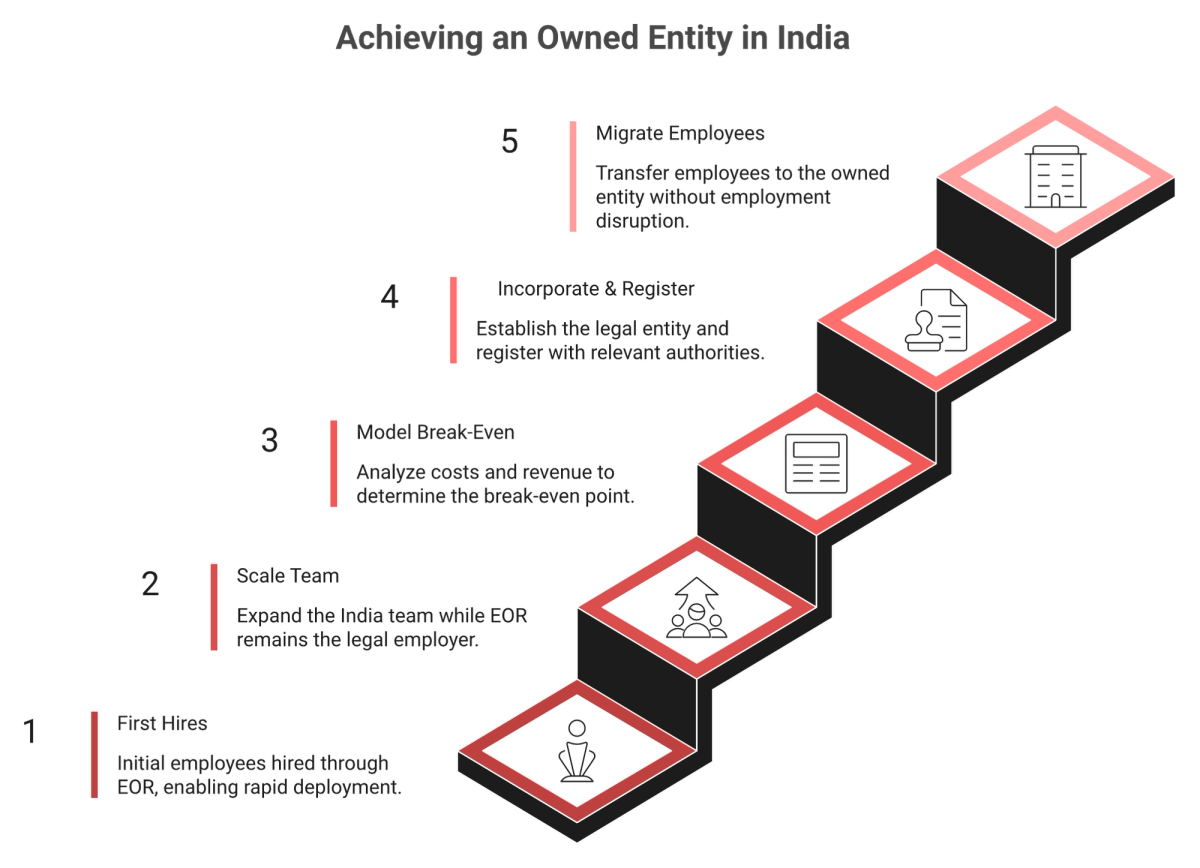
One client hit twelve hires, decided to open their own entity, and we simply moved those twelve people across. Versatile Club charges no exit fee, which is the only reason that call was easy for them.
⚠️ When leaving is the right advice
If your India team will pass 30 people and needs its own leadership, an entity is usually correct. The trade-offs are compared directly in our piece on EOR versus GCC in India.
If procurement demands SOC 2 or ISO 27001 as a gate, a certified vendor or your own entity fits better than we do. Versatile Club's read is that naming this early saves everyone a wasted quarter.
💸 What I would not do at any headcount
I would not incorporate before the first hire. That playbook costs real money and months of runway before anyone writes code. If speed is the constraint, start with hiring in India without an entity.
I would also not stay on a $599 fee for twenty people out of inertia. That is $144,000 a year for a legal employer you could own.
Where my head is right now is simple. The exit clause tells you more about a vendor than the price does.
Versatile Club has migrated EOR teams into client-owned Indian entities without a break in employment, and we write the exit path into the contract rather than after the notice.
Q10. Which India EOR should you sign, and what must you ask first?
Choose Remote if you hire across many countries and want one dashboard. Choose an India-native EOR if India is most of your headcount and state depth matters more than country count. Versatile Club answers all ten diligence questions in writing before signature, including deposit, exit notice, and applied FX rate. Get every answer in email, not on a call.
Three scenarios, three honest winners
✅ Where each option wins
| Your situation | Best fit | Why |
| Hiring in 5+ countries | Remote or a global platform | 90-country coverage, one dashboard |
| India is 80%+ of headcount | India-native EOR | multi-state PT, PF, and labour code depth |
| US employees across states | Remote PEO | US-only product, USD billing, US bank account |
| First 1 to 5 India hires | India-native EOR | lower fee, faster onboarding, direct support |
Remote publishes no setup fee and covers 90 countries, which is a real advantage for a multi-country roadmap.
Versatile Club operates only in India by design, so a buyer hiring in Poland and Brazil next quarter should not shortlist us. Buyers who want the India-only comparison read our EOR services in India page first.
❌ The words that should end a sales call
If a rep offers you "PEO India," you have learned something important about the rep.
US-style co-employment PEO does not legally exist under Indian labour law. Remote's own PEO product is United States only, billed in USD, and requires a US bank account. The legal position is unpacked in our explainer on EOR versus PEO.
The ten questions to send before you sign
⏰ Copy this into an email
What is the fee on monthly billing, and on annual?
Is there a setup, onboarding, or offboarding fee?
Will a deposit or reserve be required, and at what amount?
What is the exit notice period?
Which entity employs the worker, with CIN?
What FX rate was applied on last month's payroll?
Is there a card or transfer fee?
Is PF contributed on the ceiling or on full wages?
Who issues the salary TDS certificate?
Who answers at 11pm my time, three days before payroll?
Versatile Club answers question ten with a name and a phone number, because I am the person on WhatsApp. Questions one to four map directly to our published India EOR pricing.
💬 What buyers say about support and gaps
"Founder is just a call away. Extremely helpful in resolving all our queries. The process is super smooth to setup India EOR."
— surbhi m., 5/5 Versatile Club G2 - Verified Review
"The dashboard could be a little more self-serve. A couple of times I wanted to pull a report or a doc myself and ended up just messaging my contact instead."
— Angad S., Founder Versatile Club G2 - Verified Review
That dashboard criticism is fair, and it is the honest trade for founder-direct support. A ticket queue scales better than I do.
⚠️ The prediction I am sitting with
What I think shifts in the next two years is that India stops being one country on a global EOR map.
Owned-entity specialists start taking the India line item from generalists, because buyers learn to ask question five. Our running comparison of the best EOR services in India tracks that shift.
If you are pricing your first India hire this week, send me your salary band and city on WhatsApp. Versatile Club will send back the all-in number with statutory lines itemised, and you can hold it against any $599 quote you already have, or you can just tell us what you are building.
FAQs
Is Remote's India EOR price $599 or $699 per employee per month?
Both numbers are real, and the difference is the billing term.
- $699 per employee per month is what renders on Remote's en-IN pricing page for Employer of Record, on monthly billing.
- $599 per employee per month is the rate available on an annual commitment, published on Remote's EOR product page.
The gap is $100 a month, or $1,200 per employee per year. Remote cut its EOR list price from $699 to $599 in late 2024, and $699 survived as the month-to-month rate, which is why older blog posts and current order forms disagree.
Two practical notes. First, screenshot the rate with the billing toggle in the position you intend to sign, because the page has changed before. Second, the flat fee excludes Indian statutory employer costs entirely, which typically add 10% to 35% on top of gross salary.
We price differently. Versatile Club charges a flat monthly fee per employee with $0 setup, no exit fee, and the first month free, and the full structure is published on our India EOR pricing page rather than gated behind a sales call.
Does Remote require a security deposit for India employees?
No, not as a standard requirement. Remote's pricing FAQ states that it collects reserve payments "only in uncommon, high-risk situations," as a safeguard allowing it to pay employees if a customer cannot meet payments.
Where a reserve does apply, the documented scope and triggers matter:
- It applies to EOR employees and Contractor-of-Record contractors only.
- It does not apply to Global Payroll, standard Contractor Management, Contractor Management Plus, or HR Management.
- Triggers include account financial exposure, hiring country, moving from 14-day to 30-day invoice terms, non-standard notice or severance clauses, and a pattern of late payments.
- It is credited or refunded once the contract ends and termination costs settle.
Treat a held month of salary as working capital, not a fee. On a ₹30 lakh salary that is roughly $2,800 per employee sitting on a vendor's balance sheet.
Versatile Club holds no security deposit and charges no setup or exit fee, and the mechanics are documented in how our India EOR works. Ask any provider for the reserve determination in writing before you invite a worker onto the platform.
What does Remote charge to pay contractors in India?
Remote prices Indian contractors across three tiers, and the price difference reflects who carries the legal risk.
- Contractor Management, $29 per active contractor per month. You remain the legal engager.
- Contractor Management Plus, $99 per contractor per month. Adds indemnity up to $100,000 per contractor. You still remain the engager.
- Contractor of Record, from $325 per contractor per month. Remote becomes the legal engager, with uncapped indemnity, misclassification tooling, and IP Guard. Reserve payments can apply at this tier.
Two costs sit outside the tier price. Credit card payments add a 3.5% service fee, and currency conversion happens at rates Remote sets rather than live market rates.
The risk question matters more than the price. In India, worker status is assessed on control, tools, exclusivity, and fixed hours, not on the label in your contract. Full-time hours for a single client, managed daily, reads as employment in substance.
Versatile Club runs contract-to-hire and EOR under one owned Indian entity, so a conversion changes payroll status without changing vendor or IP chain, and the sequencing is set out in our guide on how to convert a contractor to an employee in India.
Which Indian statutory costs are not included in the EOR fee?
No platform fee includes Indian statutory employer costs. Budget roughly 10% to 35% on top of gross salary, depending on how the salary is structured.
- Provident Fund: 12% of Basic plus DA, filed monthly through the ECR by the 15th.
- ESI: 3.25% employer share and 0.75% employee share, for employees below the wage threshold.
- Gratuity: accrues at about 4.81% of Basic plus DA from month one.
- Professional tax: state-specific slabs up to ₹2,500 a year, monthly in Karnataka and biannual in Tamil Nadu.
- TDS on salary: deducted and deposited by the 7th of each month.
The 2025-26 changes move the base rather than the fee. The four Labour Codes came into force on 21 November 2025, and the wage definition requires Basic plus DA plus retaining allowance to be at least 50% of remuneration, which lifts PF and gratuity on the same flat platform charge. Under the Income-tax Act, 2025, TDS certificates move to Forms 130, 131, 132, and 133.
Versatile Club files PF, ESI, TDS, professional tax, and gratuity under its own registrations across all 28 states, as listed on our India compliance page.
Is Remote or an India-native EOR cheaper for hiring in India?
For an India-only team, India-native providers are materially cheaper on fee, and the gap widens at lower salary bands.
- India-native EOR fees run roughly $99 to $399 per employee per month.
- Global platforms sit between $499 and $699, with Remote at $599 annual and $699 monthly, and Multiplier around $400.
- Versatile Club prices at a flat $149 per employee per month with $0 setup, no exit fee, and no deposit.
Scale matters more than the sticker. At a ₹30 lakh CTC, a $599 fee is about 16% of the all-in monthly bill. At ₹20 lakh it is closer to 23%.
Remote earns real credit for publishing no setup fee and covering 90 countries. If you are hiring across five or more markets, that breadth is worth paying for, and an India specialist is the wrong shortlist.
If India is most of your headcount, depth wins: multi-state professional tax, PF filings, and labour code handling. Versatile Club employs your team through its own registered Indian entity rather than a partner shell, and the head-to-head detail sits in our Remote alternatives in India comparison.